
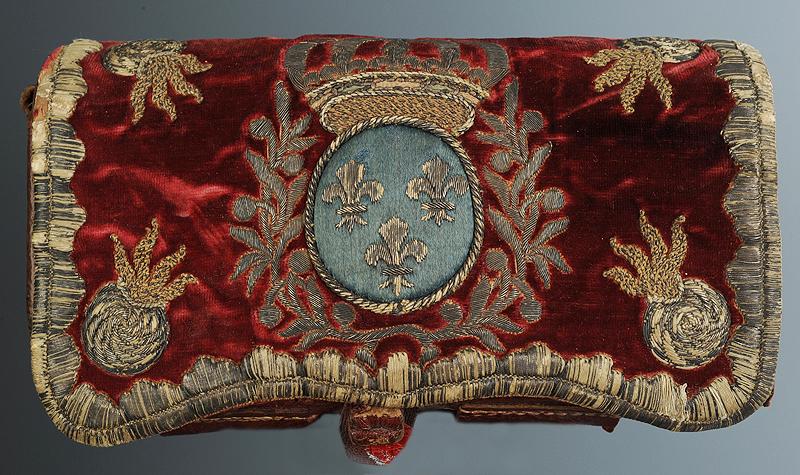
Officer's cartridge box of the Grenadiers on horseback of the King's Military Household, Louis XV (1740-1750).
Sold out
OFFICER'S GIBERNE OF THE GRENADIERS ON HORSEBACK OF THE KING'S MILITARY HOUSEHOLD, FORMER MONARCHY, REIGN OF LOUIS XV (1740-1776).
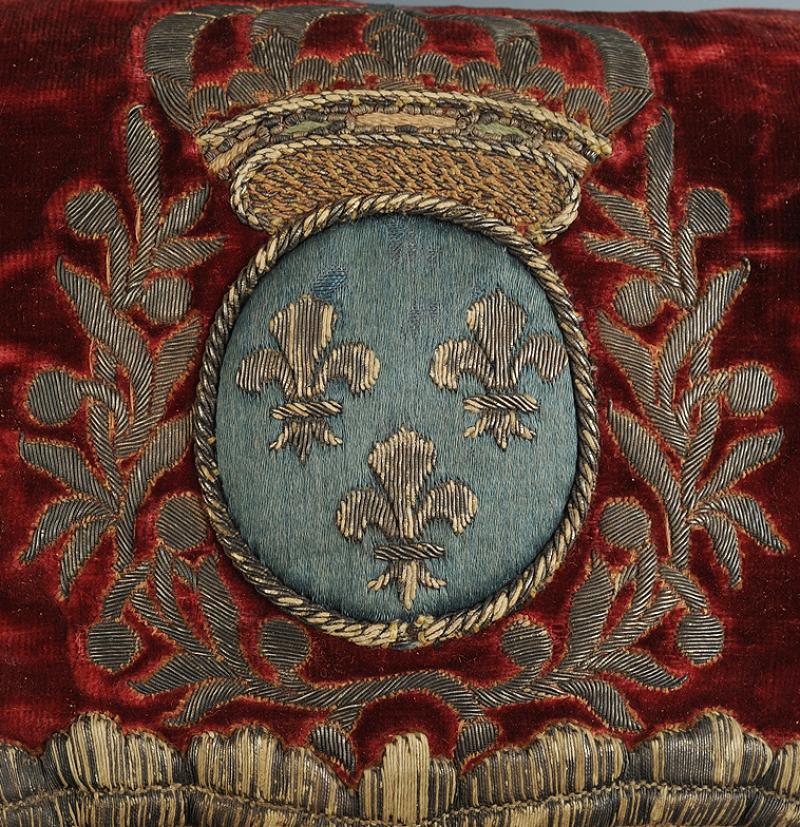
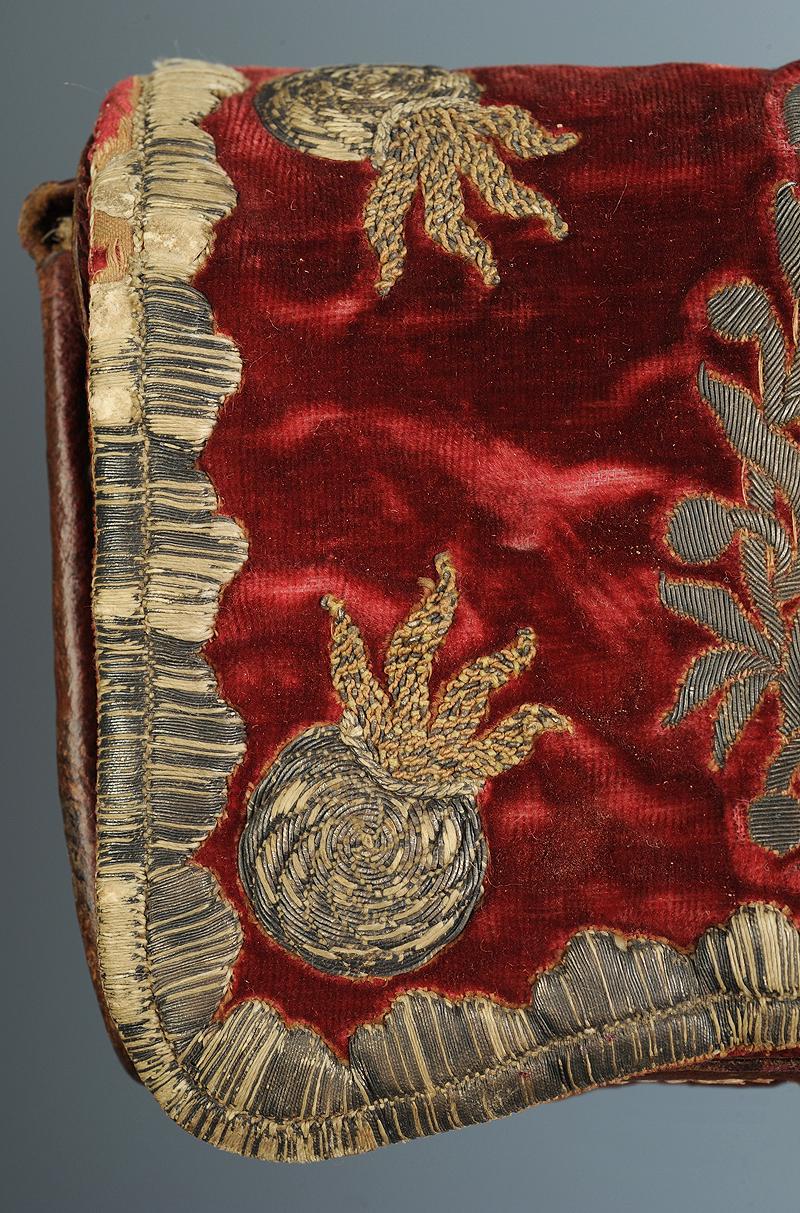
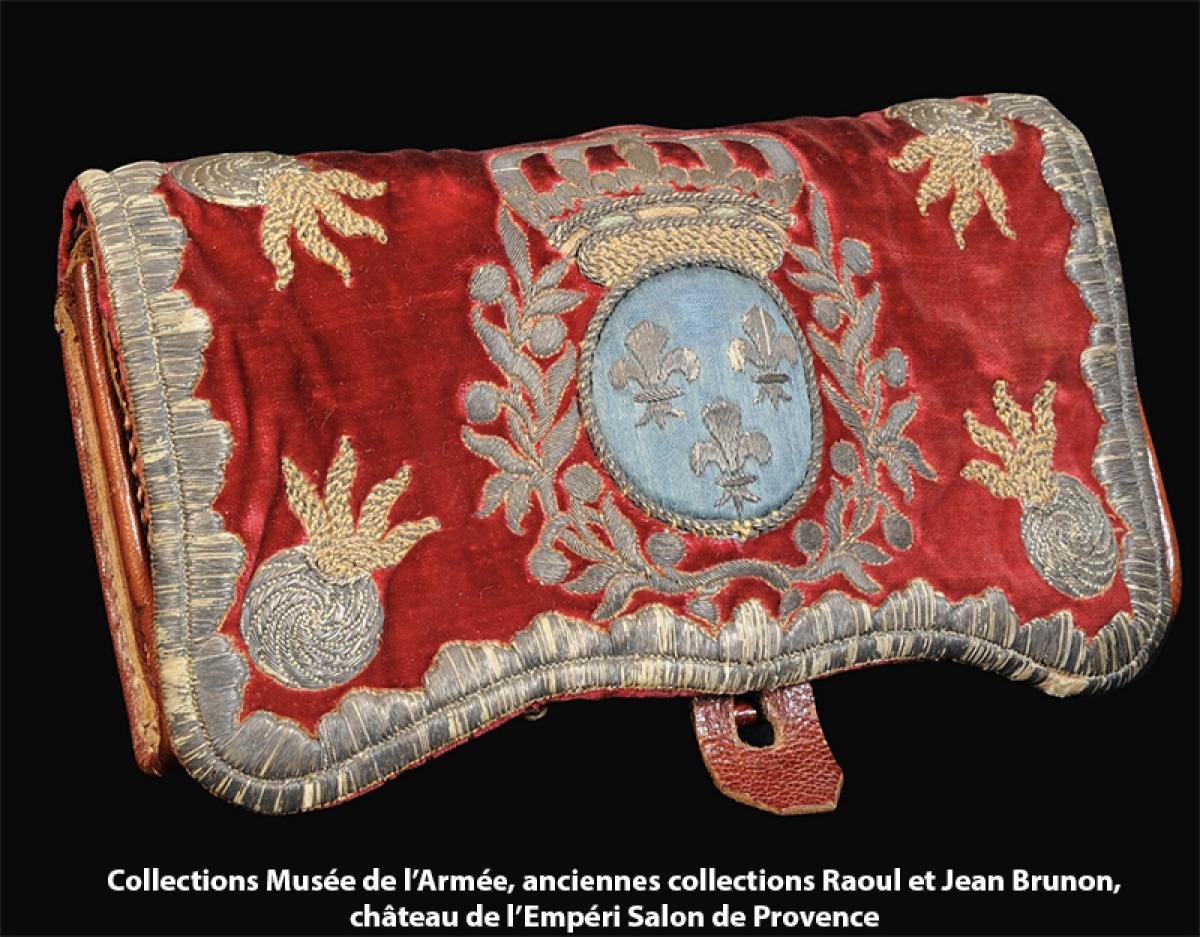
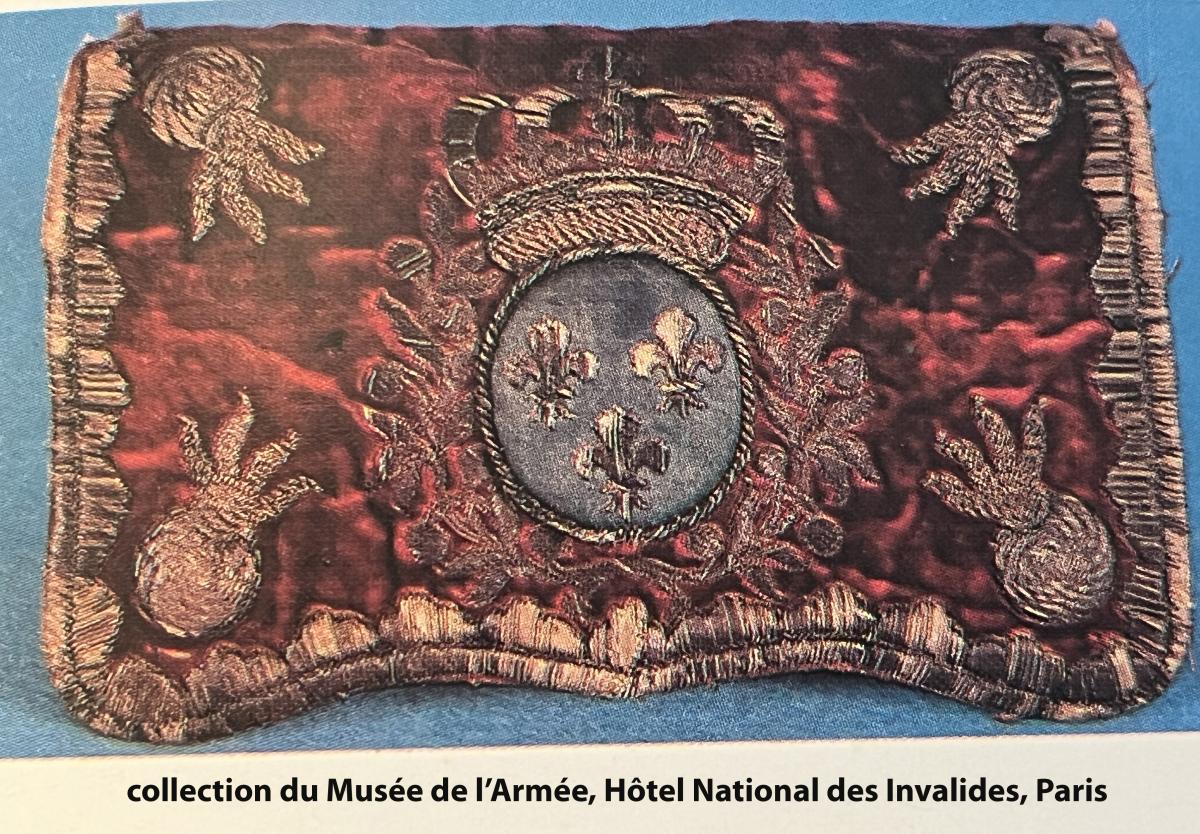
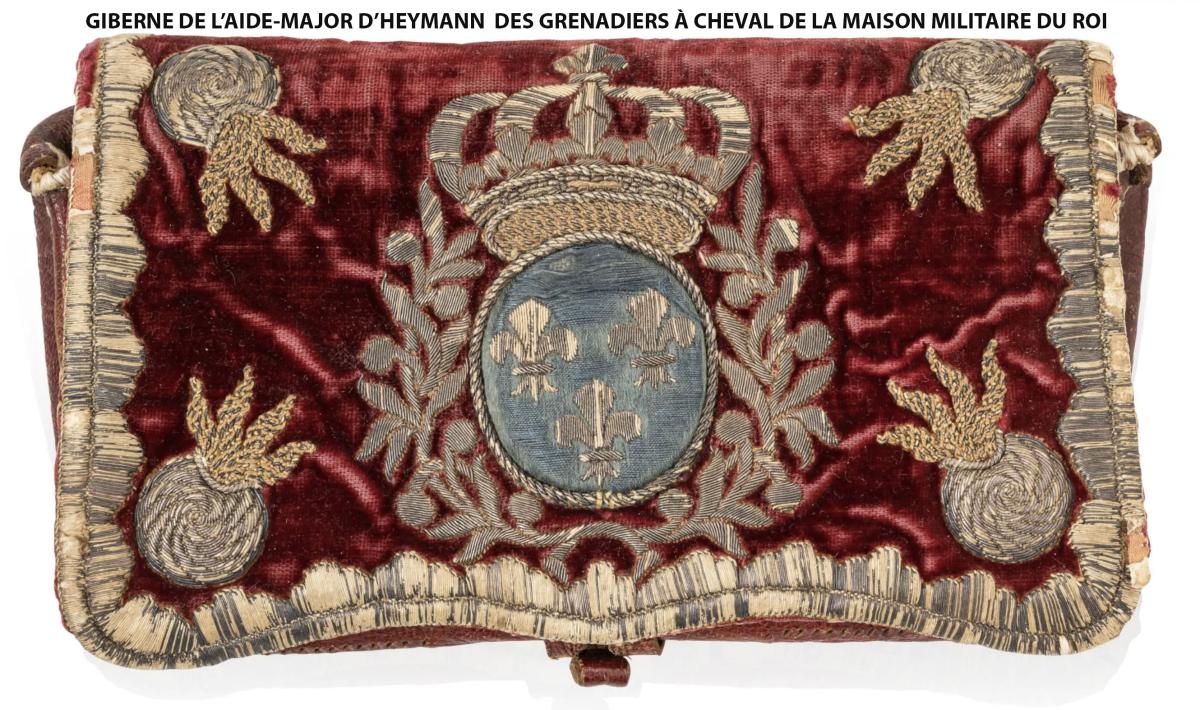
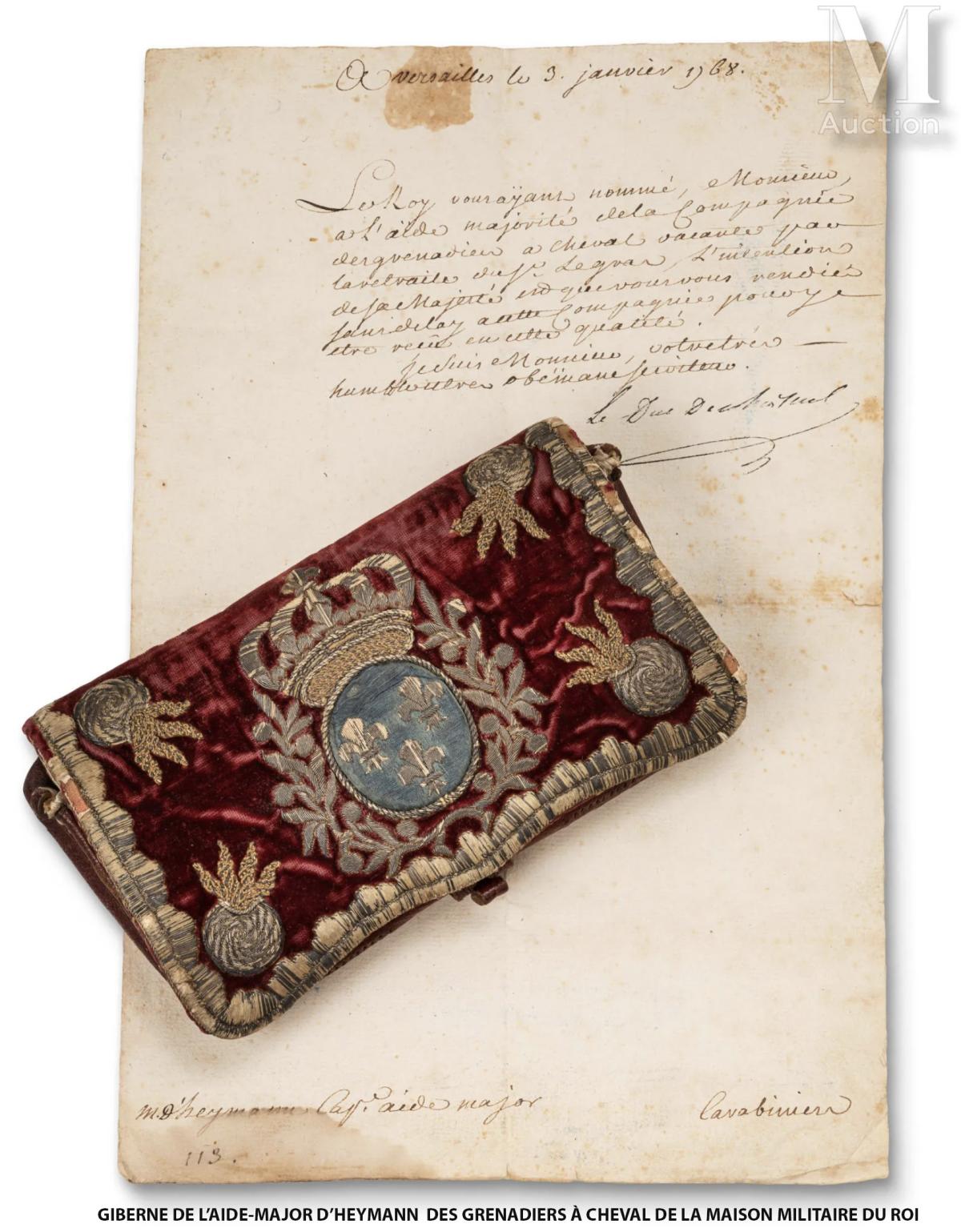
Giberne or "cartridge box worn on the belt" covered with a rectangular flap cut in a scalloped design at its lower part, width 172 mm, height 95 mm; garnet velvet background embroidered with silver, the four grenades placed in the corners are of the same metal and spun with yellow silk flames (approximately 24 mm width, 13 mm height), in the center are embroidered the Arms of France composed of an oval shield (38 mm width, 44 mm height) in azure velvet embroidered with three fleur-de-lis and framed by a passementerie cord, on each side a laurel branch is embroidered, and at the top the silver royal crown (47 mm width, approximately 37 mm height). The flap is bordered by a scalloped rod towards the inside (12 mm width). The edge and center of the shield are "padded" with cardboard to create a relief effect.
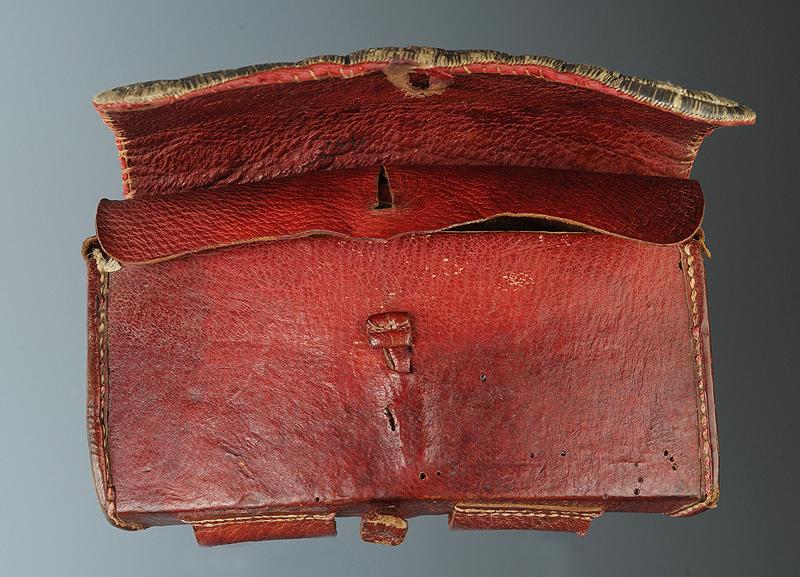
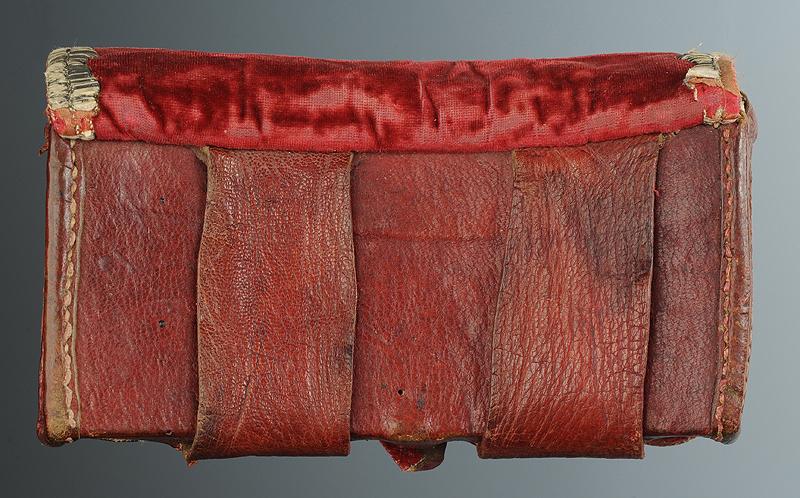
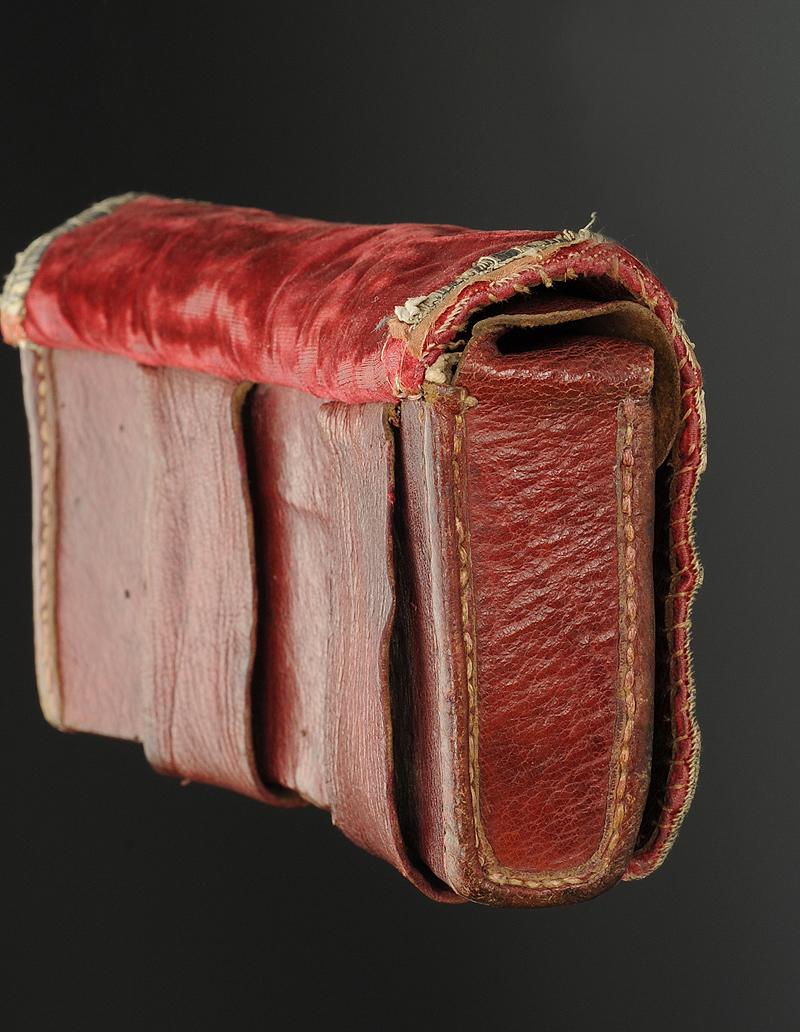
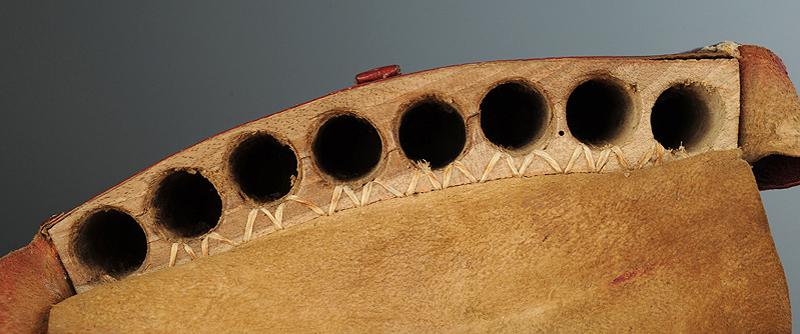
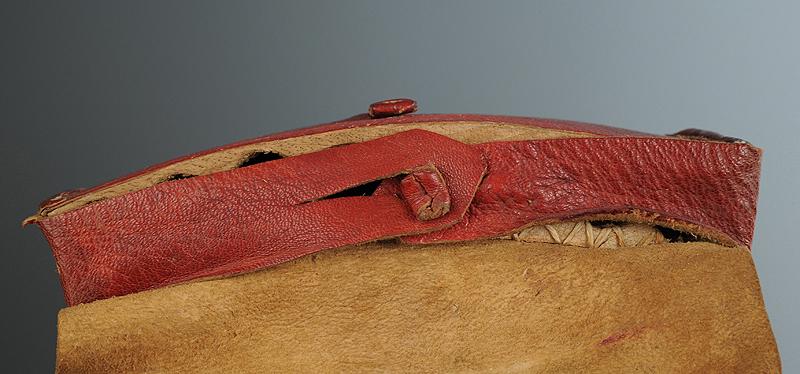
The cartridge pattern, made of beechwood, is pierced with eight holes through which the ribs pass, making the entire piece compact with the case. The rest of the case is entirely covered in red Morocco leather, and the loops for the belt are approximately 36 mm wide. Case dimensions: width approximately 178 mm, height 78 mm, thickness 30 mm. Weight 222 grams.
France.
Former Monarchy, reign of Louis XV.
In very good condition, with the velvet slightly rubbed on the reliefs and the metal embroideries, but minimal given the age of the object.
KNOWN EXAMPLES:
To this day, I have had the opportunity to examine four original examples. The collections of the Army Museum hold two identical examples of this case:
- one at the Hôtel des Invalides in Paris (M2151 Gb320)
- a second example from the former Raoul and Jean Brunon collections, currently exhibited at the Château de l'Empéri (inv. 572 B), which became part of the Army Museum collections in 1966. This second example is exceptionally significant as the giberne belonged to Louis XV, who traditionally held the rank of Captain of the Grenadiers on horseback. A label indicates the provenance of this cartridge box, "Giberne of His Majesty King Louis XV, given to Mr. Count de Courteville du Hodicq, page of the King, in 1742."
Two other examples are in private collections:
- the giberne presented in this document.
- an example that belonged to Jean-Frédéric-Augustin Thomin (or Thenin) de Heymann (1740-1801), appointed assistant major of the Company of the King's Grenadiers on horseback from January 9, 1768, replacing Mr. Legras (Millon Paris auction on April 10, 2026, lot n° 11).
In total between 1740 and 1750
Two somewhat similar examples, but of a larger size, are sometimes incorrectly attributed to the Horse Grenadiers or even called a sabretache! One belonged to the former Naudin collection reproduced in Michel Pétard's work "Military Equipment from 1600 to 1870" volume II, M Pétard 1985, page 24, figure 105; and the second belonged to the former Charles Marchal collection published in Henry Lachouque's work "Ten Centuries of Military Uniforms", Hachette, 1963, page 46; both are actually officer's gibernes of the Grenadiers of the French Guards circa 1760-1767.
HISTORICAL BACKGROUND:
The Company of the Horse Grenadiers of the King's Household was reestablished on July 15, 1814, by royal ordinance of Louis XVIII. The Company of the Horse Grenadiers was created in 1676, with the mission of leading the way for the King's cavalry. It was dissolved in 1775.
From the reign of King Louis XIV, all individuals serving in the King's personal service belonged to the King's Military Household. This was organized into a Civil Household and a Military Household. The different units of the King's Military Household provided personal protection to the sovereign and constituted an elite troop within the royal army of the 18th century. Alongside the four companies of the King’s Bodyguards, the companies of the Guardsmen, the Light Horse, and the two companies of Musketeers, there was the Horse Grenadiers Company of the King's Household, established in 1676 and abolished by King Louis XVI in 1775. Tasked with leading the way in military campaigns, they were able to fight on foot and on horseback to support the Musketeers. At its peak, the company comprised about 150 men chosen by the king, all of high stature and required to wear mustaches. Their uniform consisted of a blue coat with red lining, vest, and cuffs, silver buttons and buttonholes, a silver-braided buffalo shoulder strap, a red cloth cap trimmed with black bear skin edged in silver, red trousers and stockings, and a blue cloth horse equipment.
LIST OF OFFICERS
Four officers, in addition to the King, held the following ranks from 1740. In total, about 18 officers succeeded each other until the dissolution of the Grenadiers:
1 Captain (holder): Louis XV.
1 Captain-Lieutenant: Jean-François de Creil (serving 1730-1744); replaced by Mr. Le Bailli de Grille (1744-1759), then by Monsieur de Narbonne-Lara in 1759; 1759 Mr. Marquis de Lugeac.
3 Lieutenants:
- 1st Lieutenant: Monsieur de Montboissier; replaced in 1749 by Monsieur de Narbonne-Lara; in 1758 by Monsieur de Lugeac; in 1759 by Marquis de Toustain.
- 2nd Lieutenant: Monsieur de La Roche-Fontenilles; replaced by Monsieur de Montmorency in 1747; in 1758 by Count de Robin; in 1761 by Marquis de l'Étang-Parade; and in 1769 by Count de l'Espinasse.
- 3rd Lieutenant: Monsieur de Brissac; replaced by Monsieur de Chabrillant in 1745; in 1758 by Monsieur de Bonnaire; in 1761 by Chevalier de Laurens de Beaujeu.
1 Assistant Major:
1758 Chevalier de Laurens de Beaujeu; replaced in 1760 by Mr. Le Gras; in 1768 by Jean-Frédéric-Augustin Thomin de Heymann; in 1770 the position is vacant; 1772 Chevalier de Mintier; then in 1776 by Count de Hourmelin.
Giberne or "cartridge box worn on the belt" covered with a rectangular flap cut in a scalloped design at its lower part, width 172 mm, height 95 mm; garnet velvet background embroidered with silver, the four grenades placed in the corners are of the same metal and spun with yellow silk flames (approximately 24 mm width, 13 mm height), in the center are embroidered the Arms of France composed of an oval shield (38 mm width, 44 mm height) in azure velvet embroidered with three fleur-de-lis and framed by a passementerie cord, on each side a laurel branch is embroidered, and at the top the silver royal crown (47 mm width, approximately 37 mm height). The flap is bordered by a scalloped rod towards the inside (12 mm width). The edge and center of the shield are "padded" with cardboard to create a relief effect.
The cartridge pattern, made of beechwood, is pierced with eight holes through which the ribs pass, making the entire piece compact with the case. The rest of the case is entirely covered in red Morocco leather, and the loops for the belt are approximately 36 mm wide. Case dimensions: width approximately 178 mm, height 78 mm, thickness 30 mm. Weight 222 grams.
France.
Former Monarchy, reign of Louis XV.
In very good condition, with the velvet slightly rubbed on the reliefs and the metal embroideries, but minimal given the age of the object.
KNOWN EXAMPLES:
To this day, I have had the opportunity to examine four original examples. The collections of the Army Museum hold two identical examples of this case:
- one at the Hôtel des Invalides in Paris (M2151 Gb320)
- a second example from the former Raoul and Jean Brunon collections, currently exhibited at the Château de l'Empéri (inv. 572 B), which became part of the Army Museum collections in 1966. This second example is exceptionally significant as the giberne belonged to Louis XV, who traditionally held the rank of Captain of the Grenadiers on horseback. A label indicates the provenance of this cartridge box, "Giberne of His Majesty King Louis XV, given to Mr. Count de Courteville du Hodicq, page of the King, in 1742."
Two other examples are in private collections:
- the giberne presented in this document.
- an example that belonged to Jean-Frédéric-Augustin Thomin (or Thenin) de Heymann (1740-1801), appointed assistant major of the Company of the King's Grenadiers on horseback from January 9, 1768, replacing Mr. Legras (Millon Paris auction on April 10, 2026, lot n° 11).
In total between 1740 and 1750
Two somewhat similar examples, but of a larger size, are sometimes incorrectly attributed to the Horse Grenadiers or even called a sabretache! One belonged to the former Naudin collection reproduced in Michel Pétard's work "Military Equipment from 1600 to 1870" volume II, M Pétard 1985, page 24, figure 105; and the second belonged to the former Charles Marchal collection published in Henry Lachouque's work "Ten Centuries of Military Uniforms", Hachette, 1963, page 46; both are actually officer's gibernes of the Grenadiers of the French Guards circa 1760-1767.
HISTORICAL BACKGROUND:
The Company of the Horse Grenadiers of the King's Household was reestablished on July 15, 1814, by royal ordinance of Louis XVIII. The Company of the Horse Grenadiers was created in 1676, with the mission of leading the way for the King's cavalry. It was dissolved in 1775.
From the reign of King Louis XIV, all individuals serving in the King's personal service belonged to the King's Military Household. This was organized into a Civil Household and a Military Household. The different units of the King's Military Household provided personal protection to the sovereign and constituted an elite troop within the royal army of the 18th century. Alongside the four companies of the King’s Bodyguards, the companies of the Guardsmen, the Light Horse, and the two companies of Musketeers, there was the Horse Grenadiers Company of the King's Household, established in 1676 and abolished by King Louis XVI in 1775. Tasked with leading the way in military campaigns, they were able to fight on foot and on horseback to support the Musketeers. At its peak, the company comprised about 150 men chosen by the king, all of high stature and required to wear mustaches. Their uniform consisted of a blue coat with red lining, vest, and cuffs, silver buttons and buttonholes, a silver-braided buffalo shoulder strap, a red cloth cap trimmed with black bear skin edged in silver, red trousers and stockings, and a blue cloth horse equipment.
LIST OF OFFICERS
Four officers, in addition to the King, held the following ranks from 1740. In total, about 18 officers succeeded each other until the dissolution of the Grenadiers:
1 Captain (holder): Louis XV.
1 Captain-Lieutenant: Jean-François de Creil (serving 1730-1744); replaced by Mr. Le Bailli de Grille (1744-1759), then by Monsieur de Narbonne-Lara in 1759; 1759 Mr. Marquis de Lugeac.
3 Lieutenants:
- 1st Lieutenant: Monsieur de Montboissier; replaced in 1749 by Monsieur de Narbonne-Lara; in 1758 by Monsieur de Lugeac; in 1759 by Marquis de Toustain.
- 2nd Lieutenant: Monsieur de La Roche-Fontenilles; replaced by Monsieur de Montmorency in 1747; in 1758 by Count de Robin; in 1761 by Marquis de l'Étang-Parade; and in 1769 by Count de l'Espinasse.
- 3rd Lieutenant: Monsieur de Brissac; replaced by Monsieur de Chabrillant in 1745; in 1758 by Monsieur de Bonnaire; in 1761 by Chevalier de Laurens de Beaujeu.
1 Assistant Major:
1758 Chevalier de Laurens de Beaujeu; replaced in 1760 by Mr. Le Gras; in 1768 by Jean-Frédéric-Augustin Thomin de Heymann; in 1770 the position is vacant; 1772 Chevalier de Mintier; then in 1776 by Count de Hourmelin.
Reference :
T271
Next update Friday, octobre 9 at 13:30 PM
FOR ALL PURCHASES, PAYMENT IN MULTIPLE CHECKS POSSIBLE
bertrand.malvaux@wanadoo.fr 06 07 75 74 63
SHIPPING COSTS
Shipping costs are calculated only once per order for one or more items, all shipments are sent via registered mail, as this is the only way to have proof of dispatch and receipt.
For parcels whose value cannot be insured by the Post, shipments are entrusted to DHL or Fedex with real value insured, the service is of high quality but the cost is higher.
RETURN POLICY
Items can be returned within 8 days of receipt. They must be returned by registered mail at the sender's expense, in their original packaging, and in their original condition.
AUTHENTICITY
The selection of items offered on this site allows me to guarantee the authenticity of each piece described here, all items offered are guaranteed to be period and authentic, unless otherwise noted or restricted in the description.
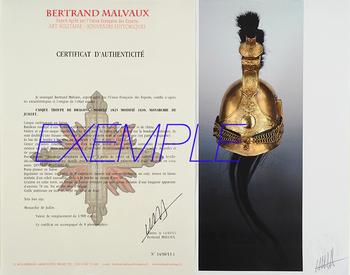
An authenticity certificate of the item including the description published on the site, the period, the sale price, accompanied by one or more color photographs is automatically provided for any item priced over 130 euros. Below this price, each certificate is charged 5 euros.
Only items sold by me are subject to an authenticity certificate, I do not provide any expert reports for items sold by third parties (colleagues or collectors).
FOR ALL PURCHASES, PAYMENT IN MULTIPLE CHECKS POSSIBLE
bertrand.malvaux@wanadoo.fr 06 07 75 74 63
An authenticity certificate of the item including the description published on the site, the period, the sale price, accompanied by one or more color photographs is automatically provided for any item priced over 130 euros. Below this price, each certificate is charged 5 euros.
Only items sold by me are subject to an authenticity certificate, I do not provide any expert reports for items sold by third parties (colleagues or collectors).