
SPANISH INFANTA REGIMENT ARÇON PISTOL, 1789 model. Reign of Charles IV. 34590
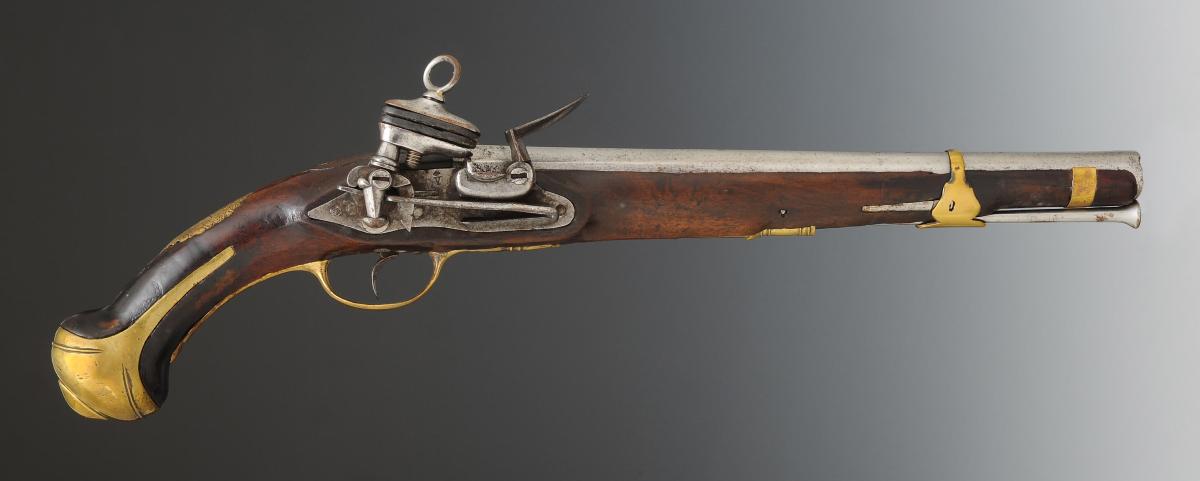
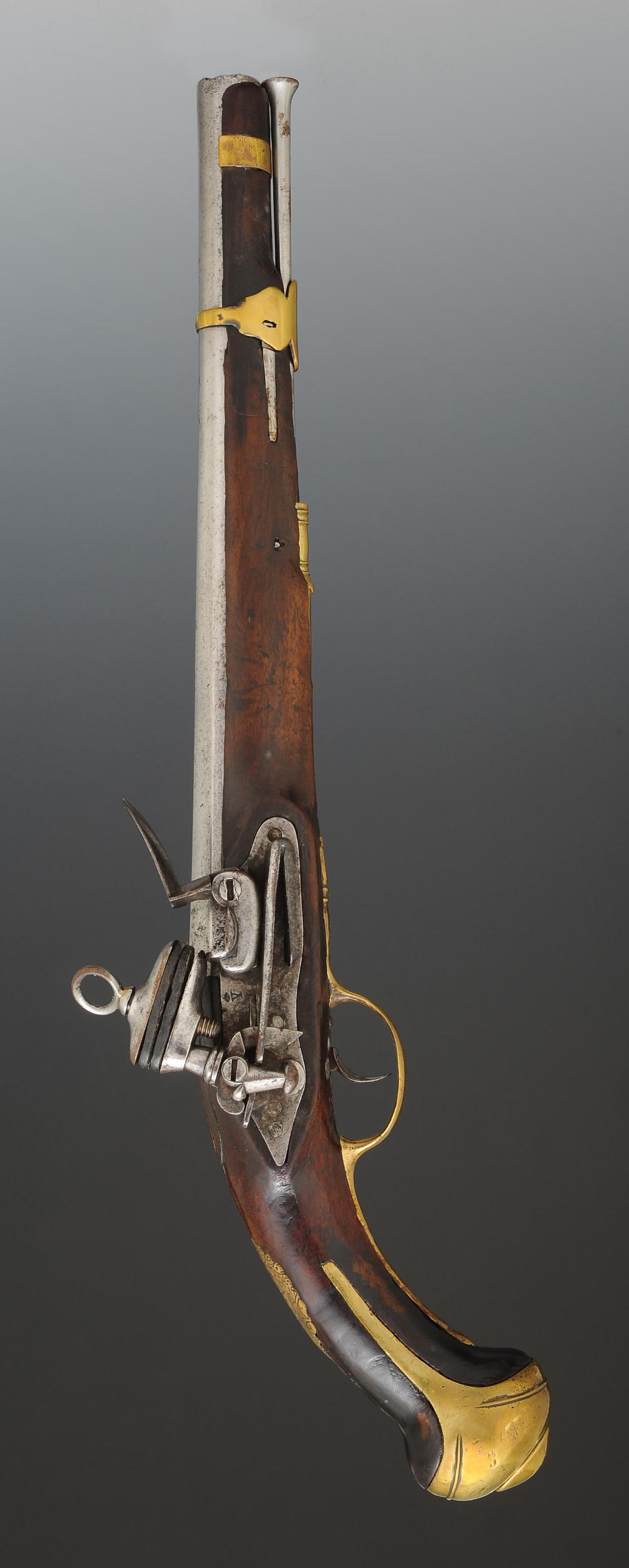
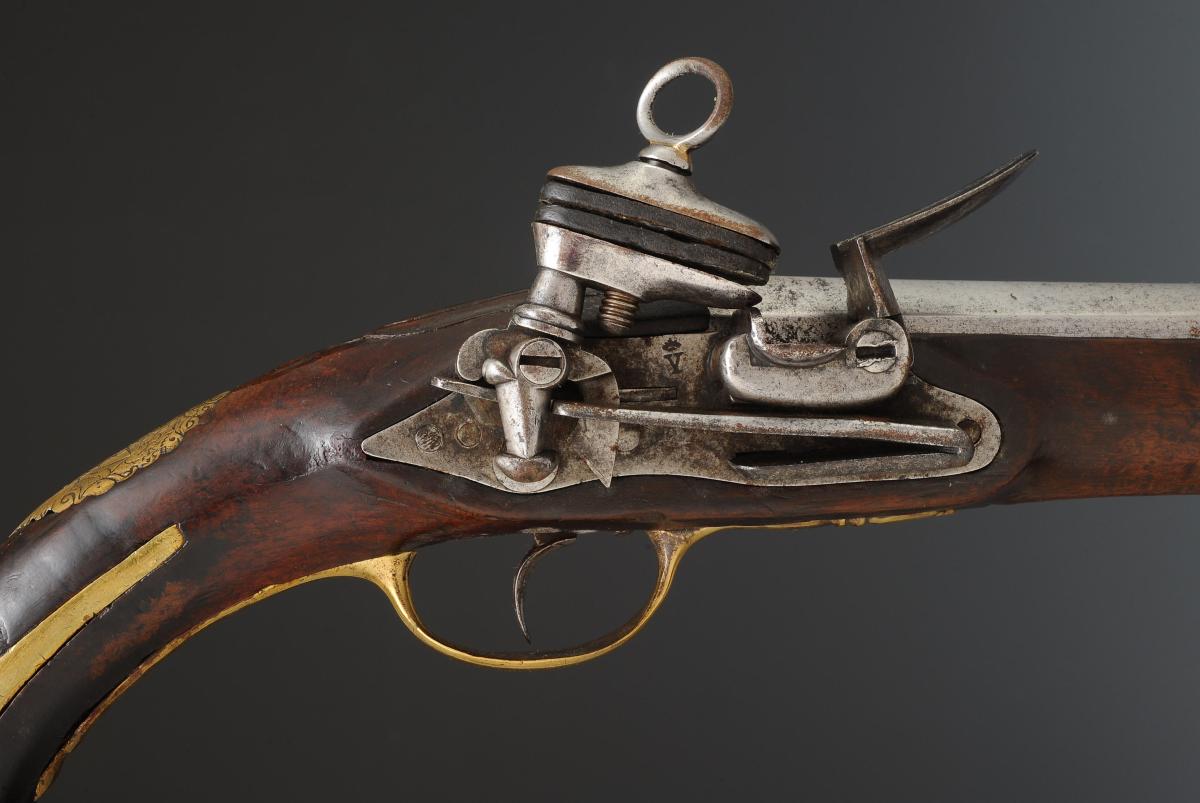
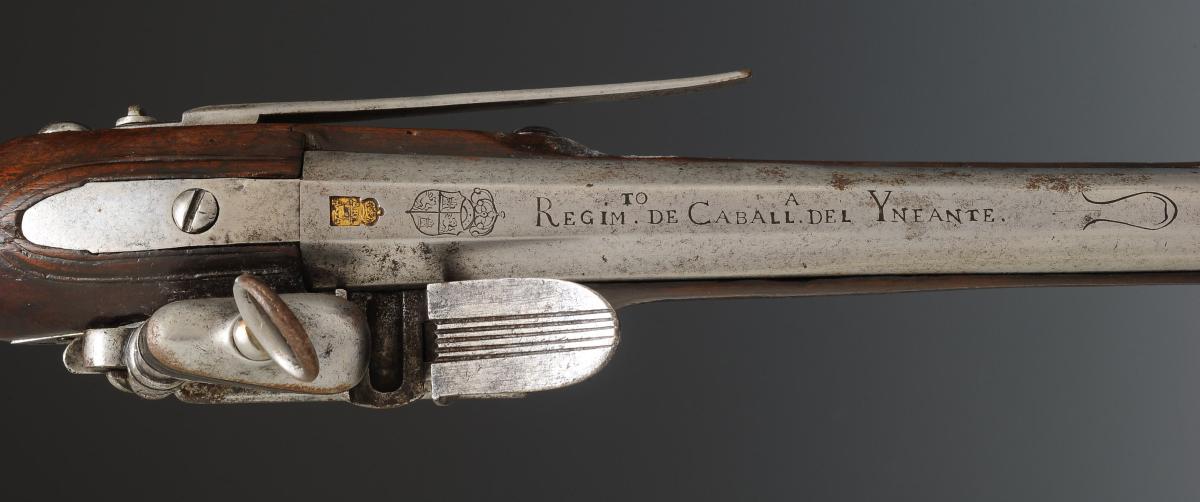
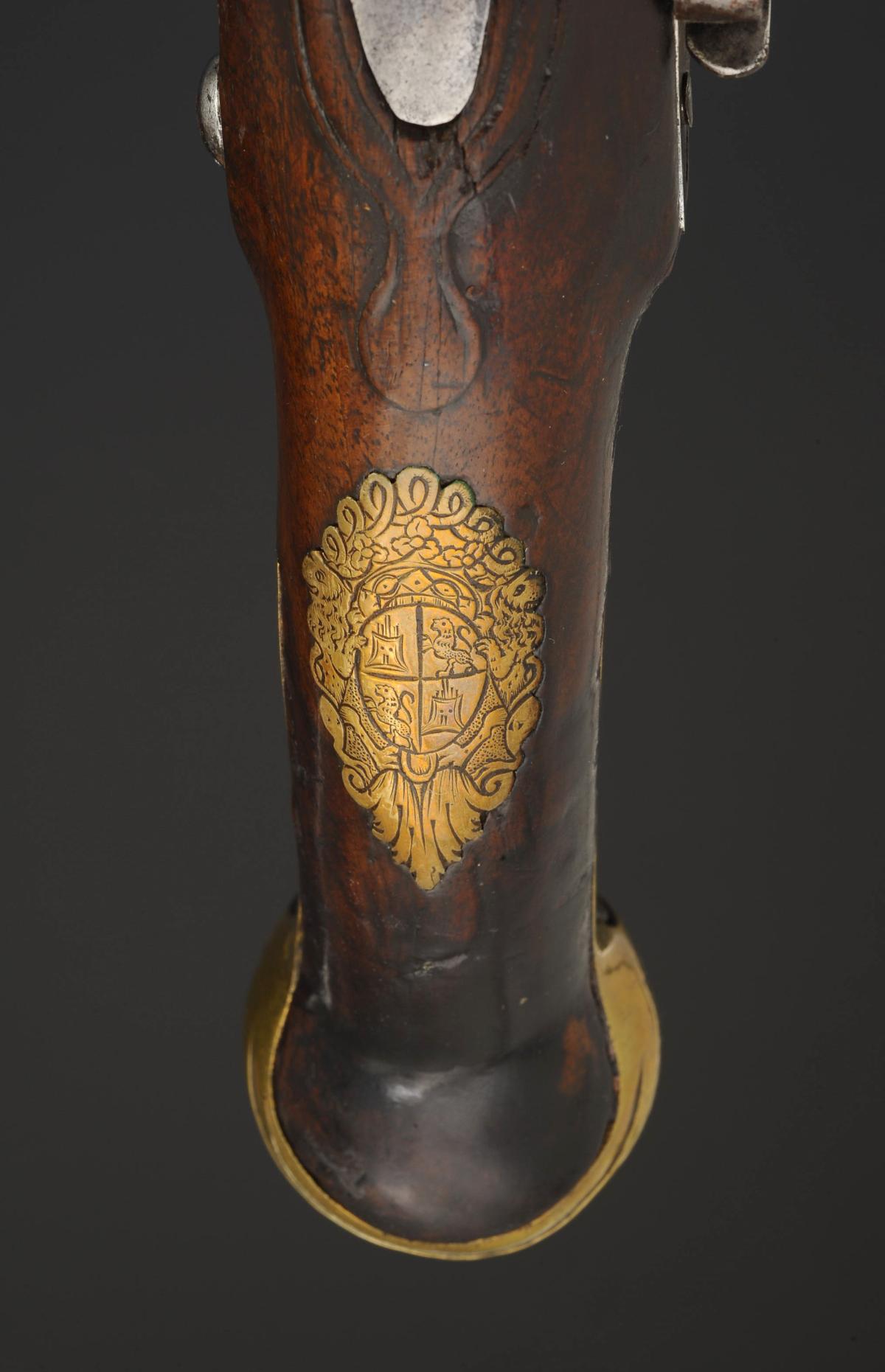
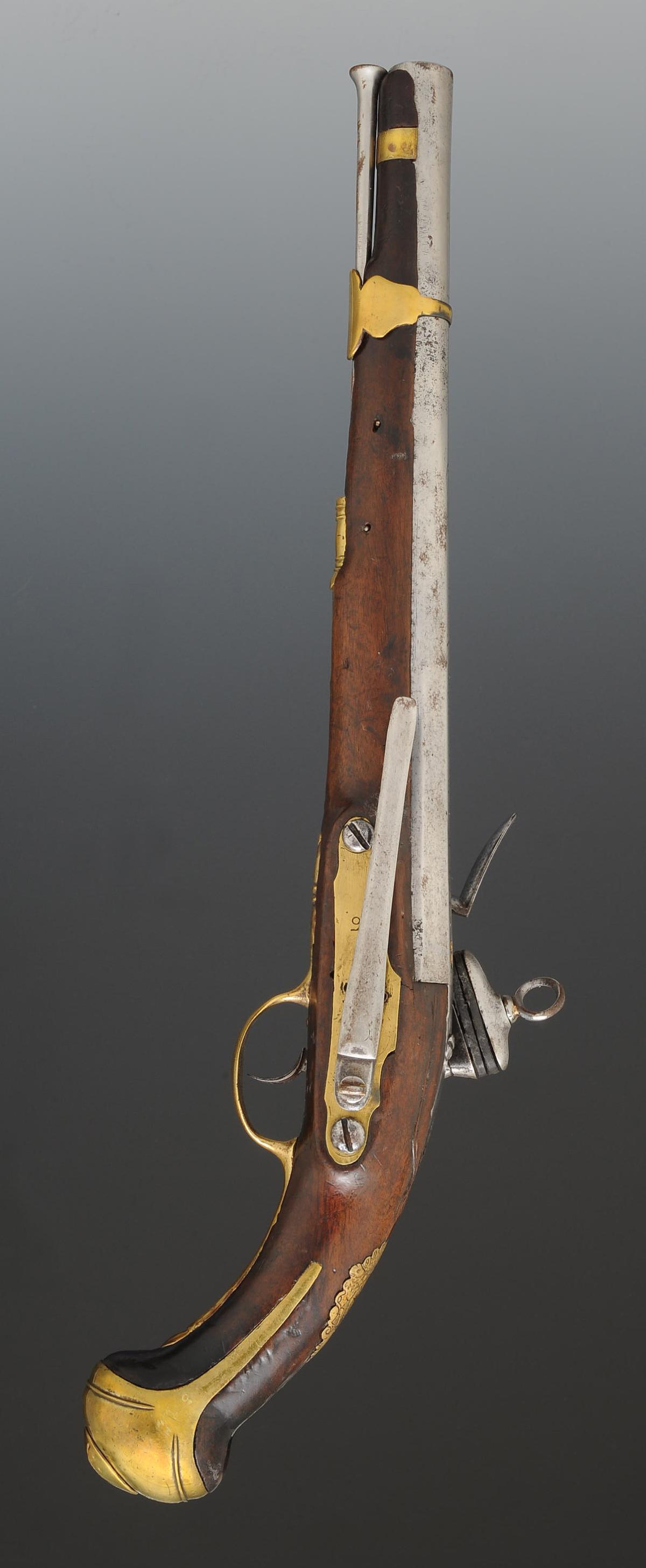
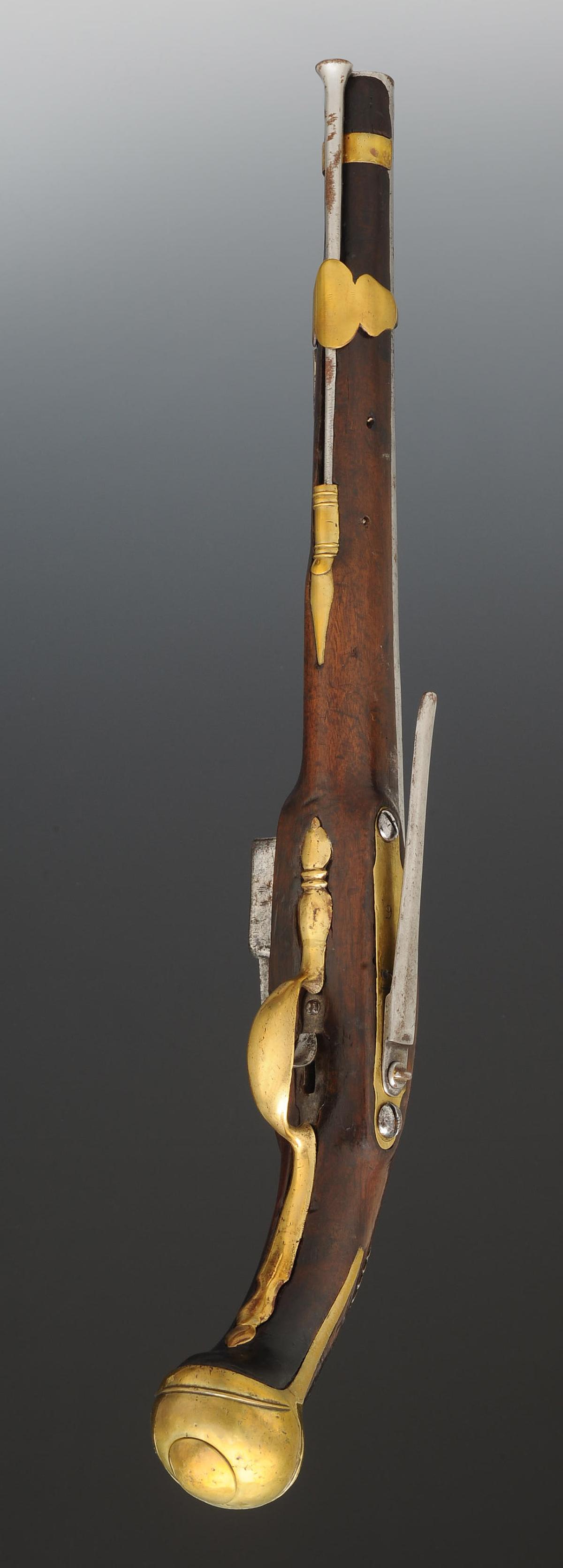
SPANISH INFANTE REGIMENT ARÇON PISTOL, 1789 model. Reign of Charles IV. 34590
Cavalry pistol with walnut stock and polished brass fittings, the thumb piece features the coat of arms of Spain. The barrel bears the golden stamp of the controller Bartolomé de Arluciaga from Elgoibar (between 1760 and 1791). The top flat is engraved with the coat of arms of Spain followed by "REGIMto DE CABALLa DEL YNFANTE". The Spanish-style lockplate is functional with its original leather jaws, and the counter plate is marked with the numbers 9 and 21 under the belt hook. Total length 50 cm; barrel length 32 cm; caliber 18 mm (ramrod reconstructed).
Spain. Reign of Charles IV. Very good condition.
PROVENANCE:
Former PM collection.
NOTE:
Bartolomé de Arluciaga is a master gunner and controller from Elgoibar, a key town in the Deba valley in Guipuscoa, the Spanish Basque Country. He is a renowned master armorer active between 1760 and 1791. He received his training at Elgoibar school, near Eibar and Placencia. Elgoibar housed workshops of the best cannon smiths in iron and steel. Arluciaga reached the highest rank for an armorer in the region: that of sworn royal controller. Appointed by royal decree or designated by the Basque corporation under military supervision, he was authorized to approve weapons intended for the King's troops. His career spans the thirty most intense years of military modernization in Bourbon Spain. Between 1760 and 1788, under the reign of Charles III, he participated in the production and inspection of cannons for the infantry and cavalry musket and pistol models of the 1752/1755 and 1772 reforms. Between 1788 and 1791, during the reign of Charles IV, he was at the peak of his art during the launch of the new weapons for the Guard and Royal Cavalry, especially for the manufacture and inspection of the 1789 Model.
The stamp of Bartolomé de Arluciaga on Spanish weapons is applied to the touchhole of the barrel (a cartouche with his name), he would strike his name or initials (often in a small rectangular or oval shield), as well as a golden brass stamp on the barrel, on weapons for officers or those destined for royal regiments such as "Regimiento de Caballería de Borbón" or "Regimiento del Príncipe".
HISTORY:
The Regimiento de Caballería del Infante, often engraved on weapons in the abbreviated form "REGIMto DE CABALLa DEL YNFANTE," is one of the most important and oldest historical units of the Spanish line cavalry. In 1789, during the accession of Charles IV and when the Spanish Army adopted the new arms regulation (including the 1789 Arçon Pistol), the regiment occupied a prominent place in the Crown's military organization.
Created in 1703, the regiment was raised in the early 18th century during the reign of Philip V, during the War of the Spanish Succession. Its honorary name derives from the dignity of the Infante of Spain (the princes of the Spanish royal family, children of the sovereign who are not direct heirs to the throne). In the organization of line cavalry under Charles III and Charles IV, the regiment held the rank of 4th Line Cavalry Regiment (right behind Regimiento del Príncipe, which held the 3rd rank). In 1789, it consisted of a staff and 4 to 5 squadrons divided into companies, totaling around 500 to 600 cavalrymen. It was part of the heavy line cavalry, intended for charges in line battles, frontal shock, and the maintenance of royal presence in the Spanish provinces. In peacetime, the regiment garrisoned important cities on the peninsula (such as Andalusia, Old Castile, or northern Spain) to maintain order and secure the borders.
The Regimiento del Infante was engaged in the major conflicts of the late 18th century:
Firstly, during the War of Roussillon / War of the Convention (1793-1795) where the regiment crossed the Pyrenees to fight the French revolutionary army in Catalonia and Roussillon, notably at the battles of Masanet and Arles.
Then it participated in the War of the Oranges in 1801, a campaign against Portugal.
Finally, it played a role in the Spanish War of Independence from 1808 to 1814, where the regiment distinguished itself in numerous battles against the Napoleonic troops across the Iberian Peninsula.
Price :
3 000,00 €
| Destination | Envoi recommandé | Envoi Recommandé + Express |
|---|---|---|
| Shipping France | 14,00 € | 50,00 € |
| Shipping Europe | 20,00 € | 60,00 € |
| Shipping world | 44,00 € | 100,00 € |
Insurance (1%) :
30,00 €
Reference :
34590
Next update Friday, octobre 30 at 13:30 PM
FOR ALL PURCHASES, PAYMENT IN MULTIPLE CHECKS POSSIBLE
bertrand.malvaux@wanadoo.fr 06 07 75 74 63
SHIPPING COSTS
Shipping costs are calculated only once per order for one or more items, all shipments are sent via registered mail, as this is the only way to have proof of dispatch and receipt.
For parcels whose value cannot be insured by the Post, shipments are entrusted to DHL or Fedex with real value insured, the service is of high quality but the cost is higher.
RETURN POLICY
Items can be returned within 8 days of receipt. They must be returned by registered mail at the sender's expense, in their original packaging, and in their original condition.
AUTHENTICITY
The selection of items offered on this site allows me to guarantee the authenticity of each piece described here, all items offered are guaranteed to be period and authentic, unless otherwise noted or restricted in the description.
An authenticity certificate of the item including the description published on the site, the period, the sale price, accompanied by one or more color photographs is automatically provided for any item priced over 130 euros. Below this price, each certificate is charged 5 euros.
Only items sold by me are subject to an authenticity certificate, I do not provide any expert reports for items sold by third parties (colleagues or collectors).
FOR ALL PURCHASES, PAYMENT IN MULTIPLE CHECKS POSSIBLE
bertrand.malvaux@wanadoo.fr 06 07 75 74 63
An authenticity certificate of the item including the description published on the site, the period, the sale price, accompanied by one or more color photographs is automatically provided for any item priced over 130 euros. Below this price, each certificate is charged 5 euros.
Only items sold by me are subject to an authenticity certificate, I do not provide any expert reports for items sold by third parties (colleagues or collectors).