
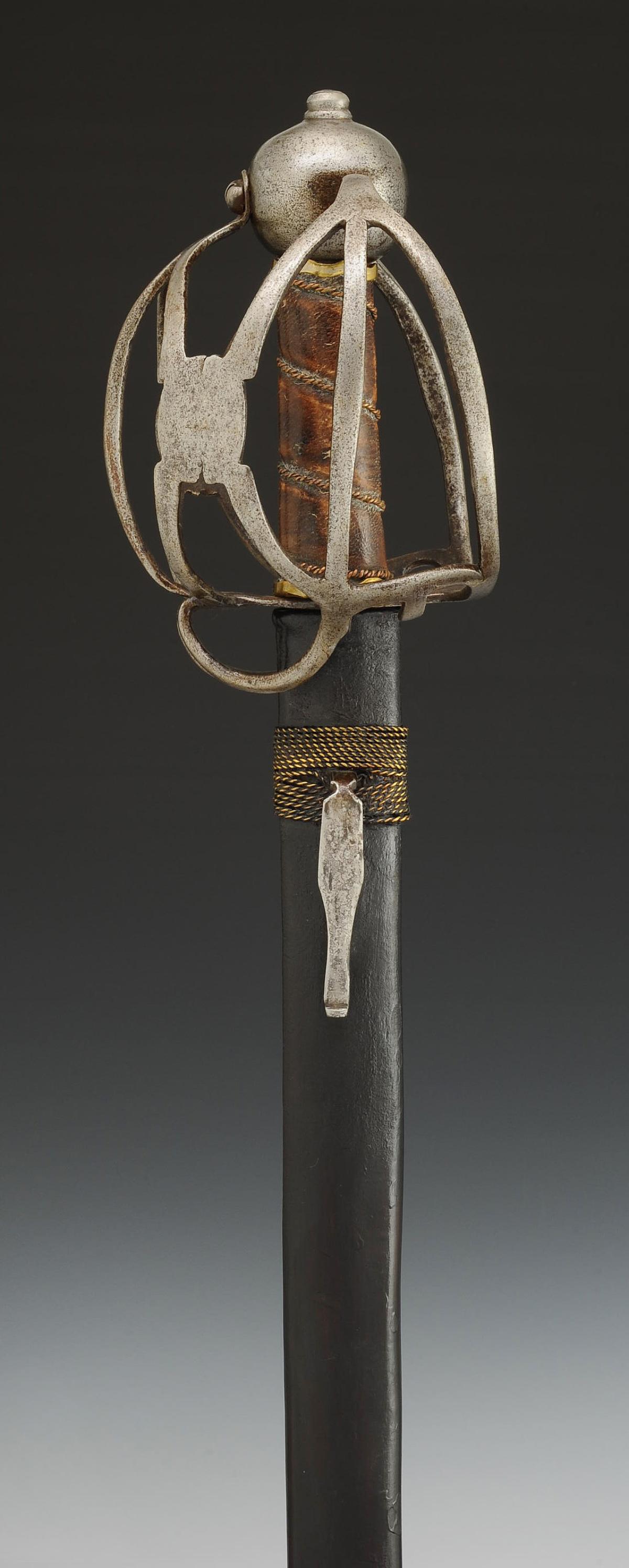
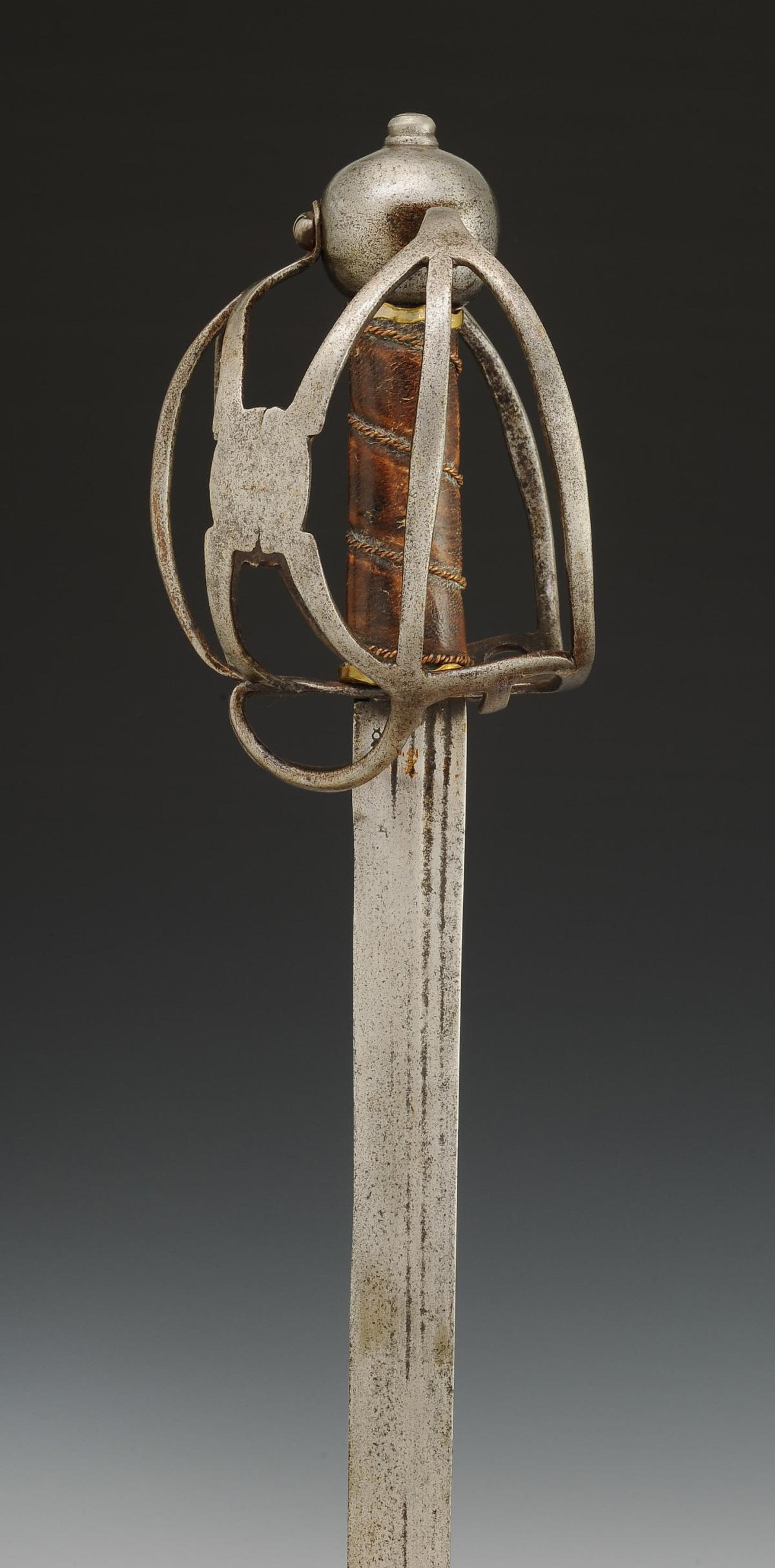
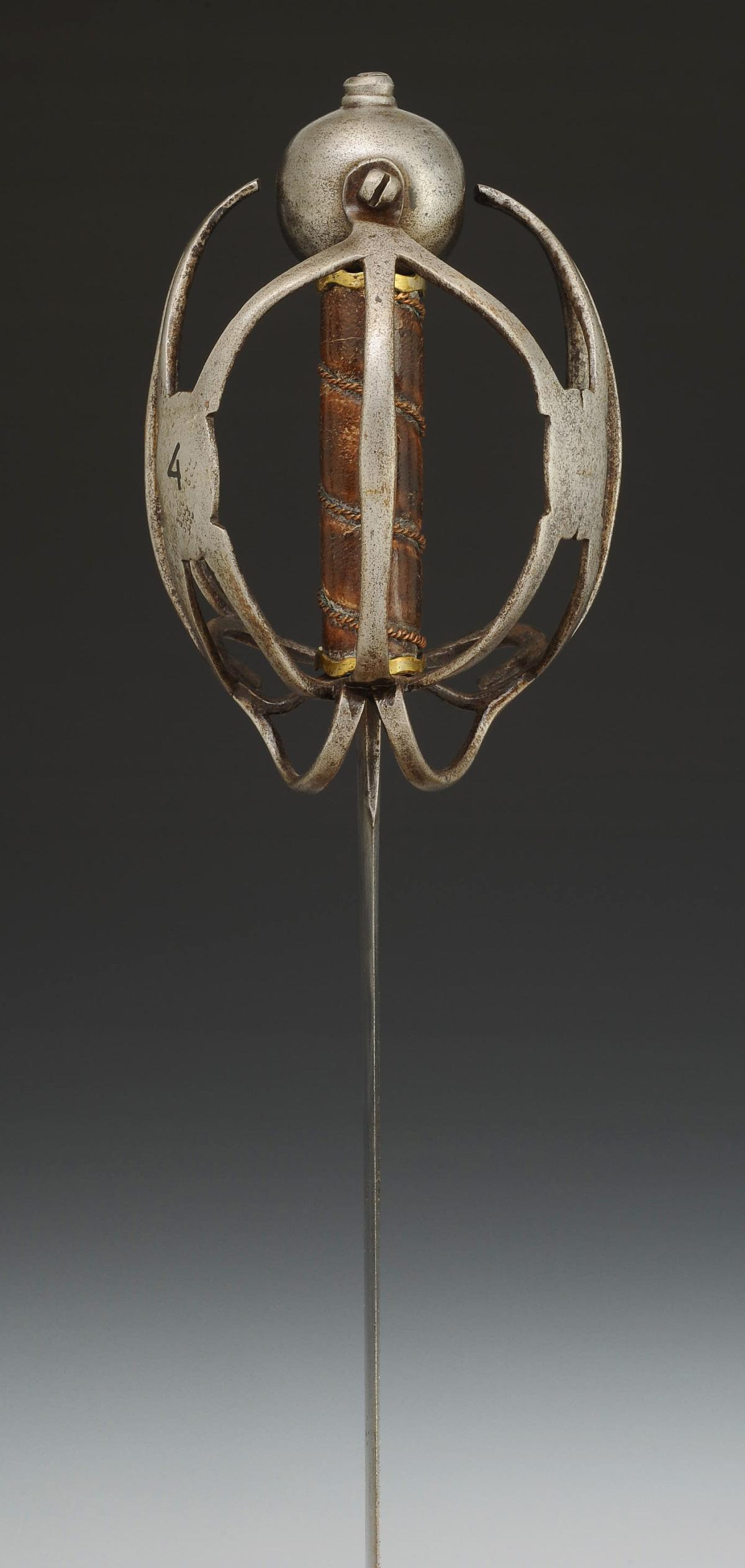
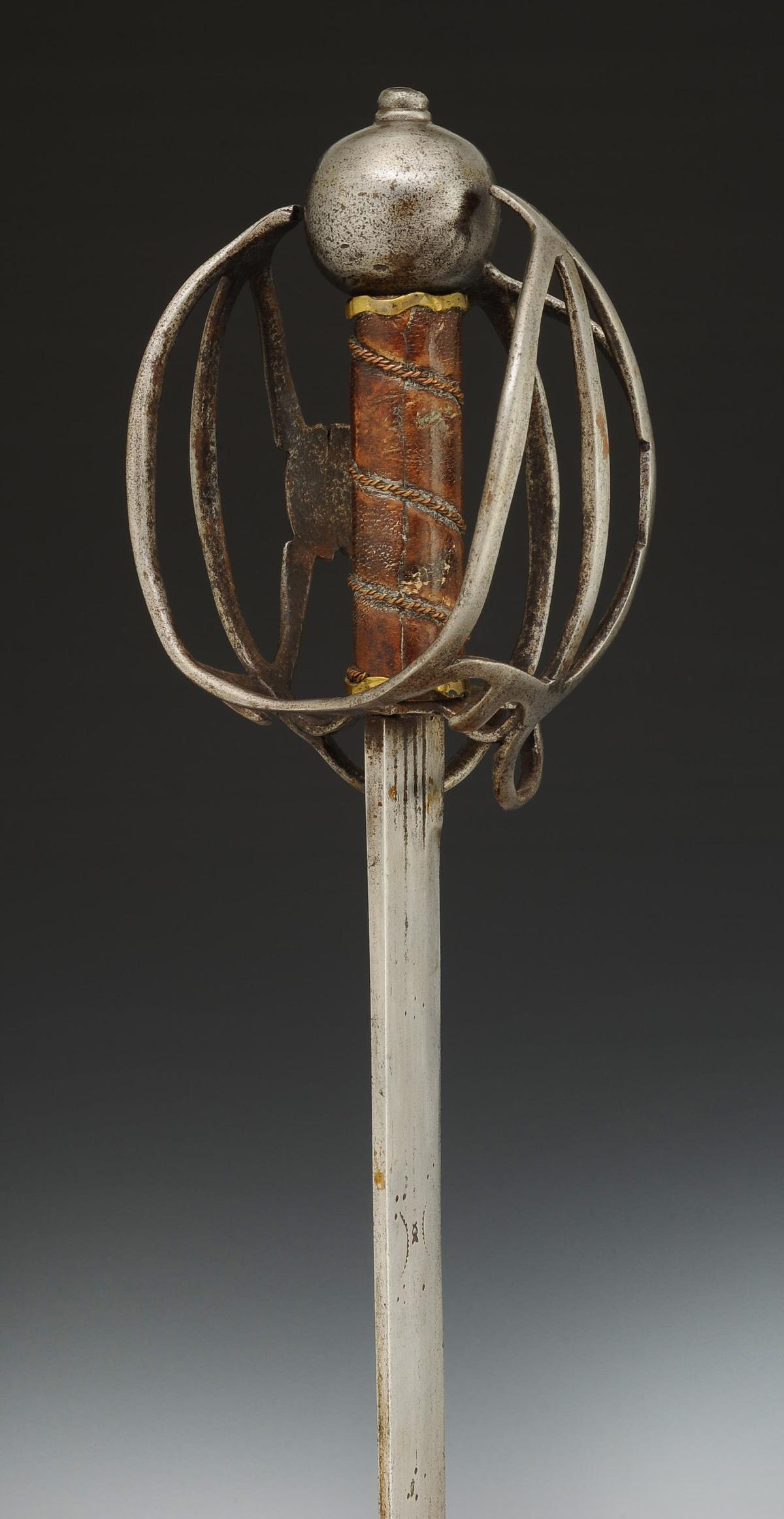
STRONG CAVALRY SWORD known as the "BACKSWORD" ENGLISH, ARSENAL MODEL, Kingdom of England, reign of James I, Charles I, circa 1610 to 1640. 34583


Sold out
STRONG CAVALRY SWORD known as "ENGLISH BACKSWORD," ARSENAL MODEL, Kingdom of England, reign of James I, Charles I, circa 1610 to 1640. 34583
Iron hilt. Basket guard. Wood grip wrapped in copper filigree leather and brass ferrules. Blade with back grooves and long back edge measuring 98 cm, marked with original Styrian stamps, currently in Austria near Graz. Wooden scabbard covered in calf leather with a 7 cm hook reinforced with twisted brass filigree and a 7.3 cm iron tip.
Total weight with scabbard: 1350 g - Without scabbard: 1050 g.
Kingdom of England
Reign of James I, Charles I, circa 1610 to 1640.
Good conservation condition, typical oxidation, leather of scabbard and stitching degraded, later re-glued and varnished.
PROVENANCE :
Ancienne collection PM.
HISTORICAL BACKGROUND:
Between 1550-1600, English swords began to have increasingly protective guards, particularly for mounted combat. Various hilt styles were used, from branches to rings, and gradually transitioning to basket hilts.
An early example is an English sword dating back to 1560-1570, showing an early type of basket hilt, a primarily single-edged blade, and strong hand protection.
This development predates the period of James I.
By the end of the 16th century, the backsword gradually evolved as a weapon suitable for military combat, especially for cavalrymen, distinguishing it from the narrower rapier blade.
Under James I, English hilts became more complex.
Research by John F. Hayward on English swords from 1600-1650 reveals a new form of backsword guard appearing in the second quarter of the 17th century, which gradually became the distinctive guard type for cavalrymen during the English Civil Wars.
Even after the monarchy was restored in 1660, strong swords with basket hilts remained widely used.
Reference :
34583
Next update Friday, november 6 at 13:30 PM
FOR ALL PURCHASES, PAYMENT IN MULTIPLE CHECKS POSSIBLE
bertrand.malvaux@wanadoo.fr 06 07 75 74 63
SHIPPING COSTS
Shipping costs are calculated only once per order for one or more items, all shipments are sent via registered mail, as this is the only way to have proof of dispatch and receipt.
For parcels whose value cannot be insured by the Post, shipments are entrusted to DHL or Fedex with real value insured, the service is of high quality but the cost is higher.
RETURN POLICY
Items can be returned within 8 days of receipt. They must be returned by registered mail at the sender's expense, in their original packaging, and in their original condition.
AUTHENTICITY
The selection of items offered on this site allows me to guarantee the authenticity of each piece described here, all items offered are guaranteed to be period and authentic, unless otherwise noted or restricted in the description.
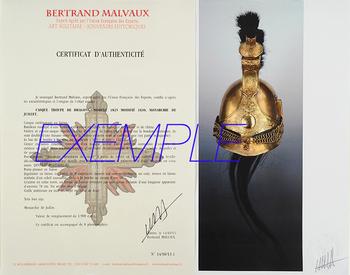
An authenticity certificate of the item including the description published on the site, the period, the sale price, accompanied by one or more color photographs is automatically provided for any item priced over 130 euros. Below this price, each certificate is charged 5 euros.
Only items sold by me are subject to an authenticity certificate, I do not provide any expert reports for items sold by third parties (colleagues or collectors).
FOR ALL PURCHASES, PAYMENT IN MULTIPLE CHECKS POSSIBLE
bertrand.malvaux@wanadoo.fr 06 07 75 74 63
An authenticity certificate of the item including the description published on the site, the period, the sale price, accompanied by one or more color photographs is automatically provided for any item priced over 130 euros. Below this price, each certificate is charged 5 euros.
Only items sold by me are subject to an authenticity certificate, I do not provide any expert reports for items sold by third parties (colleagues or collectors).