
SILVER SHOE BUCKLE belonging to General Guillaumer DELMAS, Revolution (1796). 34547
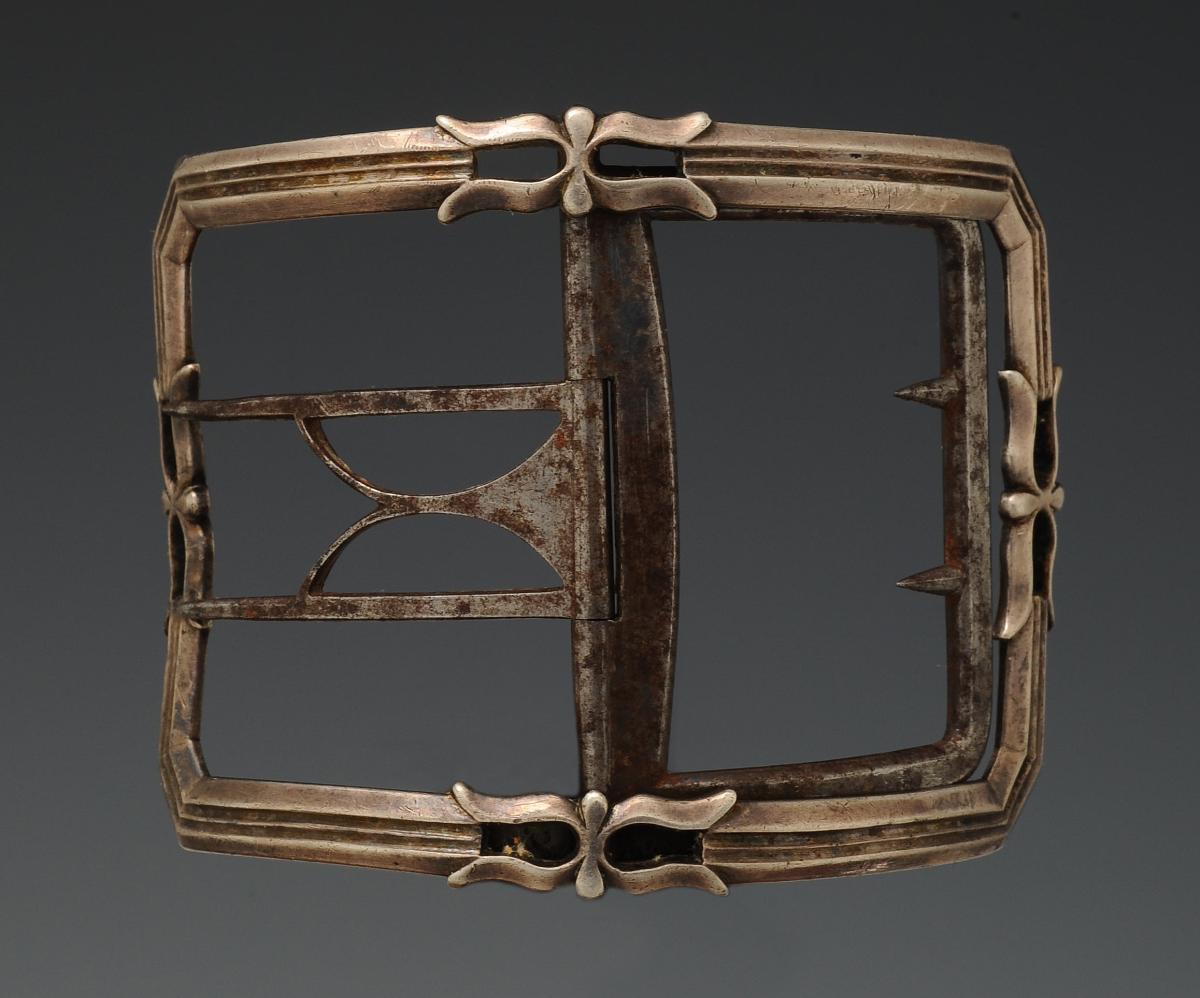
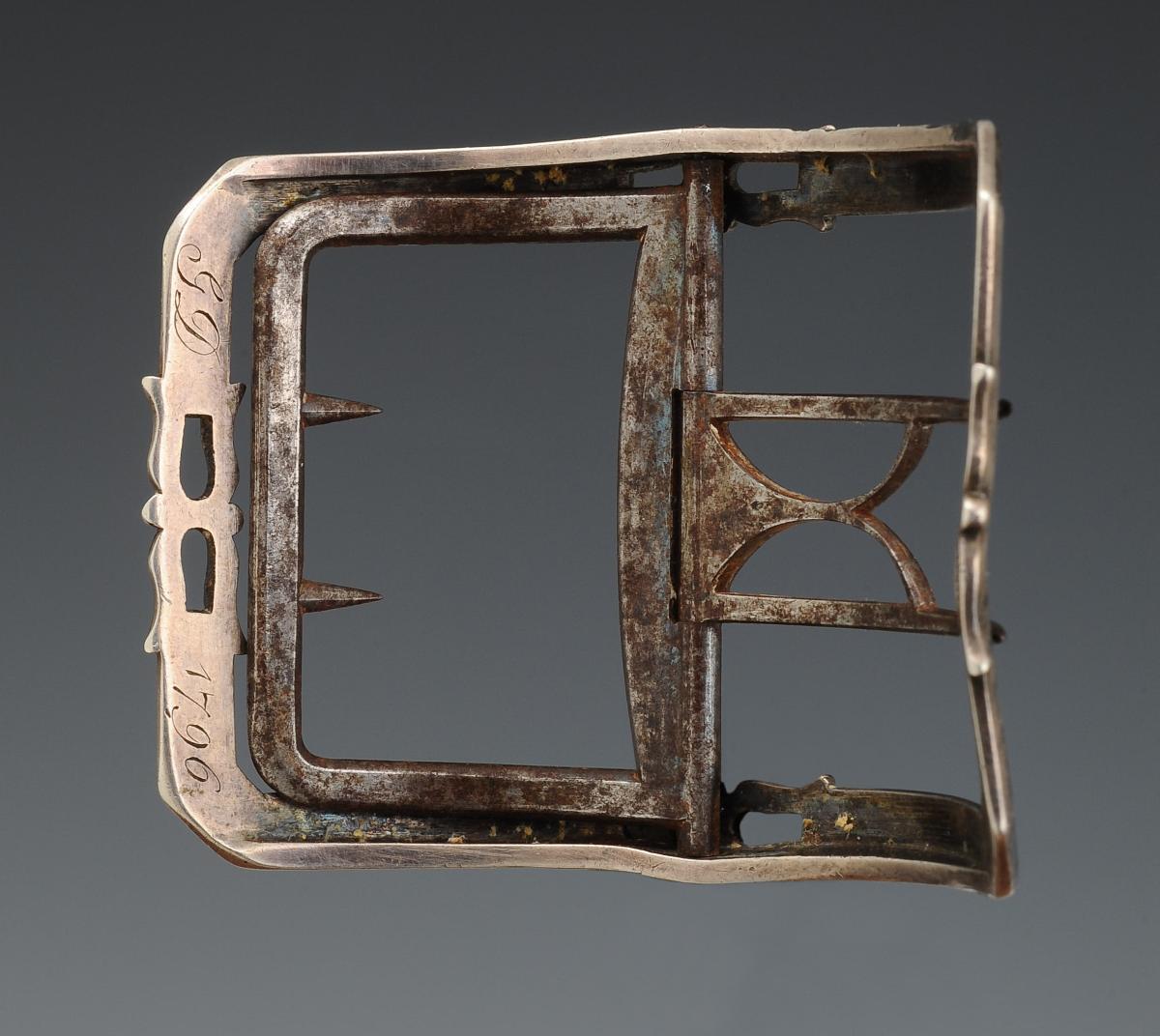
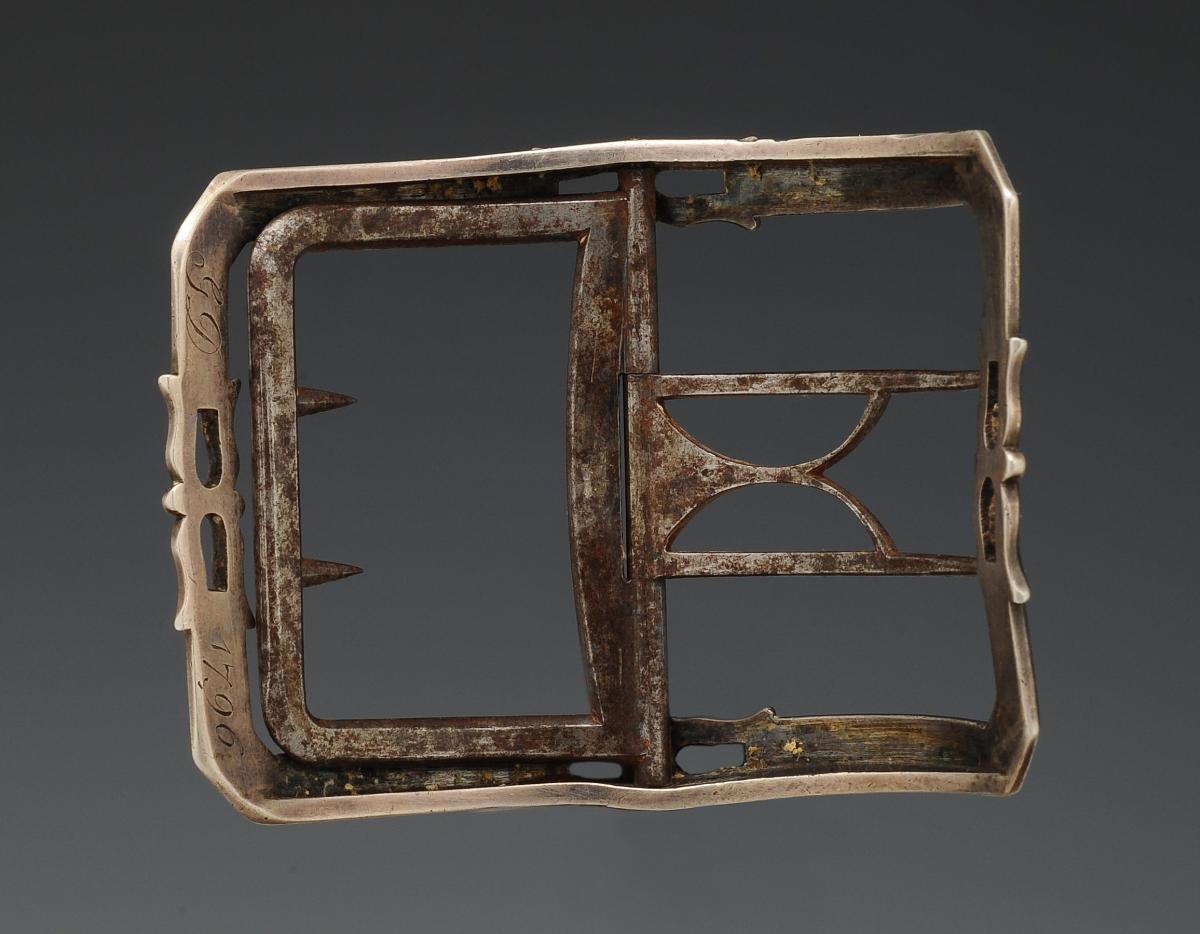
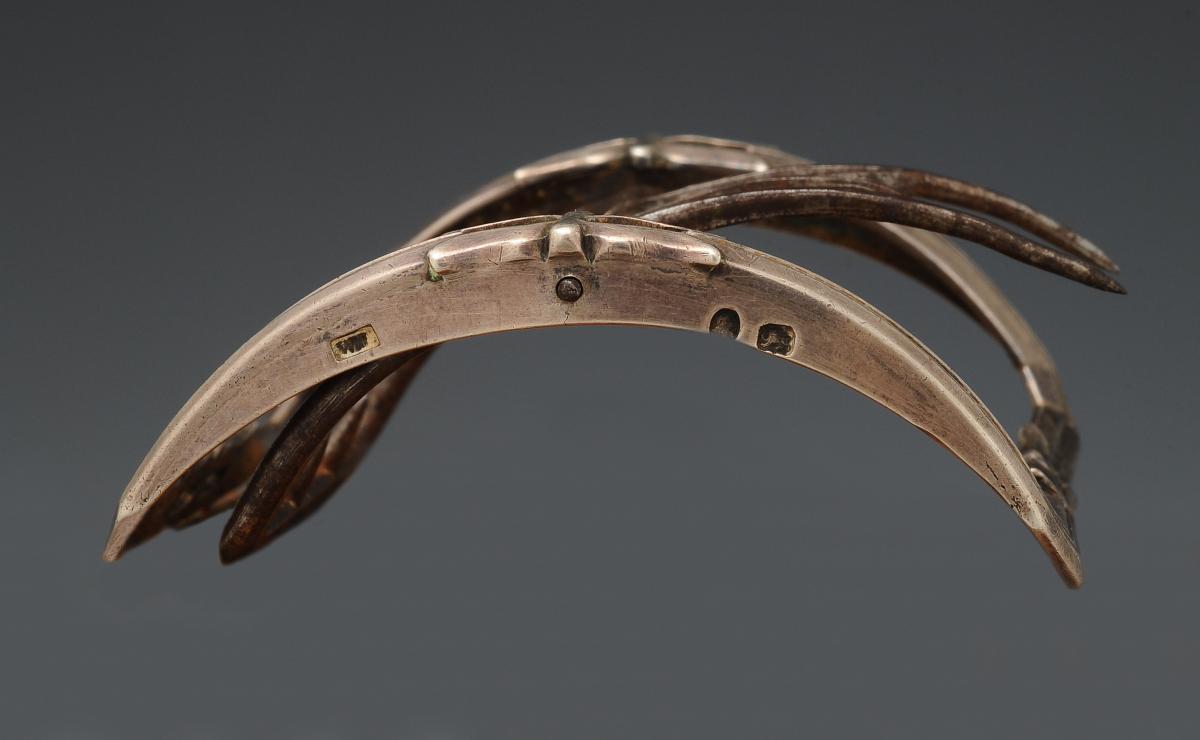

SILVER SHOE BUCKLE that belonged to General Guillaumer DELMAS, Revolution (1796).
Rectangular silver buckle with raised floral decoration, hollowed center, and steel hook.
H 5.6 cm, L without curvature 7.2 cm, L with curvature 9.1 cm.
Engraved "GD" and dated "1796" on the back, hallmarked.
France.
Revolution.
Very good condition.
BIOGRAPHY:
Antoine Guillaume Delmas de Murulhac, born on June 22, 1768 in Argentat (Corrèze) and died from his wounds at the Battle of Leipzig on October 30, 1813, was a French general of the Revolution and the Empire.
He was the eldest son of Pierre Delmas, Chevalier of Saint-Louis, a former captain in the Touraine-Infantry, and Françoise Plaze.
Old Regime:
He joined the Touraine Regiment at the age of eleven and fought in the American War of Independence with the Touraine Infantry Regiment, which was brought from the Antilles by the fleet commanded by Admiral de Grasse, and participated in the siege of Yorktown in October 1781. However, his fiery passions soon led him into such excesses that, despite the affection of his colonel, Viscount de Mirabeau, he was forced to leave his regiment in 1788.
Wars of the Revolution:
Chosen unanimously in 1791 to command the 1st volunteer battalion of Corrèze, he quickly acquired a brilliant reputation in the Army of the Rhine, where one day he went to retrieve a flag in the midst of enemy cavalry, killed two hussars defending it, and brought it back to applause from the entire vanguard. His skill and courage soon earned him the rank of brigadier general and command of all the vanguard's infantry.
Sent to Landau, Delmas was threatened with dismissal by the representative of the people and, denounced by the Jacobins of that city, he managed to escape. After the lifting of the blockade, he went to fight on the Kaiserslautern line. The Jacobin clubs of Spire renewed the denunciations of Landau. He ended his day gloriously on the battlefield, surrendered himself as a prisoner, was taken to Paris, but was soon demanded back by the army.
Returning to duty at the head of a division and scouting the position of the fortress of Bois-le-Duc, which was covered by marshes and floods, he suddenly found himself in front of Fort d'Orthen, discovered a weak point in the palisades, and noticed hesitation among the garrison. He then turned to his officers and eight hussars accompanying him, saying, "My friends, the fort is ours; whoever loves me, follow me," and spurring his horse, he crossed the ditch, climbed the parapet, and was the first to enter the fort. The 50 men defending it, amazed by such audacity, were cut down, pushed beyond the walls, and pursued onto the glacis of the fort, which the general had his division's artillery bombard from Fort d'Orthen. This bold action led to the surrender of the important fort of Crèvecœur.
By the end of 1796, Delmas commanded a division in the Army of the Rhine under Moreau's orders. He returned to France after a serious injury, joined the Army of Italy, fought the Tyroleans, received the chief command from Joubert and kept it until Schérer arrived.
He covered himself in glory and rendered distinguished services at the Battle of Magnano. The Directory offered him command of the 1st division (Paris), which he refused, received a full suit of armor from the government as a sign of his outstanding service, and once again distinguished himself in the Army of the Rhine. He then returned to Italy as chief lieutenant of the general in command.
Consulate and Napoleonic Wars:
In 1801, he took command of the troops in Piedmont.
On Easter day, April 18, 1802, the consecration of the Concordat, signed on July 15, 1801, was celebrated with great pomp in the cathedral of Paris, amidst military splendor and the sound of artillery salutes. Several generals, including Augereau and Delmas, believed it necessary to protest to Bonaparte against this ceremony.
According to Charles Thoumas, the Republican General Delmas was reputed to have said: "It's quite a beautiful farce, lacking a million men who shed their blood to overthrow what is now being reinstated!" This is said to be the cause of the disgrace that befell him until 1813.
However, André Castelot attributes this remark to Augereau. Delmas's disgrace seems to have stemmed more from his opposition to Bonaparte's proposal for a lifetime consulate: "I'll take that little bugger by the boot and make him pass under my horse's belly!" he reportedly shouted about the First Consul during a dinner with other senior officers at Oudinot's.
In 1813, he offered his sword to the Emperor, fought with the same courage, and was fatally wounded at Leipzig.
Rectangular silver buckle with raised floral decoration, hollowed center, and steel hook.
H 5.6 cm, L without curvature 7.2 cm, L with curvature 9.1 cm.
Engraved "GD" and dated "1796" on the back, hallmarked.
France.
Revolution.
Very good condition.
BIOGRAPHY:
Antoine Guillaume Delmas de Murulhac, born on June 22, 1768 in Argentat (Corrèze) and died from his wounds at the Battle of Leipzig on October 30, 1813, was a French general of the Revolution and the Empire.
He was the eldest son of Pierre Delmas, Chevalier of Saint-Louis, a former captain in the Touraine-Infantry, and Françoise Plaze.
Old Regime:
He joined the Touraine Regiment at the age of eleven and fought in the American War of Independence with the Touraine Infantry Regiment, which was brought from the Antilles by the fleet commanded by Admiral de Grasse, and participated in the siege of Yorktown in October 1781. However, his fiery passions soon led him into such excesses that, despite the affection of his colonel, Viscount de Mirabeau, he was forced to leave his regiment in 1788.
Wars of the Revolution:
Chosen unanimously in 1791 to command the 1st volunteer battalion of Corrèze, he quickly acquired a brilliant reputation in the Army of the Rhine, where one day he went to retrieve a flag in the midst of enemy cavalry, killed two hussars defending it, and brought it back to applause from the entire vanguard. His skill and courage soon earned him the rank of brigadier general and command of all the vanguard's infantry.
Sent to Landau, Delmas was threatened with dismissal by the representative of the people and, denounced by the Jacobins of that city, he managed to escape. After the lifting of the blockade, he went to fight on the Kaiserslautern line. The Jacobin clubs of Spire renewed the denunciations of Landau. He ended his day gloriously on the battlefield, surrendered himself as a prisoner, was taken to Paris, but was soon demanded back by the army.
Returning to duty at the head of a division and scouting the position of the fortress of Bois-le-Duc, which was covered by marshes and floods, he suddenly found himself in front of Fort d'Orthen, discovered a weak point in the palisades, and noticed hesitation among the garrison. He then turned to his officers and eight hussars accompanying him, saying, "My friends, the fort is ours; whoever loves me, follow me," and spurring his horse, he crossed the ditch, climbed the parapet, and was the first to enter the fort. The 50 men defending it, amazed by such audacity, were cut down, pushed beyond the walls, and pursued onto the glacis of the fort, which the general had his division's artillery bombard from Fort d'Orthen. This bold action led to the surrender of the important fort of Crèvecœur.
By the end of 1796, Delmas commanded a division in the Army of the Rhine under Moreau's orders. He returned to France after a serious injury, joined the Army of Italy, fought the Tyroleans, received the chief command from Joubert and kept it until Schérer arrived.
He covered himself in glory and rendered distinguished services at the Battle of Magnano. The Directory offered him command of the 1st division (Paris), which he refused, received a full suit of armor from the government as a sign of his outstanding service, and once again distinguished himself in the Army of the Rhine. He then returned to Italy as chief lieutenant of the general in command.
Consulate and Napoleonic Wars:
In 1801, he took command of the troops in Piedmont.
On Easter day, April 18, 1802, the consecration of the Concordat, signed on July 15, 1801, was celebrated with great pomp in the cathedral of Paris, amidst military splendor and the sound of artillery salutes. Several generals, including Augereau and Delmas, believed it necessary to protest to Bonaparte against this ceremony.
According to Charles Thoumas, the Republican General Delmas was reputed to have said: "It's quite a beautiful farce, lacking a million men who shed their blood to overthrow what is now being reinstated!" This is said to be the cause of the disgrace that befell him until 1813.
However, André Castelot attributes this remark to Augereau. Delmas's disgrace seems to have stemmed more from his opposition to Bonaparte's proposal for a lifetime consulate: "I'll take that little bugger by the boot and make him pass under my horse's belly!" he reportedly shouted about the First Consul during a dinner with other senior officers at Oudinot's.
In 1813, he offered his sword to the Emperor, fought with the same courage, and was fatally wounded at Leipzig.
Price :
250,00 €
| Destination | Envoi recommandé | Envoi Recommandé + Express |
|---|---|---|
| Shipping France | 9,00 € | 30,00 € |
| Shipping Europe | 17,00 € | 50,00 € |
| Shipping world | 30,00 € | 70,00 € |
Insurance (1%) :
2,50 €
Reference :
34547
Next update Friday, octobre 2 at 13:30 PM
FOR ALL PURCHASES, PAYMENT IN MULTIPLE CHECKS POSSIBLE
bertrand.malvaux@wanadoo.fr 06 07 75 74 63
SHIPPING COSTS
Shipping costs are calculated only once per order for one or more items, all shipments are sent via registered mail, as this is the only way to have proof of dispatch and receipt.
For parcels whose value cannot be insured by the Post, shipments are entrusted to DHL or Fedex with real value insured, the service is of high quality but the cost is higher.
RETURN POLICY
Items can be returned within 8 days of receipt. They must be returned by registered mail at the sender's expense, in their original packaging, and in their original condition.
AUTHENTICITY
The selection of items offered on this site allows me to guarantee the authenticity of each piece described here, all items offered are guaranteed to be period and authentic, unless otherwise noted or restricted in the description.
An authenticity certificate of the item including the description published on the site, the period, the sale price, accompanied by one or more color photographs is automatically provided for any item priced over 130 euros. Below this price, each certificate is charged 5 euros.
Only items sold by me are subject to an authenticity certificate, I do not provide any expert reports for items sold by third parties (colleagues or collectors).
FOR ALL PURCHASES, PAYMENT IN MULTIPLE CHECKS POSSIBLE
bertrand.malvaux@wanadoo.fr 06 07 75 74 63
An authenticity certificate of the item including the description published on the site, the period, the sale price, accompanied by one or more color photographs is automatically provided for any item priced over 130 euros. Below this price, each certificate is charged 5 euros.
Only items sold by me are subject to an authenticity certificate, I do not provide any expert reports for items sold by third parties (colleagues or collectors).