
SHAKO PLATE OF THE 1st BATTALION OF THE FLOTILLA 1805 OR OF THE 1st REGIMENT OF THE FLOTILLA 1806, First Empire. 34244

SHAKO PLATE OF THE 1st BATTALION OF THE FLOTILLA 1805 OR OF THE 1st REGIMENT OF THE FLOTILLA 1806, First Empire. 34244
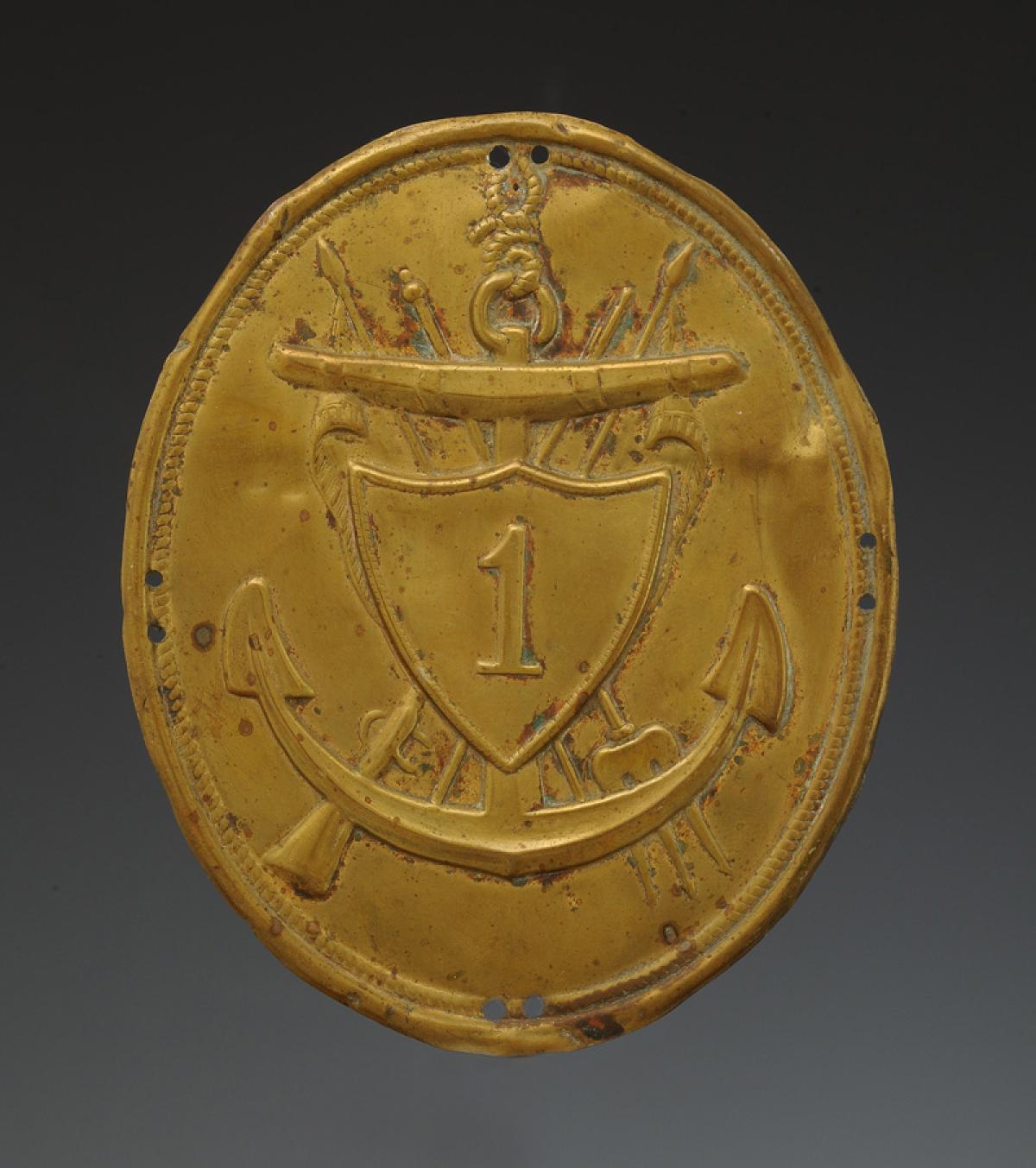
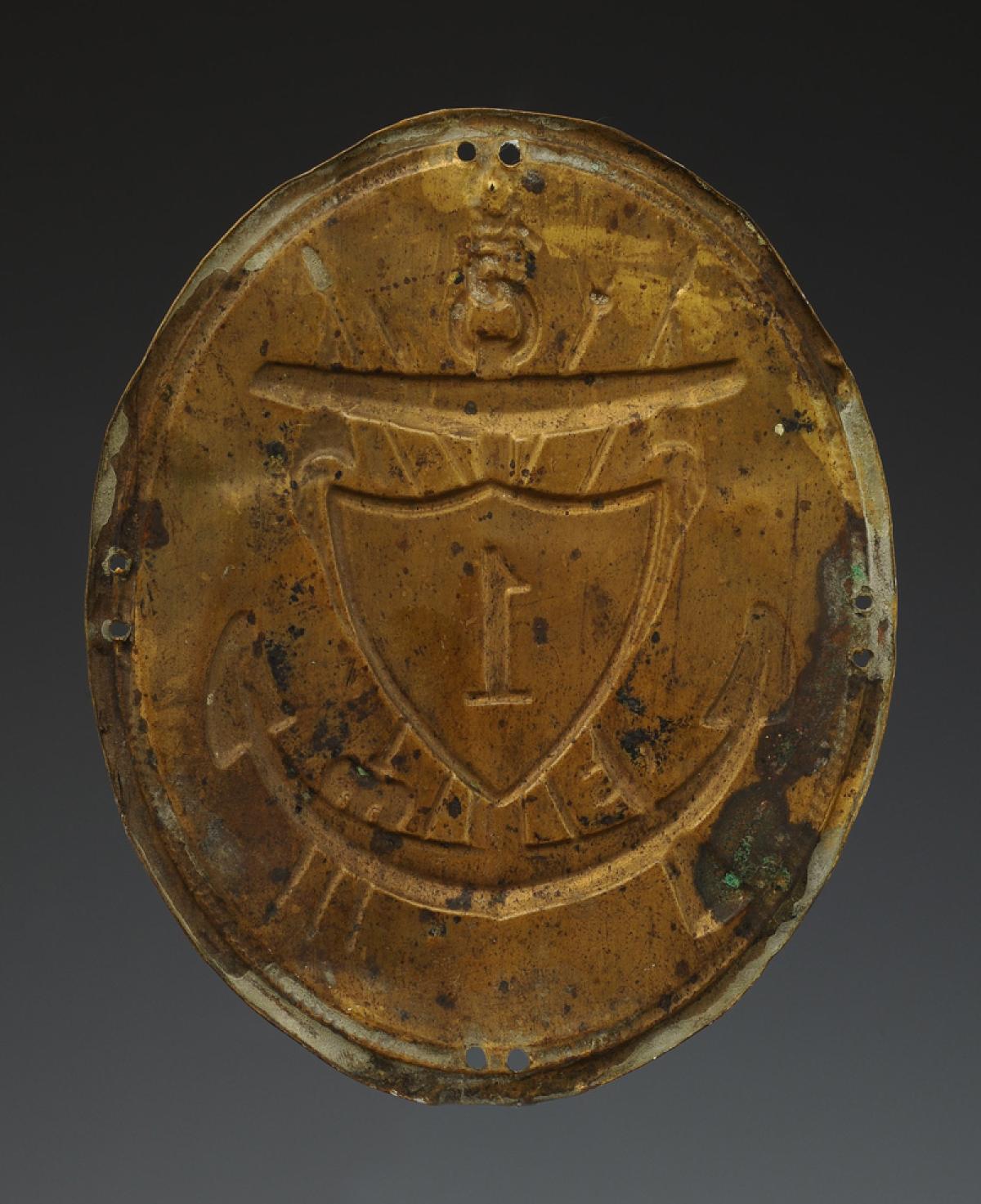
Oval brass plate embossed in relief with a naval anchor with the number "1" crest, placed on a trophy of arms, H 11.4 cm, width 9.4 cm.
France.
First Empire.
Good condition.
HISTORICAL BACKGROUND:
At the beginning of the Consulate, there was a plan to renew a previous experience from the past by creating a fleet of small flat-bottomed boats, sailing with oars, to transport an invasion army against England. Huge sums were invested to build this fleet. For example, the arsenal of Le Havre undertook the construction of 2 Spanish-type gunboats. DECRES asked Admiral GRAVINA, commanding a Spanish squadron anchored in Brest, to oversee and speed up the construction of these gunboats. As of March 10, 1801, the light fleet of Boulogne consisted of 12 divisions, carrying 30,000 men, representing the landing force. In 1803, it was renamed the "National Flotilla" and could now transport 150,000 men and 8,600 horses. The General Inspector of the flotilla was the engineer FORFAIT under the command of LATOUCHE-TREVILLE.
The bold move by NELSON on August 15 and 16, 1801, against the National Flotilla in Boulogne, was a resounding failure for the British Navy, which lost many vessels, including 8 ships sunk and 4 others boarded, resulting in the loss of 340 sailors, including 45 officers. Only 34 French sailors were killed.
The Peace of Amiens now redirected the shipyards' activities towards the large armaments needed for colonial expeditions. In 1803, when Peace broke, the efforts were once again focused on the invasion fleet. They were spurred on by the enthusiasm of the national flotilla commission, which systematically dealt with all private contractors for the construction of gunboats, such as those in Lorient. From 1801 to 1805, 300 gunboat sloops were built, mastheaded with three masts, carrying 10 to 15 oars on each side, 2 24 or 18-pounder cannons, and swivel guns on fork mounts. There were various types of vessels: prames, gunboats, barges, transports for troops, stables, artillery, or equipment. The naval shipyards and manufacturers redoubled their efforts, encouraged by "patriotic donations", as during the Revolution. Subscriptions came to the aid of the State's coffers. The city of Paris financed 90 gunboat sloops. Between Etaples and Ostend in July 1805, 2198 vessels were built ready to cross the sea with 160,920 soldiers, including 21,000 sailors and 8,745 horses.
A gunboat is commanded by an Ensign, assisted by 2 petty officers, 1 gunnery master, 2 gunnery assistants, and 15 sailors, which can be supplemented by 30 infantrymen with 1 lieutenant and 1 artillery non-commissioned officer.
* In the archives, the term "flotilla" is sometimes spelled with a single "T."
An order dated 14 Brumaire Year XII (November 6, 1803) in Boulogne dictates:
"The crew of a gunboat will be increased to 30 men, including an officer and drummer. There will be detachments commanded in the corps so that whenever the flotilla divisions would go out to sea for the night or to fight the enemy… each vessel (gunboat or gunship) will receive a crew supplement of 10 men and a sergeant provided by the same company..."
6 to 9 gunboats form a section capable of accommodating the manpower of 9 companies.
2 sections form 1 division that can accommodate 1/2 brigade under the direction of a lieutenant of a ship or a frigate captain.
Role of the flotillas:
In addition to the specific role of the national flotilla, which was intended to invade England, the use of armed light boats served as coastguards on the Atlantic and Mediterranean coasts, protecting squadrons at anchor in roadsteads or ports, as well as escorting maritime or river transports. They also protected coastal fishing, whose boats were often intercepted by the Royal Navy seeking to extract information from fishermen about the fleet's status or ongoing naval constructions. Supported on land by the coastal batteries of the Coast Guards, the sailors of the flotillas engaged in gunfire against the frequent English incursions on the French coasts. Indeed, under cover of night, "Marines" would silently land and destroy telegraph stations (Chappe), lightly armed coastal batteries, or simply replenish water supplies. Sometimes they would retrieve or drop off a few spies. Throughout the Empire's period, belligerent flotillas clashed on all seas with varying fortunes for either side.
Later, after the dispersal of the Boulogne flotilla in 1805, the crews were deployed along the Empire's coasts. In service on land, the flotilla sailors supported and assisted pontoon troops, naval workers, or army engineering in bridge construction by transporting materials, weapons, provisions, and ammunition. They sometimes fought, like skirmishers, by "clearing out" enemy islets or outposts.
The decree of July 30, 1805, formed 24 flotilla crews. They had the same composition as ship crews but manned lighter vessels, such as corvettes, brigs, galleys, gunboats, gunships, barges, cutters, barges, etc.
FLOTILLA REGIMENTS
Decree of January 25, 1807
The imperial decree of April 7, 1808, establishing the organization of 5 flotilla battalions, refers in its first article to the suppression of the three flotilla regiments created on January 25, 1807.
The 1st Regiment of Flotilla became the 43rd Flotilla Crew.
The 2nd Regiment of Flotilla became the 44th Flotilla Crew.
The 3rd Regiment of Flotilla.
Oval brass plate embossed in relief with a naval anchor with the number "1" crest, placed on a trophy of arms, H 11.4 cm, width 9.4 cm.
France.
First Empire.
Good condition.
HISTORICAL BACKGROUND:
At the beginning of the Consulate, there was a plan to renew a previous experience from the past by creating a fleet of small flat-bottomed boats, sailing with oars, to transport an invasion army against England. Huge sums were invested to build this fleet. For example, the arsenal of Le Havre undertook the construction of 2 Spanish-type gunboats. DECRES asked Admiral GRAVINA, commanding a Spanish squadron anchored in Brest, to oversee and speed up the construction of these gunboats. As of March 10, 1801, the light fleet of Boulogne consisted of 12 divisions, carrying 30,000 men, representing the landing force. In 1803, it was renamed the "National Flotilla" and could now transport 150,000 men and 8,600 horses. The General Inspector of the flotilla was the engineer FORFAIT under the command of LATOUCHE-TREVILLE.
The bold move by NELSON on August 15 and 16, 1801, against the National Flotilla in Boulogne, was a resounding failure for the British Navy, which lost many vessels, including 8 ships sunk and 4 others boarded, resulting in the loss of 340 sailors, including 45 officers. Only 34 French sailors were killed.
The Peace of Amiens now redirected the shipyards' activities towards the large armaments needed for colonial expeditions. In 1803, when Peace broke, the efforts were once again focused on the invasion fleet. They were spurred on by the enthusiasm of the national flotilla commission, which systematically dealt with all private contractors for the construction of gunboats, such as those in Lorient. From 1801 to 1805, 300 gunboat sloops were built, mastheaded with three masts, carrying 10 to 15 oars on each side, 2 24 or 18-pounder cannons, and swivel guns on fork mounts. There were various types of vessels: prames, gunboats, barges, transports for troops, stables, artillery, or equipment. The naval shipyards and manufacturers redoubled their efforts, encouraged by "patriotic donations", as during the Revolution. Subscriptions came to the aid of the State's coffers. The city of Paris financed 90 gunboat sloops. Between Etaples and Ostend in July 1805, 2198 vessels were built ready to cross the sea with 160,920 soldiers, including 21,000 sailors and 8,745 horses.
A gunboat is commanded by an Ensign, assisted by 2 petty officers, 1 gunnery master, 2 gunnery assistants, and 15 sailors, which can be supplemented by 30 infantrymen with 1 lieutenant and 1 artillery non-commissioned officer.
* In the archives, the term "flotilla" is sometimes spelled with a single "T."
An order dated 14 Brumaire Year XII (November 6, 1803) in Boulogne dictates:
"The crew of a gunboat will be increased to 30 men, including an officer and drummer. There will be detachments commanded in the corps so that whenever the flotilla divisions would go out to sea for the night or to fight the enemy… each vessel (gunboat or gunship) will receive a crew supplement of 10 men and a sergeant provided by the same company..."
6 to 9 gunboats form a section capable of accommodating the manpower of 9 companies.
2 sections form 1 division that can accommodate 1/2 brigade under the direction of a lieutenant of a ship or a frigate captain.
Role of the flotillas:
In addition to the specific role of the national flotilla, which was intended to invade England, the use of armed light boats served as coastguards on the Atlantic and Mediterranean coasts, protecting squadrons at anchor in roadsteads or ports, as well as escorting maritime or river transports. They also protected coastal fishing, whose boats were often intercepted by the Royal Navy seeking to extract information from fishermen about the fleet's status or ongoing naval constructions. Supported on land by the coastal batteries of the Coast Guards, the sailors of the flotillas engaged in gunfire against the frequent English incursions on the French coasts. Indeed, under cover of night, "Marines" would silently land and destroy telegraph stations (Chappe), lightly armed coastal batteries, or simply replenish water supplies. Sometimes they would retrieve or drop off a few spies. Throughout the Empire's period, belligerent flotillas clashed on all seas with varying fortunes for either side.
Later, after the dispersal of the Boulogne flotilla in 1805, the crews were deployed along the Empire's coasts. In service on land, the flotilla sailors supported and assisted pontoon troops, naval workers, or army engineering in bridge construction by transporting materials, weapons, provisions, and ammunition. They sometimes fought, like skirmishers, by "clearing out" enemy islets or outposts.
The decree of July 30, 1805, formed 24 flotilla crews. They had the same composition as ship crews but manned lighter vessels, such as corvettes, brigs, galleys, gunboats, gunships, barges, cutters, barges, etc.
FLOTILLA REGIMENTS
Decree of January 25, 1807
The imperial decree of April 7, 1808, establishing the organization of 5 flotilla battalions, refers in its first article to the suppression of the three flotilla regiments created on January 25, 1807.
The 1st Regiment of Flotilla became the 43rd Flotilla Crew.
The 2nd Regiment of Flotilla became the 44th Flotilla Crew.
The 3rd Regiment of Flotilla.
Price :
1 300,00 €
| Destination | Envoi recommandé | Envoi Recommandé + Express |
|---|---|---|
| Shipping France | 9,00 € | 30,00 € |
| Shipping Europe | 17,00 € | 50,00 € |
| Shipping world | 30,00 € | 70,00 € |
Insurance (1%) :
13,00 €
Reference :
34244
Next update Friday, octobre 23 at 13:30 PM
FOR ALL PURCHASES, PAYMENT IN MULTIPLE CHECKS POSSIBLE
bertrand.malvaux@wanadoo.fr 06 07 75 74 63
SHIPPING COSTS
Shipping costs are calculated only once per order for one or more items, all shipments are sent via registered mail, as this is the only way to have proof of dispatch and receipt.
For parcels whose value cannot be insured by the Post, shipments are entrusted to DHL or Fedex with real value insured, the service is of high quality but the cost is higher.
RETURN POLICY
Items can be returned within 8 days of receipt. They must be returned by registered mail at the sender's expense, in their original packaging, and in their original condition.
AUTHENTICITY
The selection of items offered on this site allows me to guarantee the authenticity of each piece described here, all items offered are guaranteed to be period and authentic, unless otherwise noted or restricted in the description.
An authenticity certificate of the item including the description published on the site, the period, the sale price, accompanied by one or more color photographs is automatically provided for any item priced over 130 euros. Below this price, each certificate is charged 5 euros.
Only items sold by me are subject to an authenticity certificate, I do not provide any expert reports for items sold by third parties (colleagues or collectors).
FOR ALL PURCHASES, PAYMENT IN MULTIPLE CHECKS POSSIBLE
bertrand.malvaux@wanadoo.fr 06 07 75 74 63
An authenticity certificate of the item including the description published on the site, the period, the sale price, accompanied by one or more color photographs is automatically provided for any item priced over 130 euros. Below this price, each certificate is charged 5 euros.
Only items sold by me are subject to an authenticity certificate, I do not provide any expert reports for items sold by third parties (colleagues or collectors).