
STRONG CAVALRY SWORD, model 1734, "DRAGONS DE LHOSPITAL", Former Monarchy. 34001

Sold out
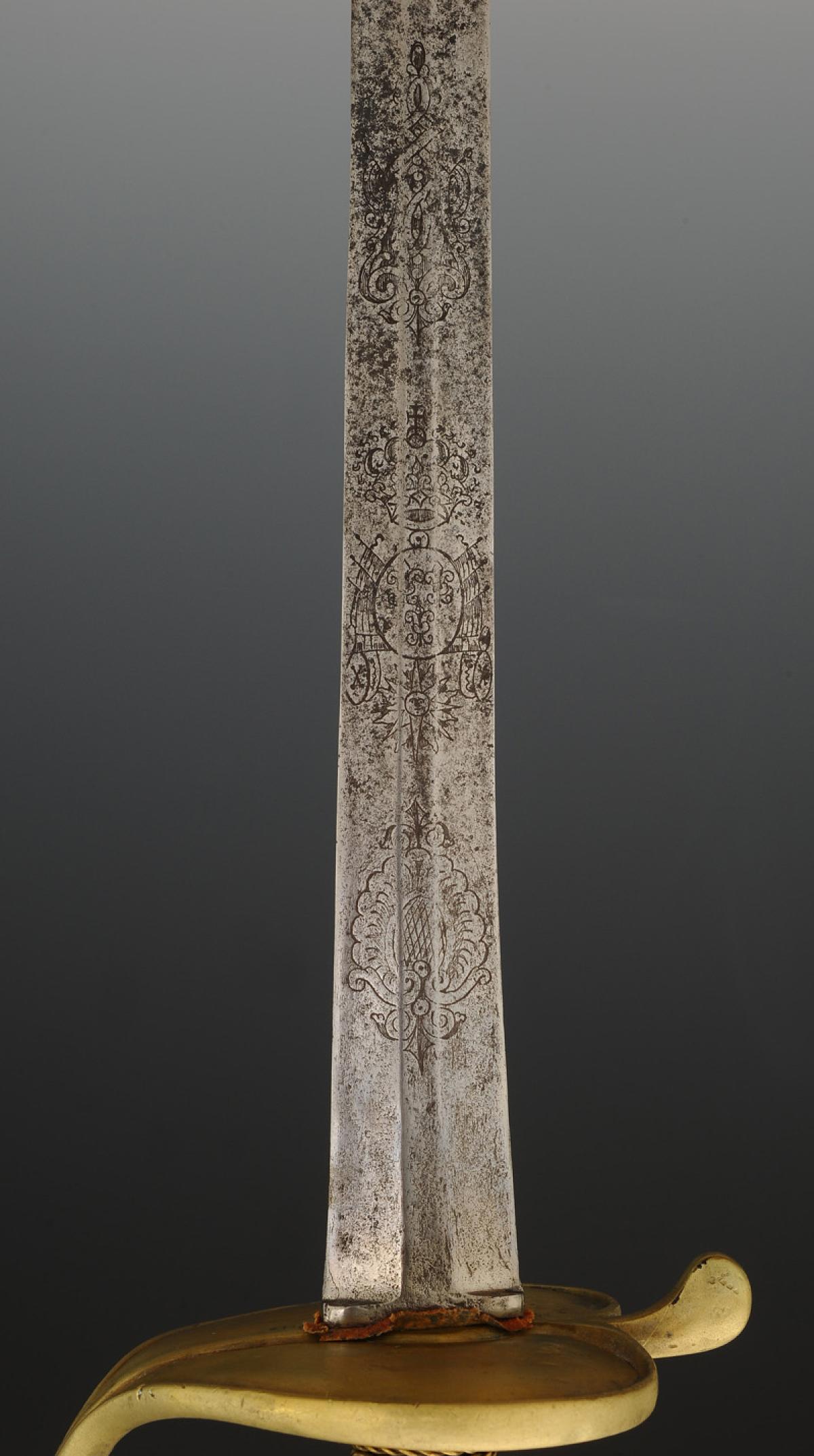
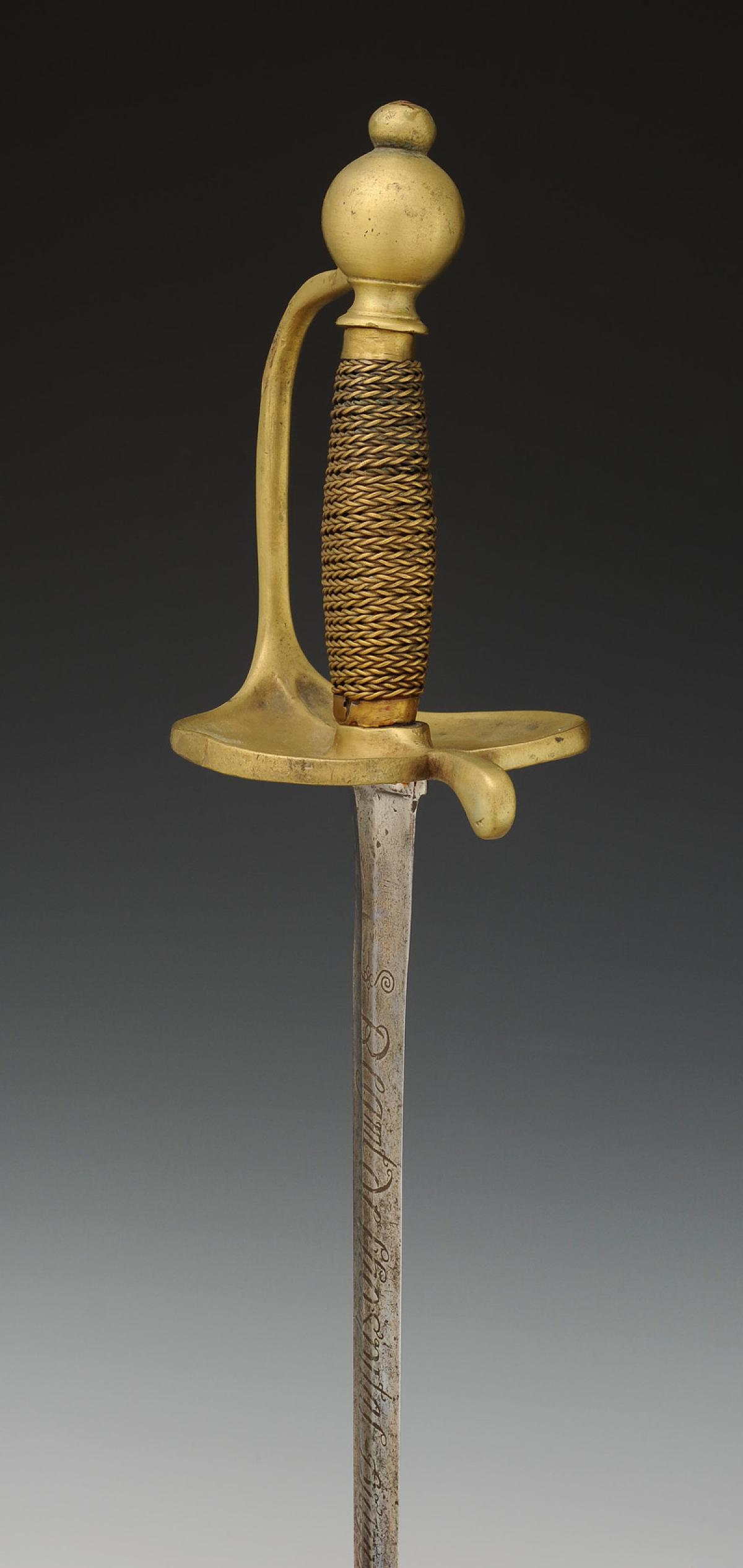
STRONG CAVALRY SWORD, model 1734, "DRAGONS DE L'HÔPITAL", Ancient Monarchy. 34001
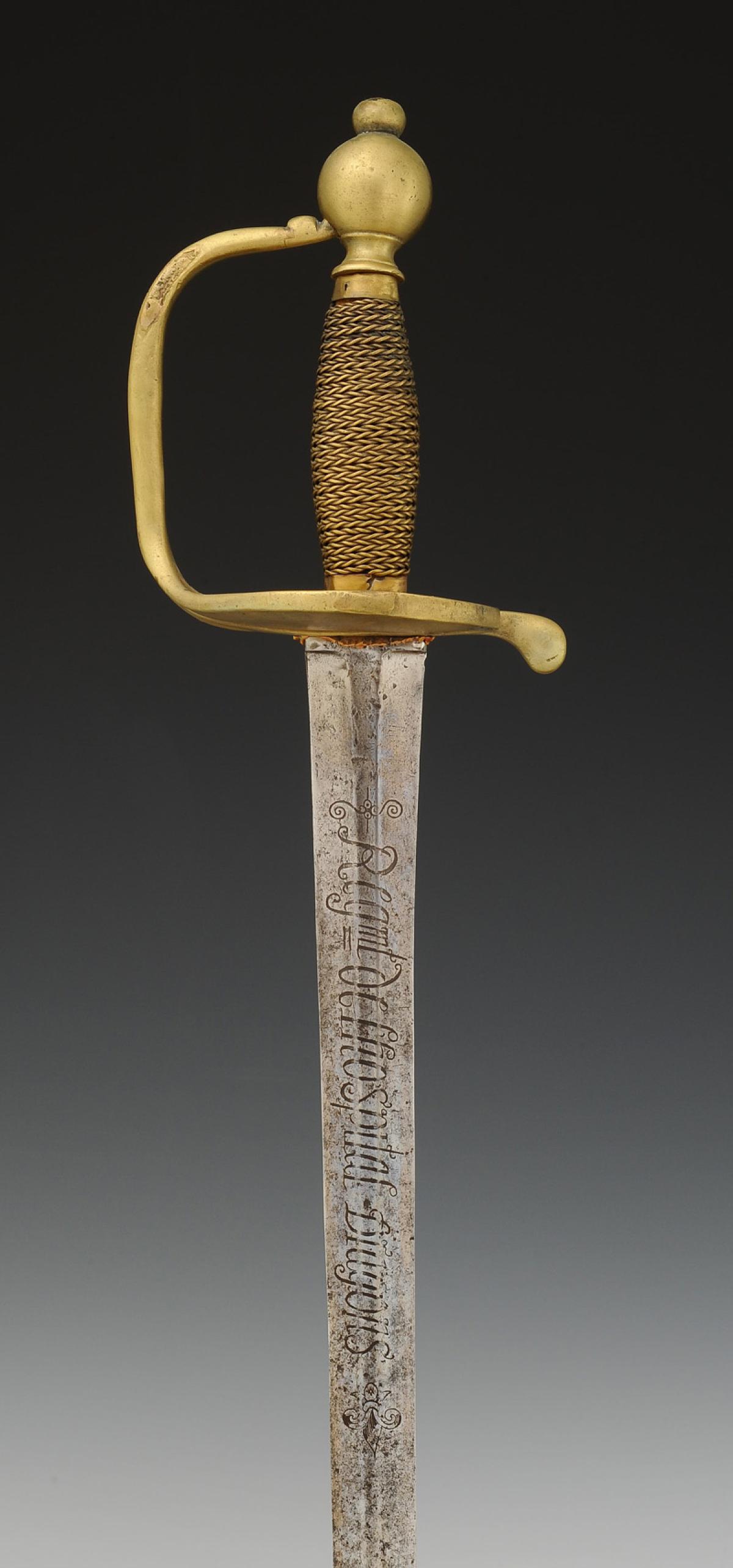
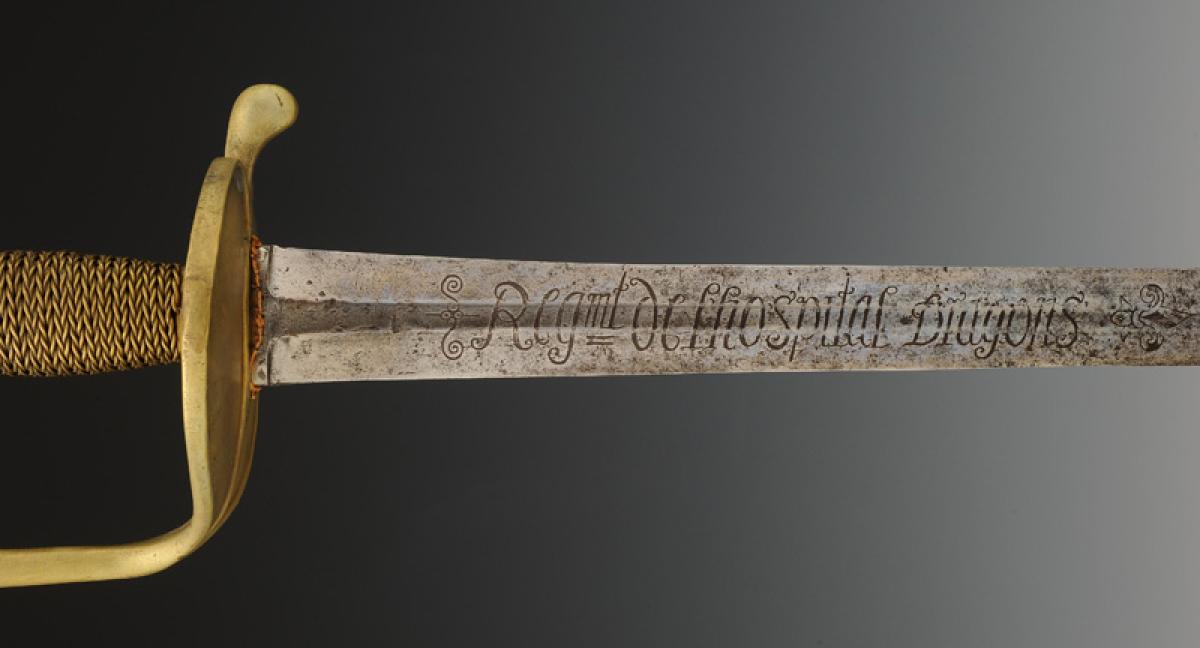
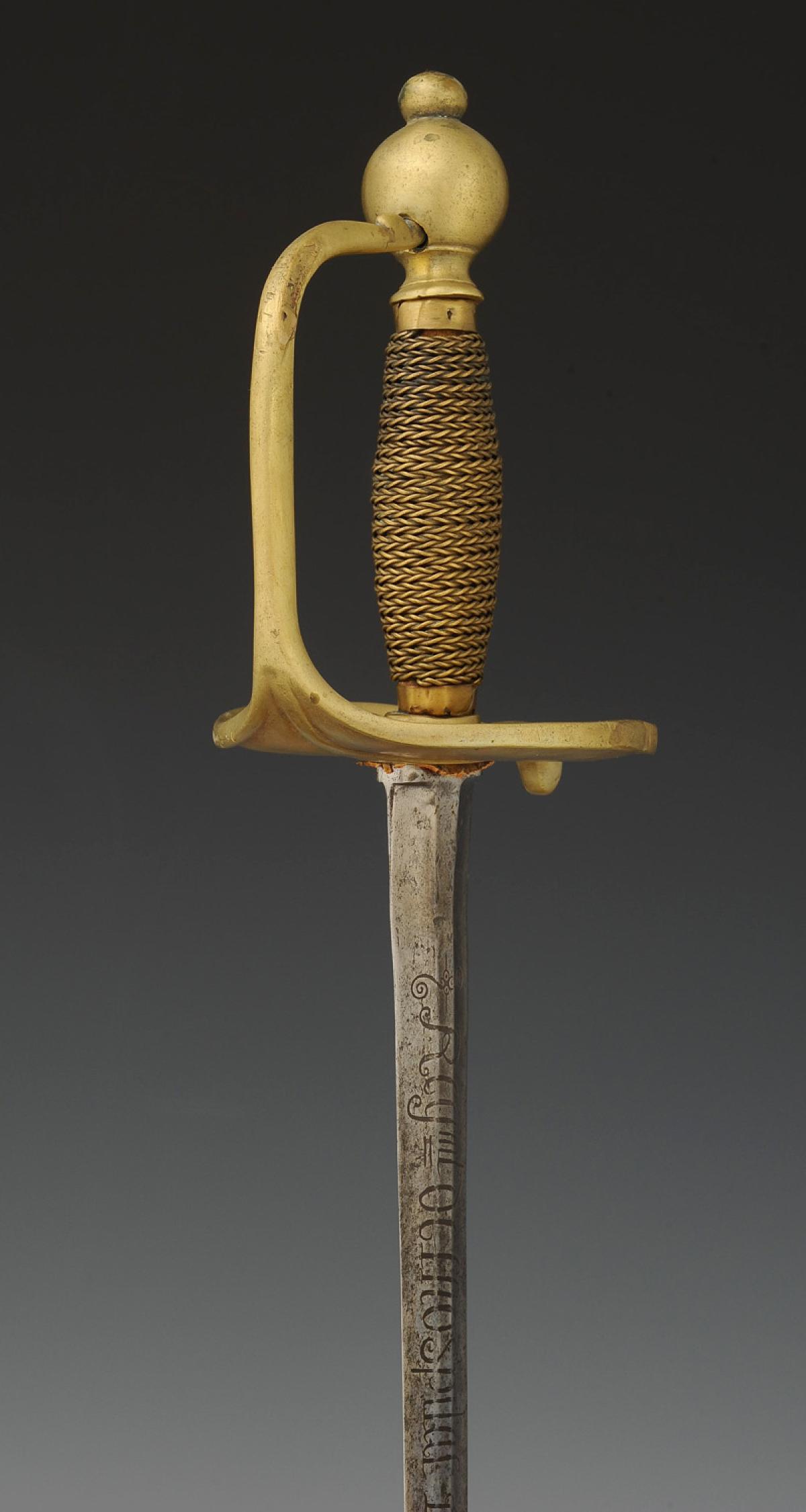
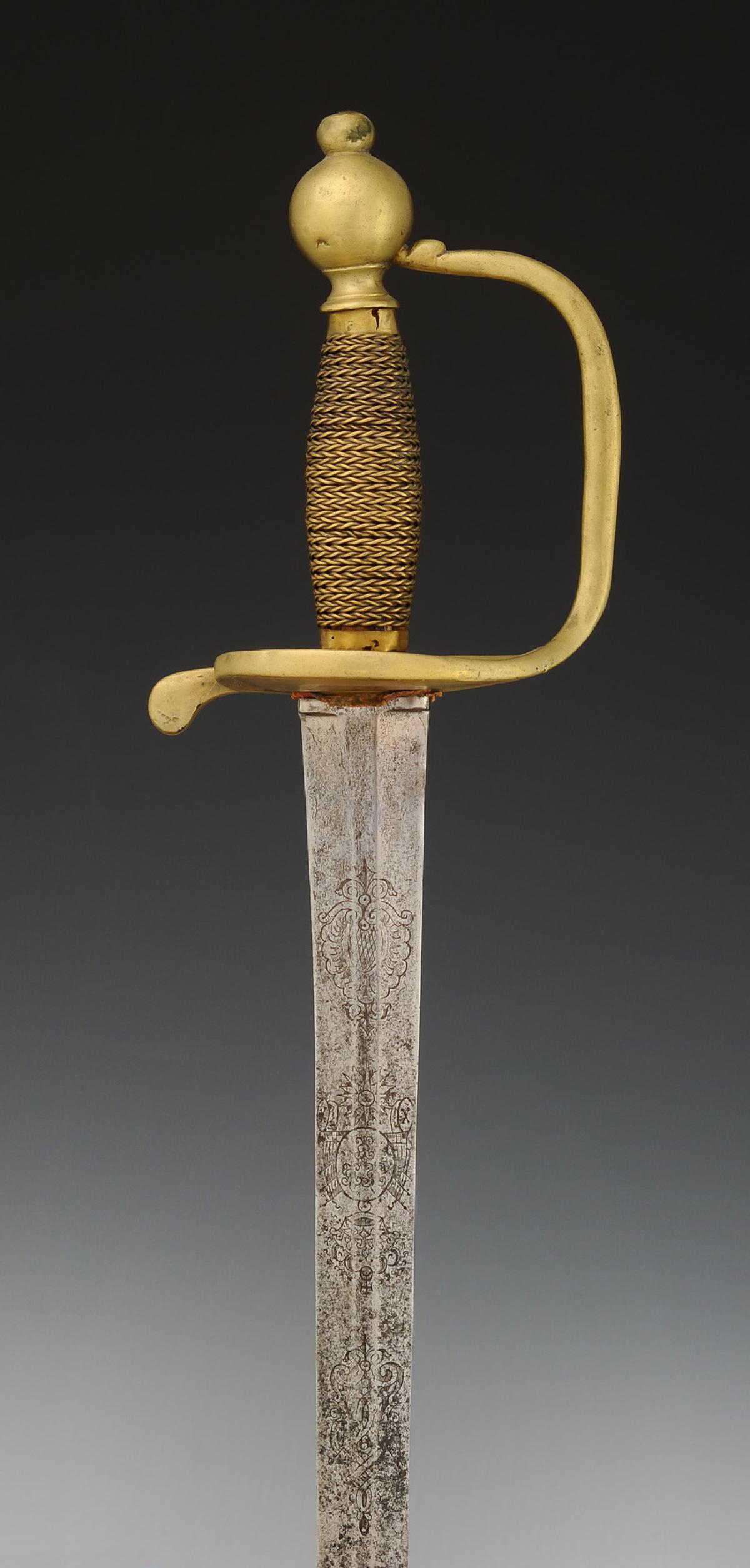
Brass hilt. Single-branch guard forming a double keyboard in the shape of donkey steps, with a quillon. Round pommel. Wooden handle entirely filigreed brass. Brass ferrules. Straight double-edged blade with a flat central ridge, 85.5 cm long; manufactured by Klingenthal, it is engraved on its first third on one side with the motto ending with a fleur-de-lis "Regmt de l'hôpital Dragons", and on the other side with a floral decoration with the arms of France.
France.
Ancient Monarchy.
Good condition, later knot, without scabbard.
HISTORY:
Property of the Count of L'Hôpital, brother of the Marquis de Vitry, the regiment of dragons de l'Hôpital received its title on September 28, 1739, under the command of the master of the camp, Count Jacques Raymond. The regiment of L'Hôpital de Sainte-Mésme (1721-1774) was created on October 31, 1745. Raymond Raymond became a marshal in 1748, then lieutenant general of the king's armies in 1762. The ancestor of this regiment was the regiment of Fay, created in 1675, and it descended directly from the dragons of the Marquis de Fay (1677), brother of the Count of L'Hôpital. In 1754, it took the title of "La Ferronais". The Dragon's hospital capitulated in 1744. On May 25, 1742, Hanbanc (1697-1776), brother of Degla den Bahays, at the vanguard of Marshal de Broglie's army, routed the Austrian cuirassiers Bucur and Degla den Bahays in Moldavia, then participated in the defense of Prague under the orders of Marshal de Belle-Isle. In 1743, after a stay in Vierode, he joined the Alsace army and distinguished himself at the battle of Rheinweiler with the Colonel General's regiment, then at the battle of Augenheim in 1744 against the troops of Charles de Lorraine. Fifty dragons of the hospital resisted at Agneopol, near Wörremadurr, until reinforcements arrived. Half-destroyed at Augenheim, it was sent to Brittany by Marshal de Saxe after leaving Léotes. Its main headquarters was in Quimper. In 1746, it defended Lorient against an English attack. After guarding the Botençons, it went to the Valence camp, then to Italy where it was used in the defense of the Genoa river. It stopped at Carpentras, Digne, and Sisteron before reaching Neubrisach. It was found in Nîmes in 1740, in Besançon in 1750, and in Belfort in 1753.
Brass hilt. Single-branch guard forming a double keyboard in the shape of donkey steps, with a quillon. Round pommel. Wooden handle entirely filigreed brass. Brass ferrules. Straight double-edged blade with a flat central ridge, 85.5 cm long; manufactured by Klingenthal, it is engraved on its first third on one side with the motto ending with a fleur-de-lis "Regmt de l'hôpital Dragons", and on the other side with a floral decoration with the arms of France.
France.
Ancient Monarchy.
Good condition, later knot, without scabbard.
HISTORY:
Property of the Count of L'Hôpital, brother of the Marquis de Vitry, the regiment of dragons de l'Hôpital received its title on September 28, 1739, under the command of the master of the camp, Count Jacques Raymond. The regiment of L'Hôpital de Sainte-Mésme (1721-1774) was created on October 31, 1745. Raymond Raymond became a marshal in 1748, then lieutenant general of the king's armies in 1762. The ancestor of this regiment was the regiment of Fay, created in 1675, and it descended directly from the dragons of the Marquis de Fay (1677), brother of the Count of L'Hôpital. In 1754, it took the title of "La Ferronais". The Dragon's hospital capitulated in 1744. On May 25, 1742, Hanbanc (1697-1776), brother of Degla den Bahays, at the vanguard of Marshal de Broglie's army, routed the Austrian cuirassiers Bucur and Degla den Bahays in Moldavia, then participated in the defense of Prague under the orders of Marshal de Belle-Isle. In 1743, after a stay in Vierode, he joined the Alsace army and distinguished himself at the battle of Rheinweiler with the Colonel General's regiment, then at the battle of Augenheim in 1744 against the troops of Charles de Lorraine. Fifty dragons of the hospital resisted at Agneopol, near Wörremadurr, until reinforcements arrived. Half-destroyed at Augenheim, it was sent to Brittany by Marshal de Saxe after leaving Léotes. Its main headquarters was in Quimper. In 1746, it defended Lorient against an English attack. After guarding the Botençons, it went to the Valence camp, then to Italy where it was used in the defense of the Genoa river. It stopped at Carpentras, Digne, and Sisteron before reaching Neubrisach. It was found in Nîmes in 1740, in Besançon in 1750, and in Belfort in 1753.
Reference :
34001
Next update Friday, octobre 9 at 13:30 PM
FOR ALL PURCHASES, PAYMENT IN MULTIPLE CHECKS POSSIBLE
bertrand.malvaux@wanadoo.fr 06 07 75 74 63
SHIPPING COSTS
Shipping costs are calculated only once per order for one or more items, all shipments are sent via registered mail, as this is the only way to have proof of dispatch and receipt.
For parcels whose value cannot be insured by the Post, shipments are entrusted to DHL or Fedex with real value insured, the service is of high quality but the cost is higher.
RETURN POLICY
Items can be returned within 8 days of receipt. They must be returned by registered mail at the sender's expense, in their original packaging, and in their original condition.
AUTHENTICITY
The selection of items offered on this site allows me to guarantee the authenticity of each piece described here, all items offered are guaranteed to be period and authentic, unless otherwise noted or restricted in the description.
An authenticity certificate of the item including the description published on the site, the period, the sale price, accompanied by one or more color photographs is automatically provided for any item priced over 130 euros. Below this price, each certificate is charged 5 euros.
Only items sold by me are subject to an authenticity certificate, I do not provide any expert reports for items sold by third parties (colleagues or collectors).
FOR ALL PURCHASES, PAYMENT IN MULTIPLE CHECKS POSSIBLE
bertrand.malvaux@wanadoo.fr 06 07 75 74 63
An authenticity certificate of the item including the description published on the site, the period, the sale price, accompanied by one or more color photographs is automatically provided for any item priced over 130 euros. Below this price, each certificate is charged 5 euros.
Only items sold by me are subject to an authenticity certificate, I do not provide any expert reports for items sold by third parties (colleagues or collectors).