
BELGIAN INFANTRY RIFLE USED IN THE FRANCO-BELGIAN TIRAILLEUR REGIMENTS OF THE PONTIFICAL ARMY, model 1854, Second Empire. 33004R.
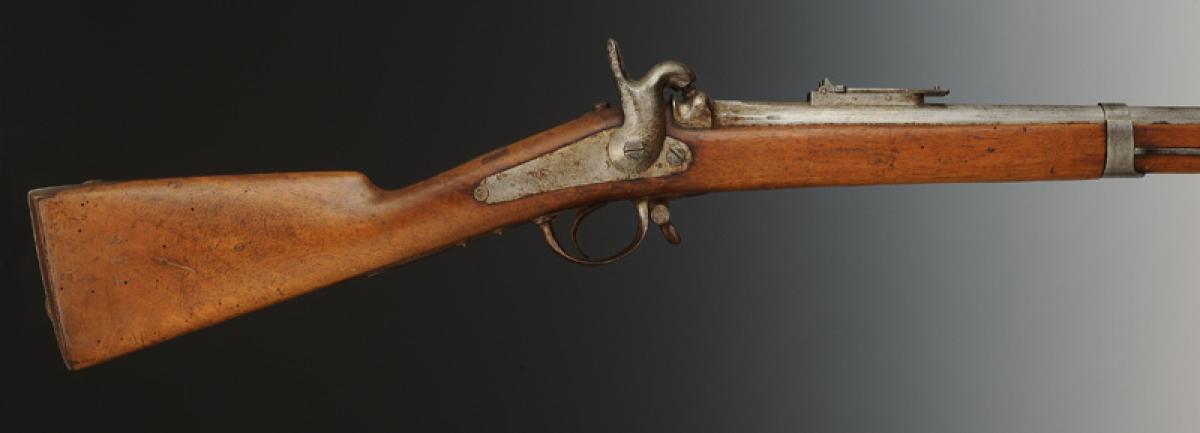
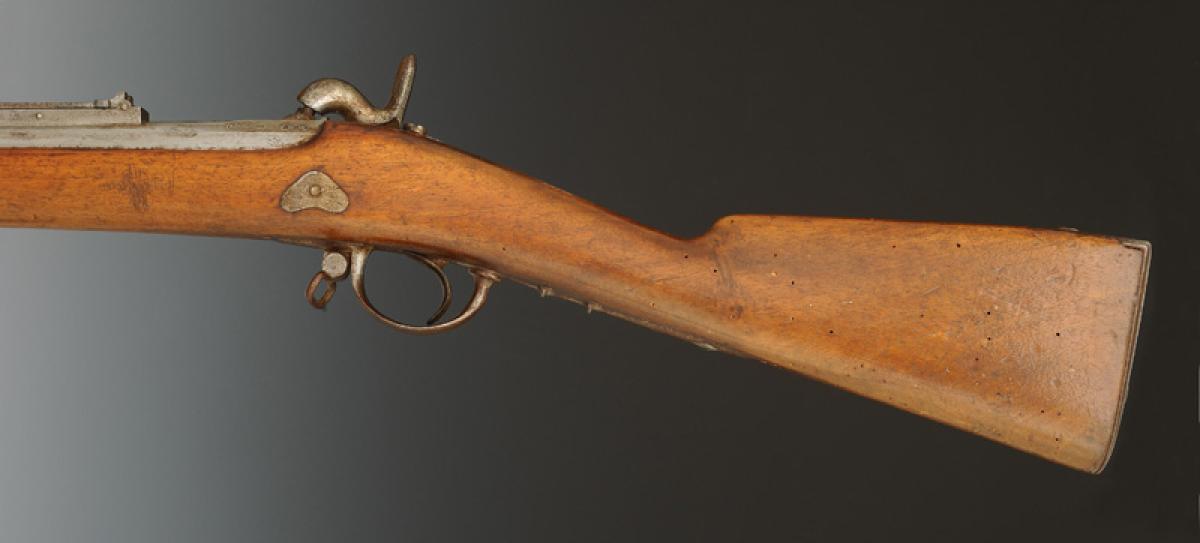
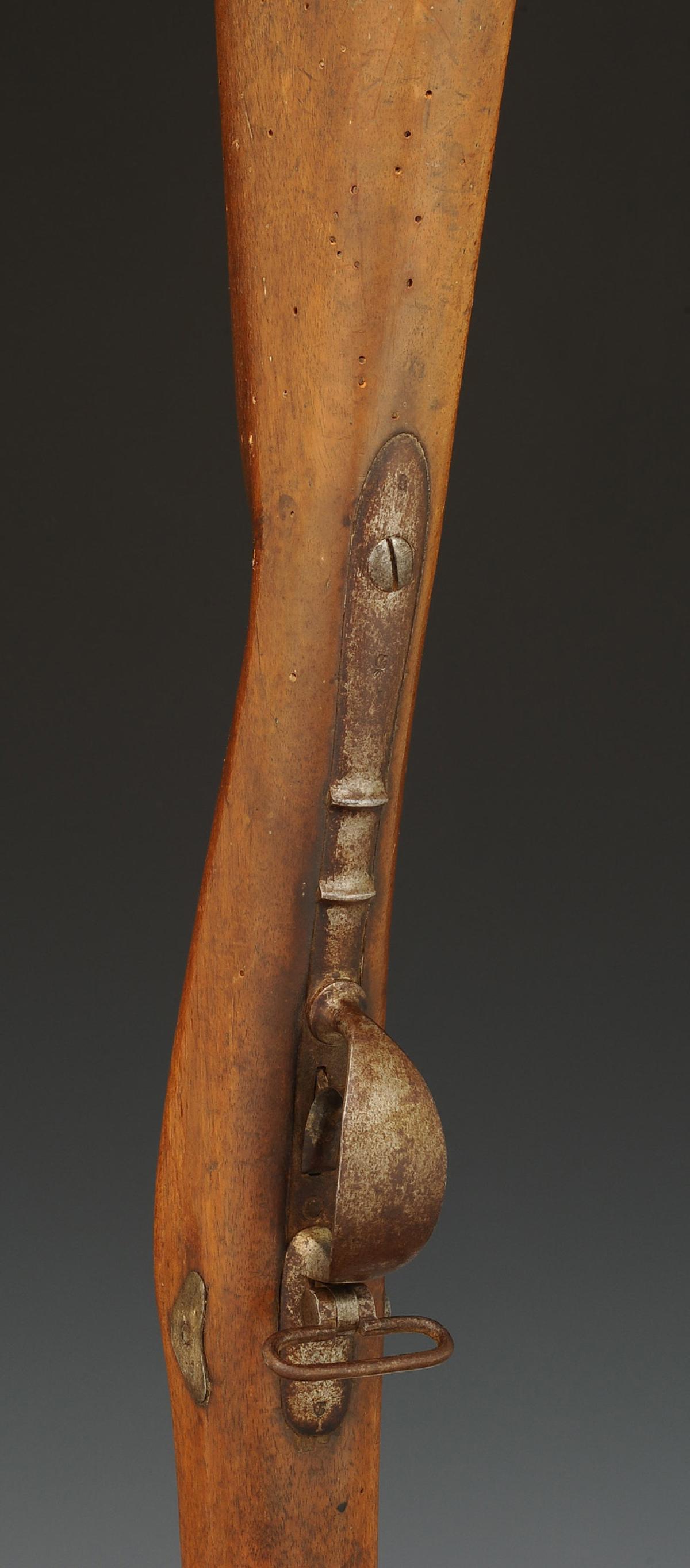
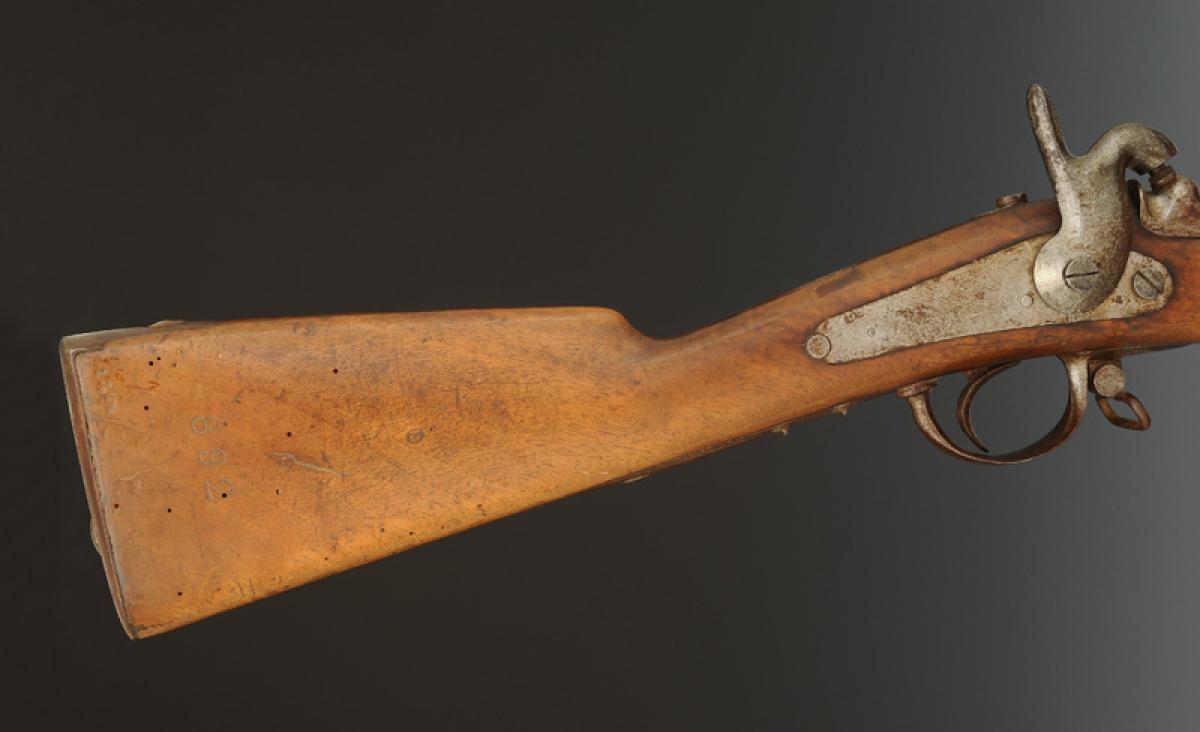

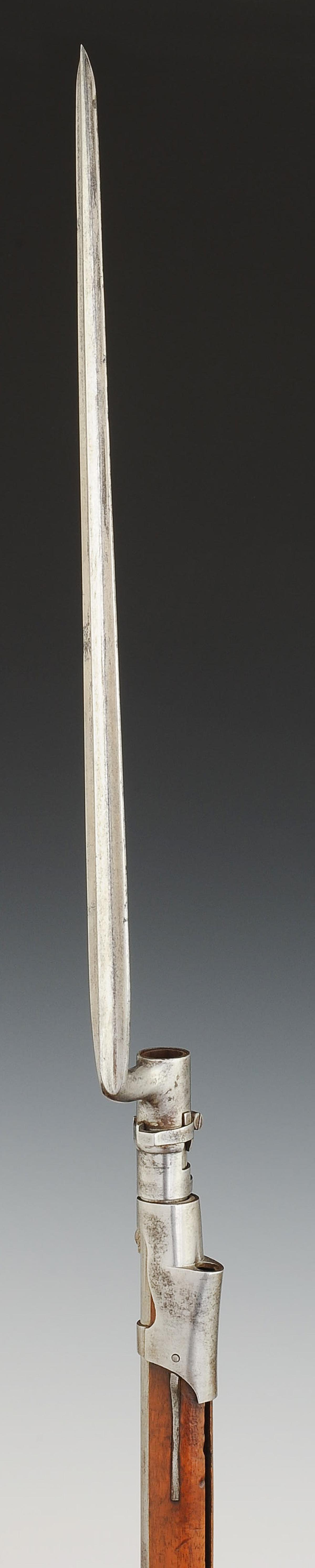
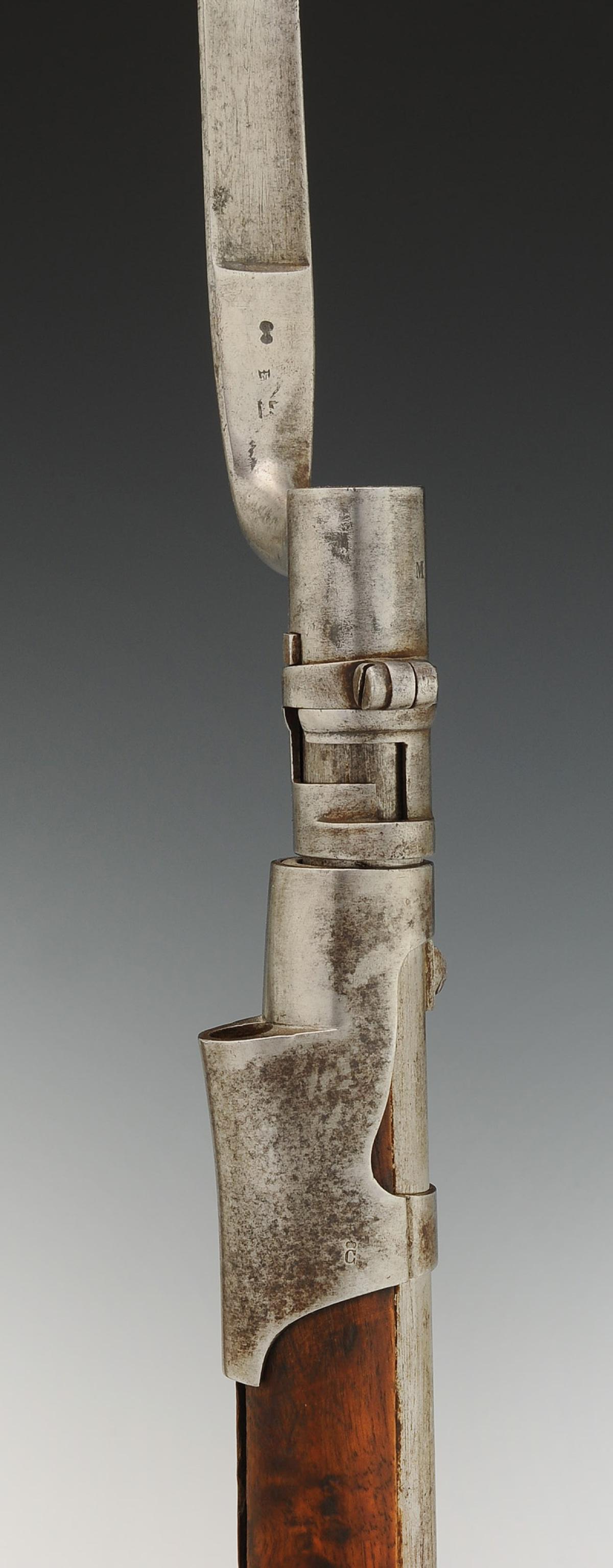
BELGIAN INFANTRY RIFLE USED IN THE FRANCO-BELGIAN TIRAILLEUR REGIMENTS OF THE PAPAL ARMY, model 1854, Second Empire. 33004R
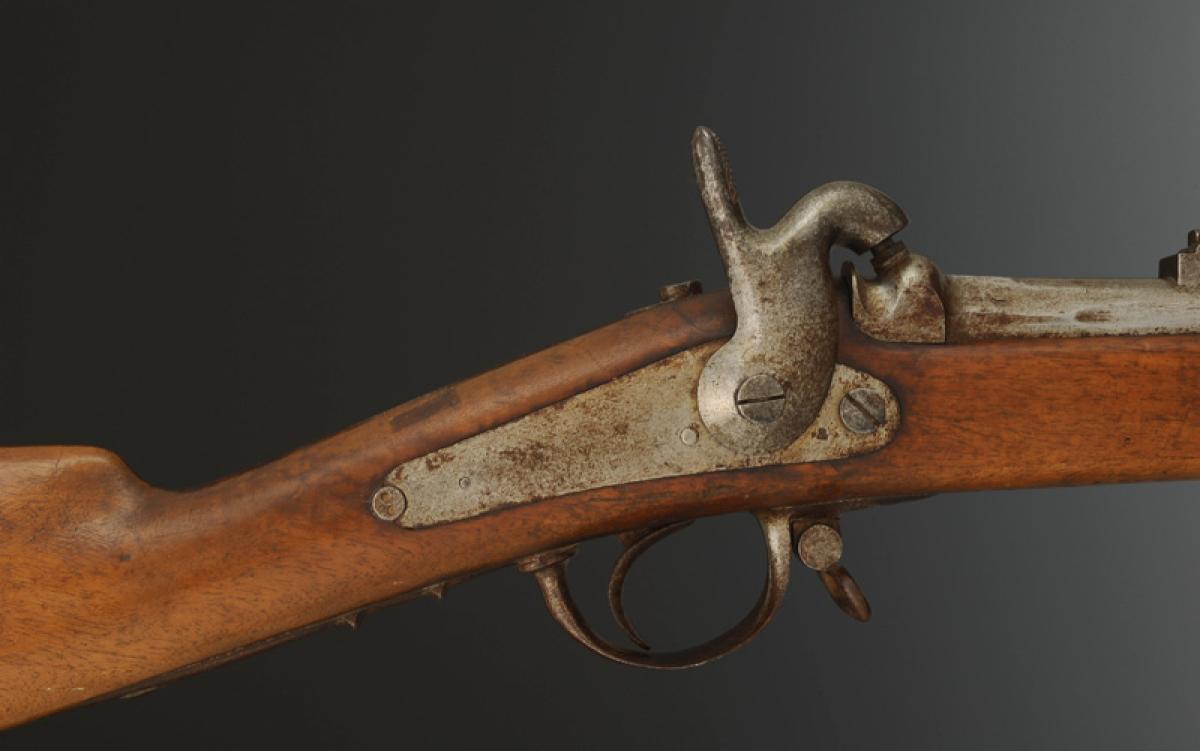
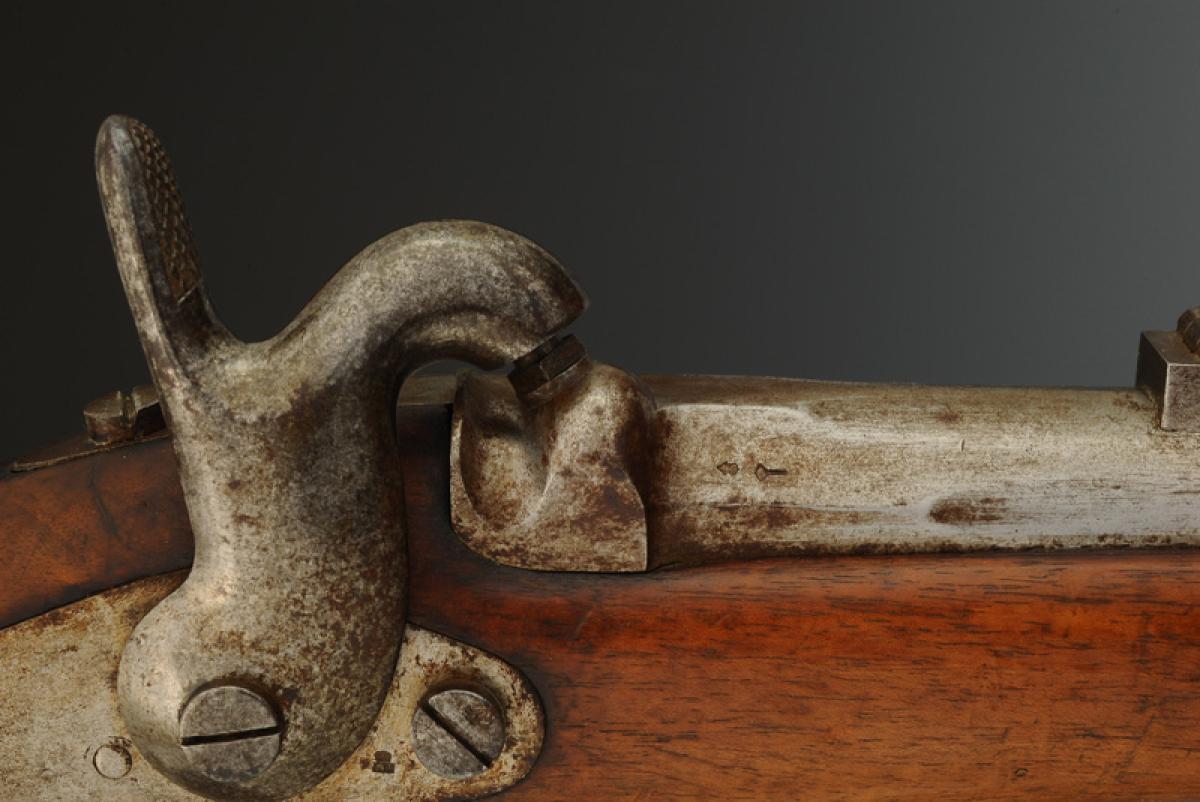
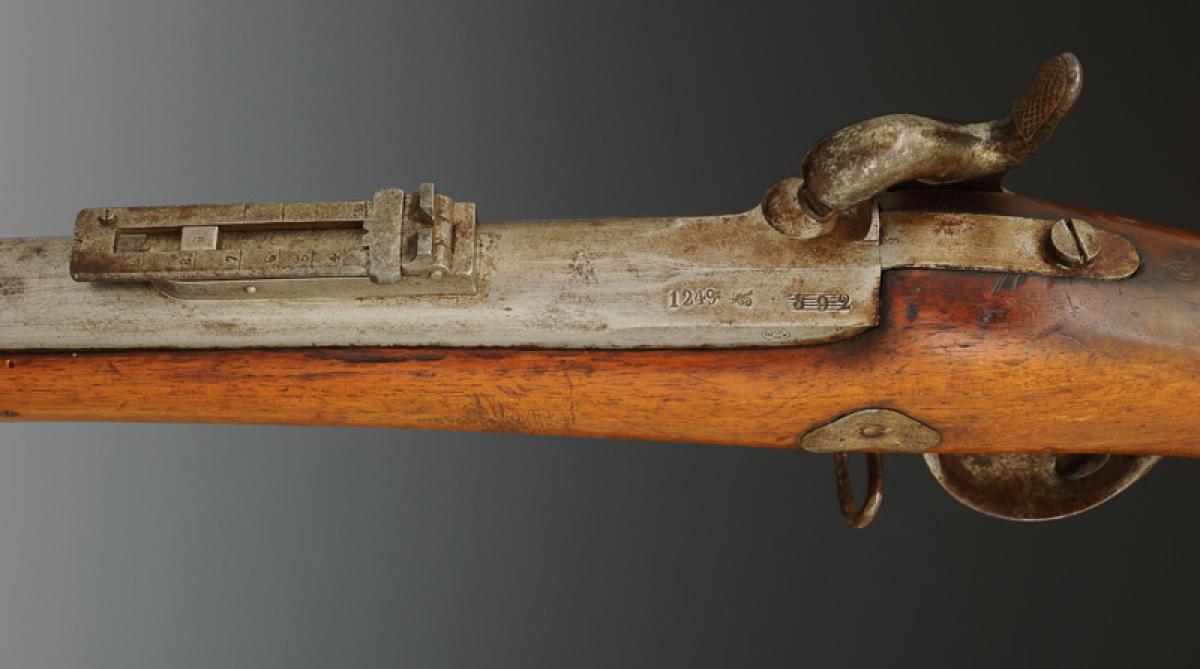
Walnut stock. Eight-sided round barrel, L 103 cm, with breech, L 109 cm. Proof mark on the breech "V" under a crown and Tower of Liège. All steel fittings. Stock numbered identically to the barrel "892"; barrel number scratched out and replaced by the serial number "1249". Percussion lock.
Total length of the rifle: 1425 mm
Belgium.
Second Empire.
Good condition, sharp barrel grooves, functional lock. Missing ramrod. Some wormholes on the stock.
Historical Notes:
The battalion of Pontifical Zouaves, created on January 1, 1861, following the model of the French Zouave troops, whose exotic uniform was very popular in the mid-19th century, evolved into a regiment on January 1, 1867. It was composed of volunteers, mostly French, Belgian, and Dutch, who came to defend the Papal State, threatened by the realization of Italian Unification in favor of Piedmont. Its history is intertwined with the last decade of the State of the Holy See (1860-1870). The regiment was disbanded on September 21, 1870 following the disappearance of the Papal States.
The Battalion of Franco-Belgian Tirailleurs:
In 1860, the situation of the Papal State seemed critical. As the Catholic powers showed disinterest in the matter, the pope's secret chamberlain, Mgr Xavier de Merode, a former military man turned pro-minister of war, decided to call on General de Lamoricière to reorganize and lead the Papal army. To increase the ranks, Lamoricière resorted to voluntary enlistment and appealed to the Catholic states. Belgians and French constituted a battalion of franco-belgian tirailleurs (the largest contingents came from Brittany and Vendée) under the command of Viscount Louis de Becdelièvre. Becdelièvre personally ensured they were equipped with uniforms inspired by the Zouaves, adapted to the Roman heat. Although not well-received by Lamoricière, who had more pressing issues, he had the support of Mgr de Merode and the pope himself; thus, the tirailleurs were called Pontifical Zouaves even before the official establishment of the corps. The Piedmontese defeated the Pontifical troops at the Battle of Castelfidardo (September 18, 1860), reducing the Papal State to just the Lazio region. The disaster led to an influx of volunteers to Rome: the battalion of Pontifical Zouaves comprised a portion of the franco-belgian tirailleurs and the Irishmen of the Saint-Patrick battalion, joined before the battle by some "crusaders" led by Henri de Cathelineau.
Joseph-Louis Guérin, a seminarian from Nantes, wounded in combat, passed away on October 30, 1860. His grave in Nantes became a very popular pilgrimage site; he was even attributed 35 healing miracles between 1861 and 1864.
In May 1860, the Athanase de Charette battalion arrived to assist General de Lamoricière and received the captain's commission. Immediately, a few French volunteers joined him, participating in the San Stefano Caves expedition. This operation, led by Colonel de Pimodan, was aimed at Garibaldian bands that had invaded the Viterbo province.
On June 1, Mr. Becdelièvre was appointed battalion commander and designated to lead the Pontifical Tirailleurs battalion.
On June 6, a decree, countersigned by the chief general, organized the first two companies from an administrative and military perspective. On June 18, an out-of-the-rank section was created.
The other two companies were formed gradually as new recruits arrived, mostly French and Belgians.
The franco-belgian tirailleurs battalion settled in Terni for further training; by September 20, 1860, it had 450 men, divided into 4 active companies and 1 depot company.
On September 8, the tirailleurs left Terni and on the 18th, played an honorable role in the Battle of Castelfidardo.
A section, led by a sergeant, remained in Spoleto and participated in the defense of the city. Only a few volunteers followed General de Lamoricière to Ancona.
The Tirailleurs who could not be directed to Terni in time formed a detachment that joined the column that operated in the Frosinone province to retake Ponte Corvo. This campaign was called the "Marittima e Campagna."
After the capitulation of Loretto, the franco-belgian tirailleurs battalion reformed in Rome, under the command of Mr. Becdelièvre, promoted to lieutenant colonel; it was organized into 6 companies thanks to new recruits who arrived after the campaign.
Towards the end of November, in the absence of Lieutenant Colonel Becdelièvre, the battalion, under the command of the captain-major adjutant de Chillaz, was directed to the Tuscan border and restored order in the Viterbo province before returning to Rome.
We have published in ''L'Avant-Garde'' the roster of the Franco-Belgians until September 20, 1860; we will subsequently complete this list within the body of our "Bulletin."
We have made an exception for the officers. Whether they belonged to the Franco-Belgian Tirailleurs or the Pontifical Zouaves, all are listed together.
The creation of the Pontifical Zouaves Corps:
On January 1, 1861, the franco-belgian tirailleurs battalion was dissolved and on the same day, the Pontifical Zouaves battalion was created, a name already dubbed by public opinion and the Piedmontese ascribed to the fighters of Castelfidardo. On January 25, the Ponte Corese expedition was conducted, brilliantly led by Lieutenant Colonel de Becdelièvre. After his retreat, the battalion came under the command of Lieutenant Colonel Atlet, with Commander de Charette as second-in-command.
By the end of 1861, the battalion had expanded to 8 companies with an out-of-the-rank section.
The year 1862 was marked by the Battle of Ceprano (August 4).
Until 1864, the Zouaves counted between 300 and 600 men, after which the numbers rose to 1,500 and further to 1,800 before reaching a maximum of 3,200 men shortly before the fall of Rome.
Between 1861 and 1870, the Papal army increased its ranks to 18,000 men, 11,000 of whom were volunteers (including 3,000 French, with nearly 40% coming from Brittany and Vendée).
On April 11, 1866, a circular from Marshal Randon authorized the creation of the Legion of Antibes, which alongside the Pontifical Zouaves provided troops to the Papal army, especially French soldiers.
Between 1861 and 1870, over 10,000 new recruits from 25 different nationalities joined. The largest contingents were Dutch, followed by French and Belgians, but there were also Swiss, Germans, Italians, Canadians, and even Americans. Of 170 officers, 111 were French and 25 were Belgian. Their chaplain was Mgr Jules Daniel, a Nantais, assisted by two Belgians, Mgr Sacré and Mgr de Woelmont.
One of the most notable recruits was John Surratt (1844-1916), involved in the assassination of Abraham Lincoln in 1865: having fled to Europe, he served for a short time in the ninth company of the Pontifical Zouaves under the name John Watson.
The French contingent primarily hailed from the present-day regions of Brittany and Pays de la Loire. Although the influx overshadowed contributions from the North, the Nîmes region, and the southern Massif Central, Belgians and Dutch volunteers mainly came from working-class backgrounds, while the nobility was well represented among the French and the francophone Belgian volunteers. The Duke of La Rochefoucauld-Doudeauville and his brother, the Duke of La Rochefoucauld-Bisaccia, financially supported the initiative by fully equipping 1,000 men. Their common ground was their commitment to the Roman Catholic Church: their fight was seen as a crusade to defend the papal capital and the pope's freedom against the revolutionary Garibaldi and King Victor Emmanuel II. Their religious commitment was often intertwined with their political allegiance: many French volunteers claimed to be legitimists.
The Convention of September 15, 1864, and the departure of the French army gave a new impetus to the corps' recruitment, and on January 1, 1867, the battalion became a regiment with 2 battalions of 6 companies and 4 depot companies.
After the memorable campaign of Mentana, the regiment was organized into three battalions, which successively had 6, 7, and 8 companies, and 4 depot companies.
Finally, in 1869, the regiment received its final organization: 4 battalions with 6 companies and 4 depot companies. In this formation, it witnessed the invasion of 1870 and the siege of Rome.
The disbandment took place on September 21, 1870.
Walnut stock. Eight-sided round barrel, L 103 cm, with breech, L 109 cm. Proof mark on the breech "V" under a crown and Tower of Liège. All steel fittings. Stock numbered identically to the barrel "892"; barrel number scratched out and replaced by the serial number "1249". Percussion lock.
Total length of the rifle: 1425 mm
Belgium.
Second Empire.
Good condition, sharp barrel grooves, functional lock. Missing ramrod. Some wormholes on the stock.
Historical Notes:
The battalion of Pontifical Zouaves, created on January 1, 1861, following the model of the French Zouave troops, whose exotic uniform was very popular in the mid-19th century, evolved into a regiment on January 1, 1867. It was composed of volunteers, mostly French, Belgian, and Dutch, who came to defend the Papal State, threatened by the realization of Italian Unification in favor of Piedmont. Its history is intertwined with the last decade of the State of the Holy See (1860-1870). The regiment was disbanded on September 21, 1870 following the disappearance of the Papal States.
The Battalion of Franco-Belgian Tirailleurs:
In 1860, the situation of the Papal State seemed critical. As the Catholic powers showed disinterest in the matter, the pope's secret chamberlain, Mgr Xavier de Merode, a former military man turned pro-minister of war, decided to call on General de Lamoricière to reorganize and lead the Papal army. To increase the ranks, Lamoricière resorted to voluntary enlistment and appealed to the Catholic states. Belgians and French constituted a battalion of franco-belgian tirailleurs (the largest contingents came from Brittany and Vendée) under the command of Viscount Louis de Becdelièvre. Becdelièvre personally ensured they were equipped with uniforms inspired by the Zouaves, adapted to the Roman heat. Although not well-received by Lamoricière, who had more pressing issues, he had the support of Mgr de Merode and the pope himself; thus, the tirailleurs were called Pontifical Zouaves even before the official establishment of the corps. The Piedmontese defeated the Pontifical troops at the Battle of Castelfidardo (September 18, 1860), reducing the Papal State to just the Lazio region. The disaster led to an influx of volunteers to Rome: the battalion of Pontifical Zouaves comprised a portion of the franco-belgian tirailleurs and the Irishmen of the Saint-Patrick battalion, joined before the battle by some "crusaders" led by Henri de Cathelineau.
Joseph-Louis Guérin, a seminarian from Nantes, wounded in combat, passed away on October 30, 1860. His grave in Nantes became a very popular pilgrimage site; he was even attributed 35 healing miracles between 1861 and 1864.
In May 1860, the Athanase de Charette battalion arrived to assist General de Lamoricière and received the captain's commission. Immediately, a few French volunteers joined him, participating in the San Stefano Caves expedition. This operation, led by Colonel de Pimodan, was aimed at Garibaldian bands that had invaded the Viterbo province.
On June 1, Mr. Becdelièvre was appointed battalion commander and designated to lead the Pontifical Tirailleurs battalion.
On June 6, a decree, countersigned by the chief general, organized the first two companies from an administrative and military perspective. On June 18, an out-of-the-rank section was created.
The other two companies were formed gradually as new recruits arrived, mostly French and Belgians.
The franco-belgian tirailleurs battalion settled in Terni for further training; by September 20, 1860, it had 450 men, divided into 4 active companies and 1 depot company.
On September 8, the tirailleurs left Terni and on the 18th, played an honorable role in the Battle of Castelfidardo.
A section, led by a sergeant, remained in Spoleto and participated in the defense of the city. Only a few volunteers followed General de Lamoricière to Ancona.
The Tirailleurs who could not be directed to Terni in time formed a detachment that joined the column that operated in the Frosinone province to retake Ponte Corvo. This campaign was called the "Marittima e Campagna."
After the capitulation of Loretto, the franco-belgian tirailleurs battalion reformed in Rome, under the command of Mr. Becdelièvre, promoted to lieutenant colonel; it was organized into 6 companies thanks to new recruits who arrived after the campaign.
Towards the end of November, in the absence of Lieutenant Colonel Becdelièvre, the battalion, under the command of the captain-major adjutant de Chillaz, was directed to the Tuscan border and restored order in the Viterbo province before returning to Rome.
We have published in ''L'Avant-Garde'' the roster of the Franco-Belgians until September 20, 1860; we will subsequently complete this list within the body of our "Bulletin."
We have made an exception for the officers. Whether they belonged to the Franco-Belgian Tirailleurs or the Pontifical Zouaves, all are listed together.
The creation of the Pontifical Zouaves Corps:
On January 1, 1861, the franco-belgian tirailleurs battalion was dissolved and on the same day, the Pontifical Zouaves battalion was created, a name already dubbed by public opinion and the Piedmontese ascribed to the fighters of Castelfidardo. On January 25, the Ponte Corese expedition was conducted, brilliantly led by Lieutenant Colonel de Becdelièvre. After his retreat, the battalion came under the command of Lieutenant Colonel Atlet, with Commander de Charette as second-in-command.
By the end of 1861, the battalion had expanded to 8 companies with an out-of-the-rank section.
The year 1862 was marked by the Battle of Ceprano (August 4).
Until 1864, the Zouaves counted between 300 and 600 men, after which the numbers rose to 1,500 and further to 1,800 before reaching a maximum of 3,200 men shortly before the fall of Rome.
Between 1861 and 1870, the Papal army increased its ranks to 18,000 men, 11,000 of whom were volunteers (including 3,000 French, with nearly 40% coming from Brittany and Vendée).
On April 11, 1866, a circular from Marshal Randon authorized the creation of the Legion of Antibes, which alongside the Pontifical Zouaves provided troops to the Papal army, especially French soldiers.
Between 1861 and 1870, over 10,000 new recruits from 25 different nationalities joined. The largest contingents were Dutch, followed by French and Belgians, but there were also Swiss, Germans, Italians, Canadians, and even Americans. Of 170 officers, 111 were French and 25 were Belgian. Their chaplain was Mgr Jules Daniel, a Nantais, assisted by two Belgians, Mgr Sacré and Mgr de Woelmont.
One of the most notable recruits was John Surratt (1844-1916), involved in the assassination of Abraham Lincoln in 1865: having fled to Europe, he served for a short time in the ninth company of the Pontifical Zouaves under the name John Watson.
The French contingent primarily hailed from the present-day regions of Brittany and Pays de la Loire. Although the influx overshadowed contributions from the North, the Nîmes region, and the southern Massif Central, Belgians and Dutch volunteers mainly came from working-class backgrounds, while the nobility was well represented among the French and the francophone Belgian volunteers. The Duke of La Rochefoucauld-Doudeauville and his brother, the Duke of La Rochefoucauld-Bisaccia, financially supported the initiative by fully equipping 1,000 men. Their common ground was their commitment to the Roman Catholic Church: their fight was seen as a crusade to defend the papal capital and the pope's freedom against the revolutionary Garibaldi and King Victor Emmanuel II. Their religious commitment was often intertwined with their political allegiance: many French volunteers claimed to be legitimists.
The Convention of September 15, 1864, and the departure of the French army gave a new impetus to the corps' recruitment, and on January 1, 1867, the battalion became a regiment with 2 battalions of 6 companies and 4 depot companies.
After the memorable campaign of Mentana, the regiment was organized into three battalions, which successively had 6, 7, and 8 companies, and 4 depot companies.
Finally, in 1869, the regiment received its final organization: 4 battalions with 6 companies and 4 depot companies. In this formation, it witnessed the invasion of 1870 and the siege of Rome.
The disbandment took place on September 21, 1870.
Christophe ROPARS, approved expert by the CNES CEDEA.
Price :
1 000,00 €
| Destination | Envoi recommandé | Envoi Recommandé + Express |
|---|---|---|
| Shipping France | 30,00 € | 100,00 € |
| Shipping Europe | 40,00 € | 200,00 € |
| Shipping world | 120,00 € | 350,00 € |
Insurance (1%) :
10,00 €
Reference :
33004R
Order shipments will be suspended between July 31 and September 1.
Next update Friday, septembre 11th at 13:30 PM
FOR ALL PURCHASES, PAYMENT IN MULTIPLE CHECKS POSSIBLE
bertrand.malvaux@wanadoo.fr 06 07 75 74 63
SHIPPING COSTS
Shipping costs are calculated only once per order for one or more items, all shipments are sent via registered mail, as this is the only way to have proof of dispatch and receipt.
For parcels whose value cannot be insured by the Post, shipments are entrusted to DHL or Fedex with real value insured, the service is of high quality but the cost is higher.
RETURN POLICY
Items can be returned within 8 days of receipt. They must be returned by registered mail at the sender's expense, in their original packaging, and in their original condition.
AUTHENTICITY
The selection of items offered on this site allows me to guarantee the authenticity of each piece described here, all items offered are guaranteed to be period and authentic, unless otherwise noted or restricted in the description.
An authenticity certificate of the item including the description published on the site, the period, the sale price, accompanied by one or more color photographs is automatically provided for any item priced over 130 euros. Below this price, each certificate is charged 5 euros.
Only items sold by me are subject to an authenticity certificate, I do not provide any expert reports for items sold by third parties (colleagues or collectors).
Next update Friday, septembre 11th at 13:30 PM
FOR ALL PURCHASES, PAYMENT IN MULTIPLE CHECKS POSSIBLE
bertrand.malvaux@wanadoo.fr 06 07 75 74 63
An authenticity certificate of the item including the description published on the site, the period, the sale price, accompanied by one or more color photographs is automatically provided for any item priced over 130 euros. Below this price, each certificate is charged 5 euros.
Only items sold by me are subject to an authenticity certificate, I do not provide any expert reports for items sold by third parties (colleagues or collectors).