
WAISTCOAT OF GENERAL ALEXIS DELZONS, Consulate era (1801-1804). 33620
Sold out
GENERAL ALEXIS DELZONS' WAISTCOAT, Consulate (1801-1804). 33620
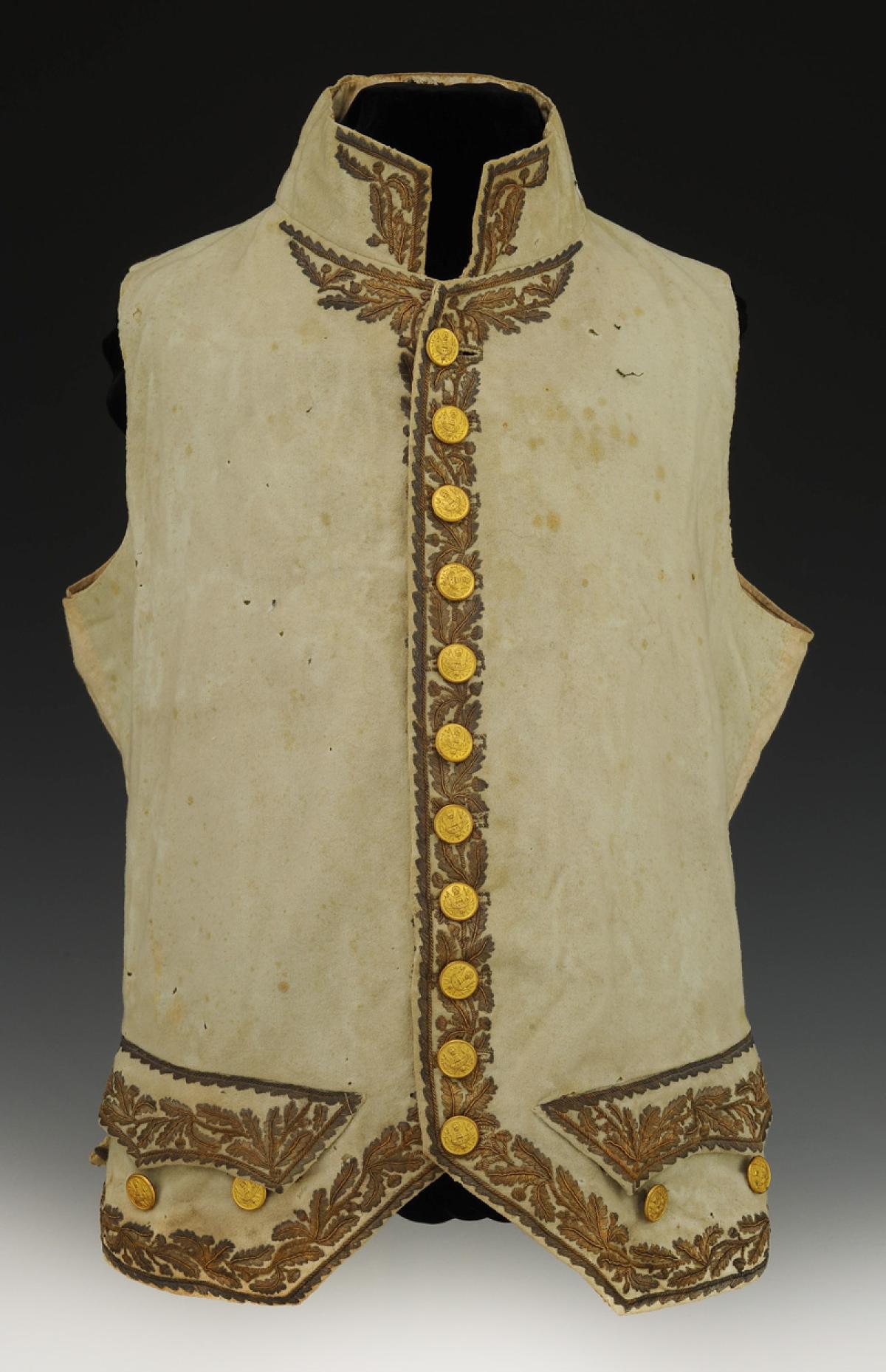
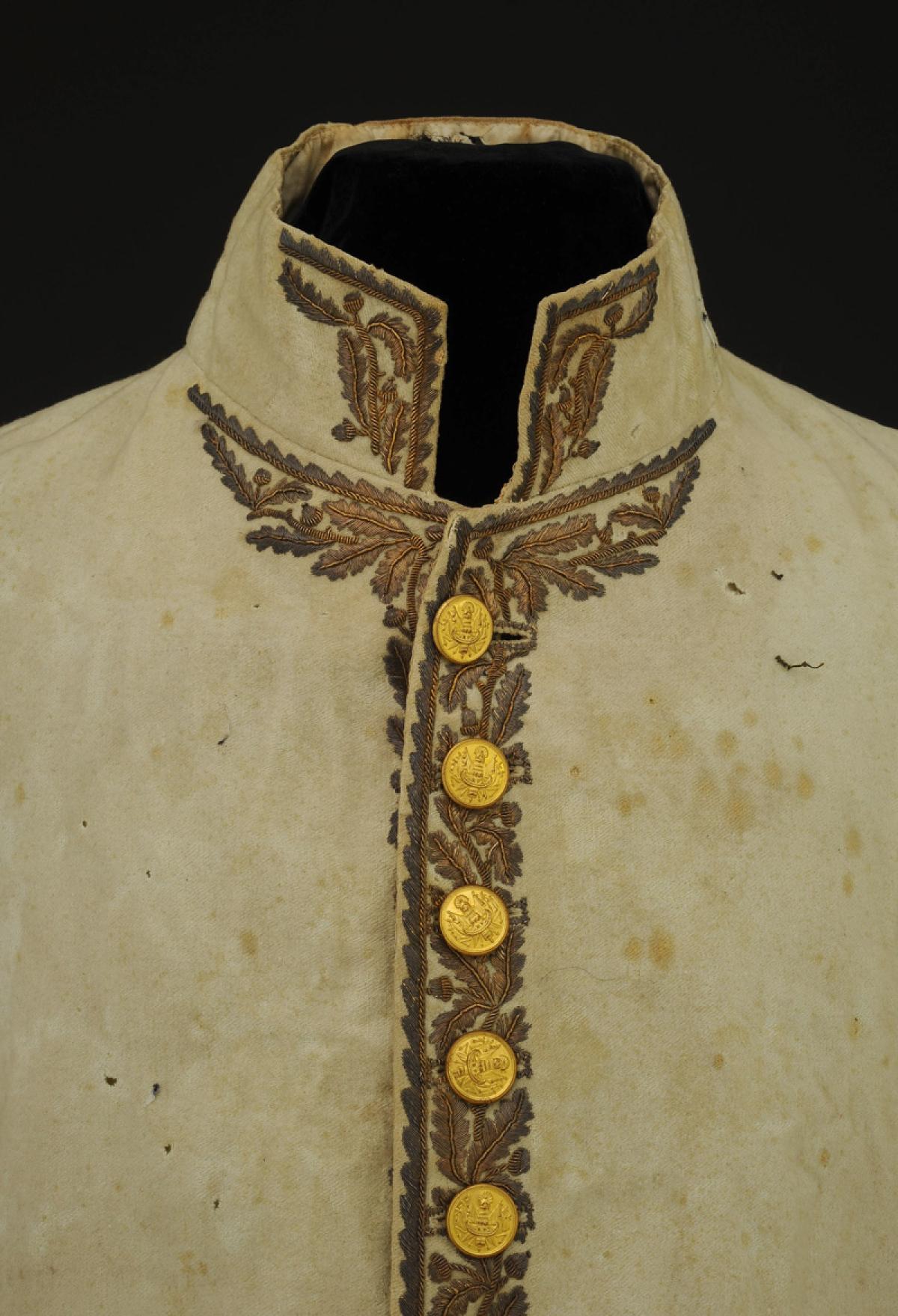
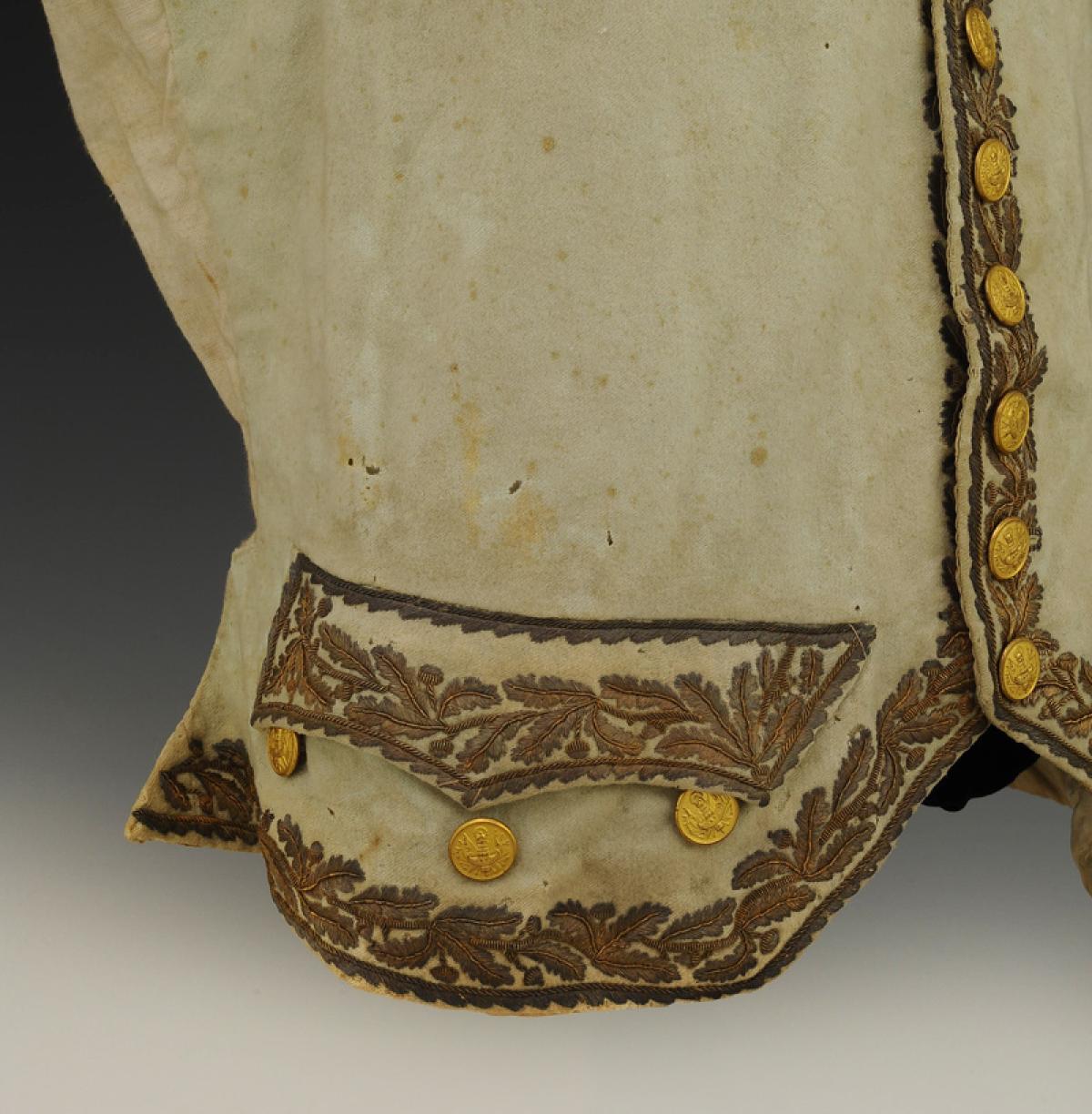
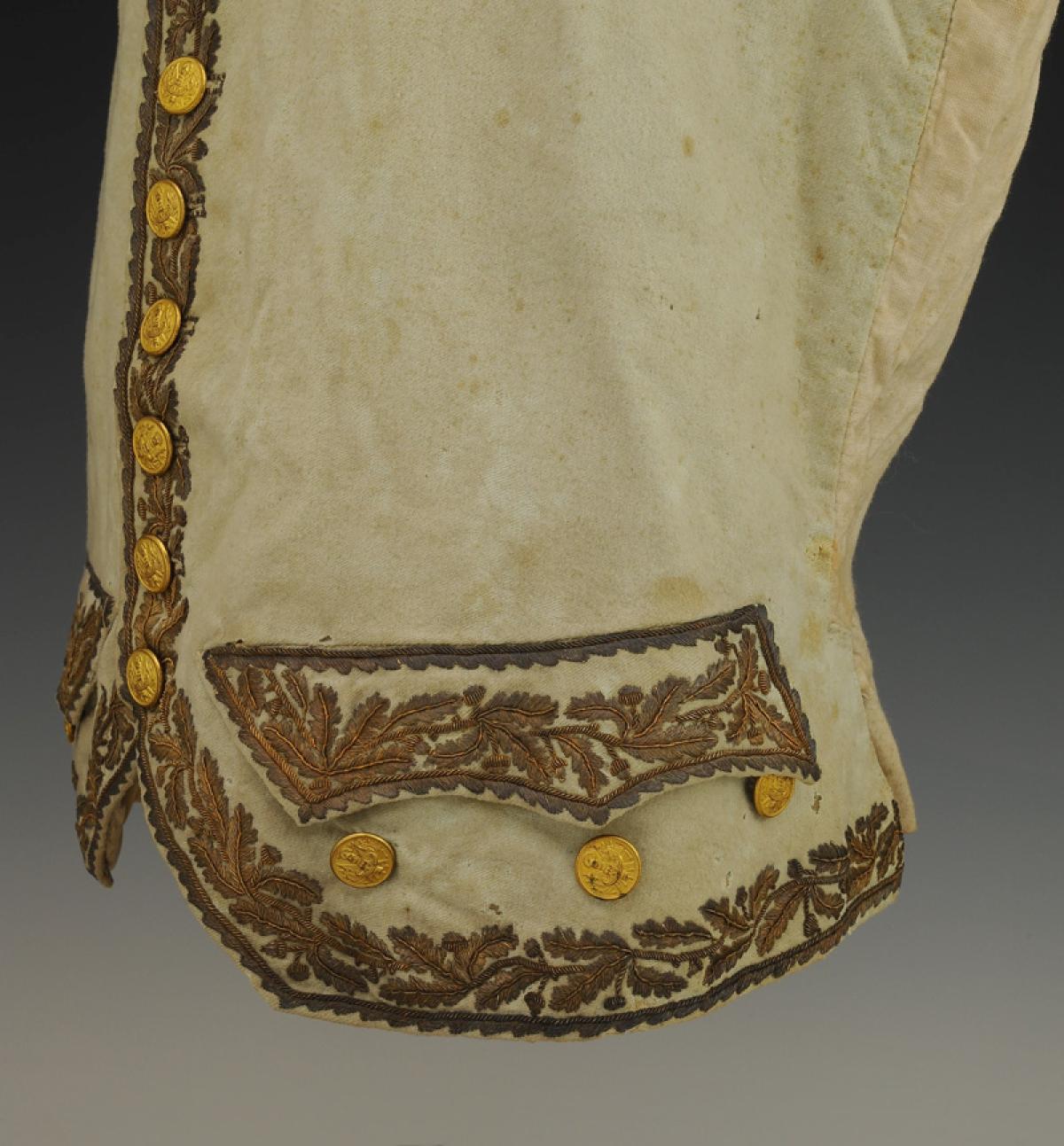
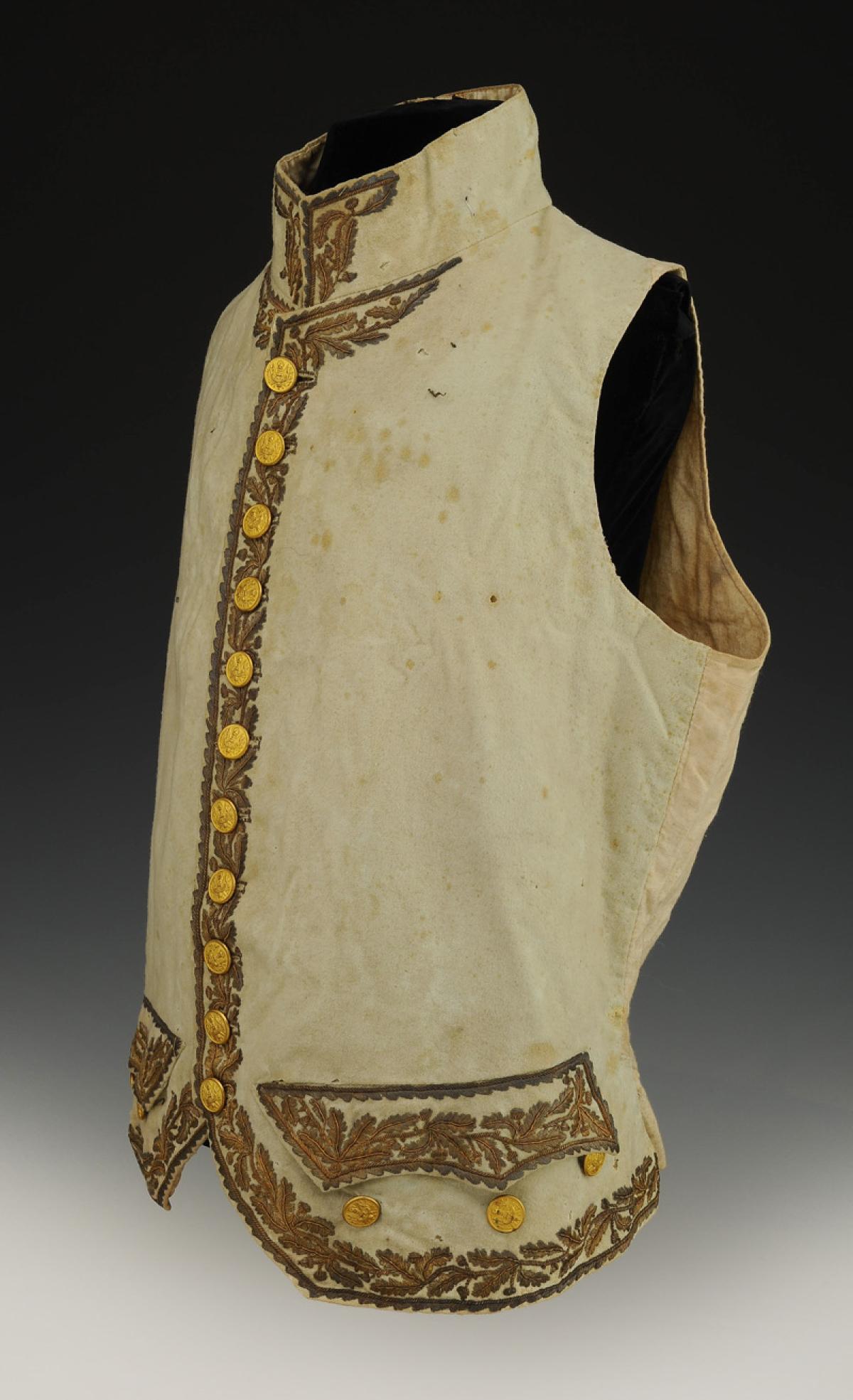
Waistcoat in white wool, embroidered on the front, collar, flap, and pocket edges with a scalloped wand and a branch of oak leaves, in threads and silver-gilt cannetilles. The width of the embroidery, including the wand, is 3.4 cm.
Waistcoat adorned with eleven small buttons on the front right side, Ø 1.7 cm, in gilded brass mounted on gilded brass, stamped with a shield bearing the initials "RF" (République Française), shield resting on a trophy composed of a bundle of fasces, a plumed helmet, a cluster of flags, and the winged thunderbolt of Jupiter. Length of the front panel of the waistcoat 38 cm.
Collar, height 5.5 cm, embroidered on the front on its entire length and 5 cm in width.
Horizontal triple-pointed pockets, pocket width 18 cm x 5 cm, with three small uniform buttons sewn underneath.
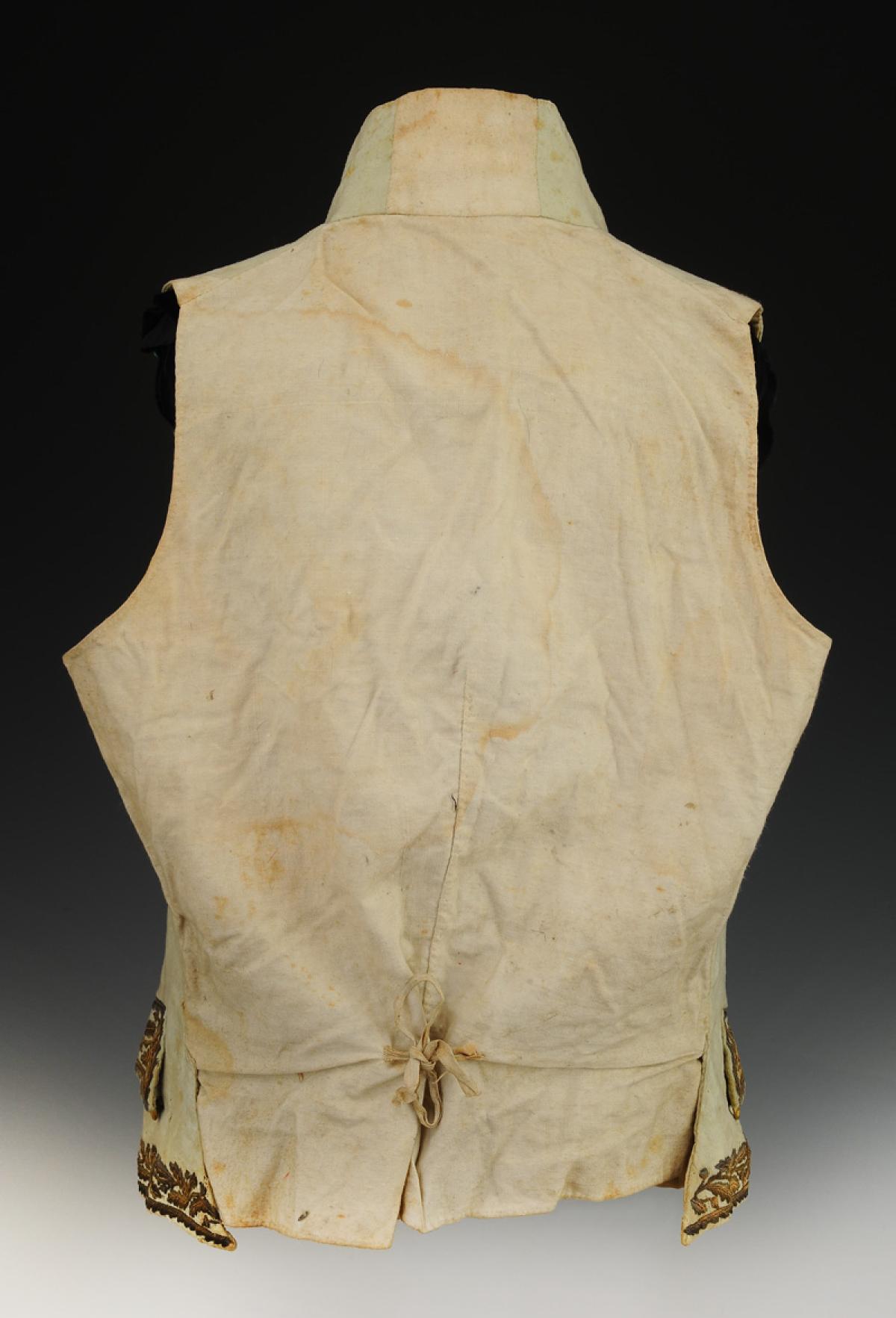
Back of the waistcoat entirely in ivory canvas.
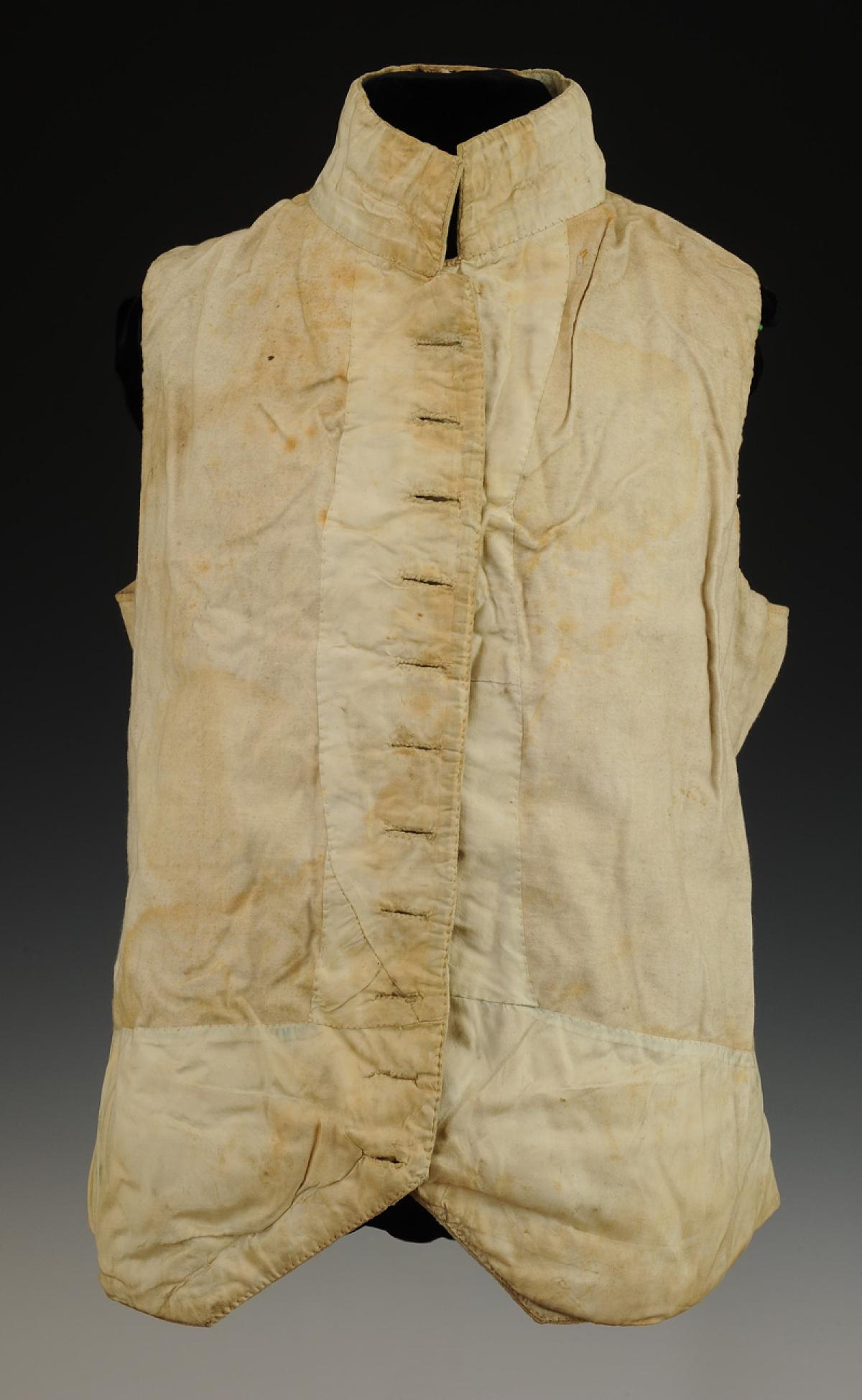
Lining of silk and ivory canvas.
At the back, at waist level, a white canvas lace allows for adjustment.
France.
Consulate (1801-1804).
In fairly good condition, with some moth holes and stains.
NOTE:
This waistcoat is of a transitional model between the regulations of Vendémiaire year VII and Vendémiaire year XII. The regulations of Vendémiaire year VII provide for a double-breasted waistcoat with twelve buttonholes. The regulations of Vendémiaire year XII describe a straight waistcoat with nine buttonholes. General Delzons' sample is an intermediate model with eleven buttonholes closing straight in the front.
BIOGRAPHY:
Alexis Joseph Delzons, born on March 26, 1775, in Aurillac and died on October 24, 1812, during the Battle of Maloyaroslavets, was a French general of the Revolution and the Empire.
CAREER DURING THE FRENCH REVOLUTION:
Son of Antoine Delzons, then a judge at the Aurillac tribunal with his uncle Pierre Hébrard, young Alexis joined the 1st battalion of volunteers from Cantal in 1791 and was appointed lieutenant of grenadiers. He participated in the campaigns of 1792 and 1793 in the Army of the Eastern Pyrenees and was promoted to captain in 1793. Wounded in the battle of La Jonquière in 1794, he distinguished himself again at the siege of Roses. When the 1st battalion of Cantal was incorporated into the 8th chasseurs à pied, known as the Vosges regiment, Delzons followed this regiment to Italy. He assaulted the redoubt of Montenotte on April 12, 1796, captured a battery on the plateau of Dego on the 14th, stood out at the Lodi bridge crossing, crossed the Mincio under enemy fire, and captured the pontoons parked on the opposite bank from the enemy.
Captured near Mantua, he was exchanged eight days later. He was wounded in the engagement on November 17 near Rivoli, and in the battle of Rivoli, he and his company resisted an Austrian regiment. He was appointed battalion chief on the battlefield. On July 2, 1798, Delzons was among the first to enter Alexandria in Egypt, took the entrenchments of Embabeh, and was promoted to head of his half-brigade; he was only 23 years old at the time.
GENERAL OF THE EMPIRE:
Delzons opposed the capitulation of Alexandria and upon his return to France, he was appointed brigadier general by Napoleon Bonaparte on April 27, 1801. He was made a Commander of the Legion of Honor on June 14, 1804. In this capacity, he actively participated in the campaigns of 1804, 1805, and 1806. In 1809, he commanded the right brigade of Marmont's corps, which was in Dalmatia and quite distant from the Grande Armée. Delzons advised in the council convened by Marmont to immediately retreat, move towards Croatia, and engage the nineteen Austrian battalions defending its borders. General Delzons contributed to the success of this maneuver, which was carried out and determined the outcome of the battle of Bilay on May 21. The following July 5, he had two horses killed under him, captured a position on the 12th, and once again determined the success of the battle of Znaim. After the Treaty of Vienna in 1809, Delzons organized the Illyrian province of Karlstadt, was appointed divisional general on February 15, 1811, and shortly after, interim commander in chief of the Illyrian army.
DEATH IN RUSSIA:
In 1812, he participated in the Russian campaign under the command of Eugène de Beauharnais and distinguished himself especially at the battles of Ostrovno and Borodino. On October 24, during the retreat, he was tasked with capturing the passage of the Louya to facilitate the occupation of Maloyaroslavets. Delzons had the destroyed bridges rebuilt and managed to get his division across. He then attacked the heights of the city and captured it. However, the Russian army headed towards his position, forcing the French regiments out. Prince Eugene ordered Delzons' division to retake the city. The general led the charge with the 84th regiment. The Russians filled the hollow path leading to the city in masses, but were overrun by Delzons' division and routed. Delzons, confident of victory, encouraged his troops when he was fatally shot in the forehead. His younger brother Benoît Delzons (1787-1812) threw himself over him to shield him, but was hit by a bullet himself and succumbed by his side.
General Delzons was buried on the battlefield the following day, October 25, 1812. His name is inscribed on the East side of the Arc de Triomphe.
Waistcoat in white wool, embroidered on the front, collar, flap, and pocket edges with a scalloped wand and a branch of oak leaves, in threads and silver-gilt cannetilles. The width of the embroidery, including the wand, is 3.4 cm.
Waistcoat adorned with eleven small buttons on the front right side, Ø 1.7 cm, in gilded brass mounted on gilded brass, stamped with a shield bearing the initials "RF" (République Française), shield resting on a trophy composed of a bundle of fasces, a plumed helmet, a cluster of flags, and the winged thunderbolt of Jupiter. Length of the front panel of the waistcoat 38 cm.
Collar, height 5.5 cm, embroidered on the front on its entire length and 5 cm in width.
Horizontal triple-pointed pockets, pocket width 18 cm x 5 cm, with three small uniform buttons sewn underneath.
Back of the waistcoat entirely in ivory canvas.
Lining of silk and ivory canvas.
At the back, at waist level, a white canvas lace allows for adjustment.
France.
Consulate (1801-1804).
In fairly good condition, with some moth holes and stains.
NOTE:
This waistcoat is of a transitional model between the regulations of Vendémiaire year VII and Vendémiaire year XII. The regulations of Vendémiaire year VII provide for a double-breasted waistcoat with twelve buttonholes. The regulations of Vendémiaire year XII describe a straight waistcoat with nine buttonholes. General Delzons' sample is an intermediate model with eleven buttonholes closing straight in the front.
BIOGRAPHY:
Alexis Joseph Delzons, born on March 26, 1775, in Aurillac and died on October 24, 1812, during the Battle of Maloyaroslavets, was a French general of the Revolution and the Empire.
CAREER DURING THE FRENCH REVOLUTION:
Son of Antoine Delzons, then a judge at the Aurillac tribunal with his uncle Pierre Hébrard, young Alexis joined the 1st battalion of volunteers from Cantal in 1791 and was appointed lieutenant of grenadiers. He participated in the campaigns of 1792 and 1793 in the Army of the Eastern Pyrenees and was promoted to captain in 1793. Wounded in the battle of La Jonquière in 1794, he distinguished himself again at the siege of Roses. When the 1st battalion of Cantal was incorporated into the 8th chasseurs à pied, known as the Vosges regiment, Delzons followed this regiment to Italy. He assaulted the redoubt of Montenotte on April 12, 1796, captured a battery on the plateau of Dego on the 14th, stood out at the Lodi bridge crossing, crossed the Mincio under enemy fire, and captured the pontoons parked on the opposite bank from the enemy.
Captured near Mantua, he was exchanged eight days later. He was wounded in the engagement on November 17 near Rivoli, and in the battle of Rivoli, he and his company resisted an Austrian regiment. He was appointed battalion chief on the battlefield. On July 2, 1798, Delzons was among the first to enter Alexandria in Egypt, took the entrenchments of Embabeh, and was promoted to head of his half-brigade; he was only 23 years old at the time.
GENERAL OF THE EMPIRE:
Delzons opposed the capitulation of Alexandria and upon his return to France, he was appointed brigadier general by Napoleon Bonaparte on April 27, 1801. He was made a Commander of the Legion of Honor on June 14, 1804. In this capacity, he actively participated in the campaigns of 1804, 1805, and 1806. In 1809, he commanded the right brigade of Marmont's corps, which was in Dalmatia and quite distant from the Grande Armée. Delzons advised in the council convened by Marmont to immediately retreat, move towards Croatia, and engage the nineteen Austrian battalions defending its borders. General Delzons contributed to the success of this maneuver, which was carried out and determined the outcome of the battle of Bilay on May 21. The following July 5, he had two horses killed under him, captured a position on the 12th, and once again determined the success of the battle of Znaim. After the Treaty of Vienna in 1809, Delzons organized the Illyrian province of Karlstadt, was appointed divisional general on February 15, 1811, and shortly after, interim commander in chief of the Illyrian army.
DEATH IN RUSSIA:
In 1812, he participated in the Russian campaign under the command of Eugène de Beauharnais and distinguished himself especially at the battles of Ostrovno and Borodino. On October 24, during the retreat, he was tasked with capturing the passage of the Louya to facilitate the occupation of Maloyaroslavets. Delzons had the destroyed bridges rebuilt and managed to get his division across. He then attacked the heights of the city and captured it. However, the Russian army headed towards his position, forcing the French regiments out. Prince Eugene ordered Delzons' division to retake the city. The general led the charge with the 84th regiment. The Russians filled the hollow path leading to the city in masses, but were overrun by Delzons' division and routed. Delzons, confident of victory, encouraged his troops when he was fatally shot in the forehead. His younger brother Benoît Delzons (1787-1812) threw himself over him to shield him, but was hit by a bullet himself and succumbed by his side.
General Delzons was buried on the battlefield the following day, October 25, 1812. His name is inscribed on the East side of the Arc de Triomphe.
Reference :
33620
Next update Friday, octobre 9 at 13:30 PM
FOR ALL PURCHASES, PAYMENT IN MULTIPLE CHECKS POSSIBLE
bertrand.malvaux@wanadoo.fr 06 07 75 74 63
SHIPPING COSTS
Shipping costs are calculated only once per order for one or more items, all shipments are sent via registered mail, as this is the only way to have proof of dispatch and receipt.
For parcels whose value cannot be insured by the Post, shipments are entrusted to DHL or Fedex with real value insured, the service is of high quality but the cost is higher.
RETURN POLICY
Items can be returned within 8 days of receipt. They must be returned by registered mail at the sender's expense, in their original packaging, and in their original condition.
AUTHENTICITY
The selection of items offered on this site allows me to guarantee the authenticity of each piece described here, all items offered are guaranteed to be period and authentic, unless otherwise noted or restricted in the description.
An authenticity certificate of the item including the description published on the site, the period, the sale price, accompanied by one or more color photographs is automatically provided for any item priced over 130 euros. Below this price, each certificate is charged 5 euros.
Only items sold by me are subject to an authenticity certificate, I do not provide any expert reports for items sold by third parties (colleagues or collectors).
FOR ALL PURCHASES, PAYMENT IN MULTIPLE CHECKS POSSIBLE
bertrand.malvaux@wanadoo.fr 06 07 75 74 63
An authenticity certificate of the item including the description published on the site, the period, the sale price, accompanied by one or more color photographs is automatically provided for any item priced over 130 euros. Below this price, each certificate is charged 5 euros.
Only items sold by me are subject to an authenticity certificate, I do not provide any expert reports for items sold by third parties (colleagues or collectors).