
JAPANESE WAKISASHI SWORD SIGNED BY THE BLACKSMITH SESSHUJU SUKEHARU, Osaka, Early Edo period, 1603-1868. 33559

Sold out
JAPANESE WAKISASHI SWORD SIGNED BY THE FORGER SESSHUJU SUKEHARU, Osaka, Early Edo Period, 1603-1868. 33559
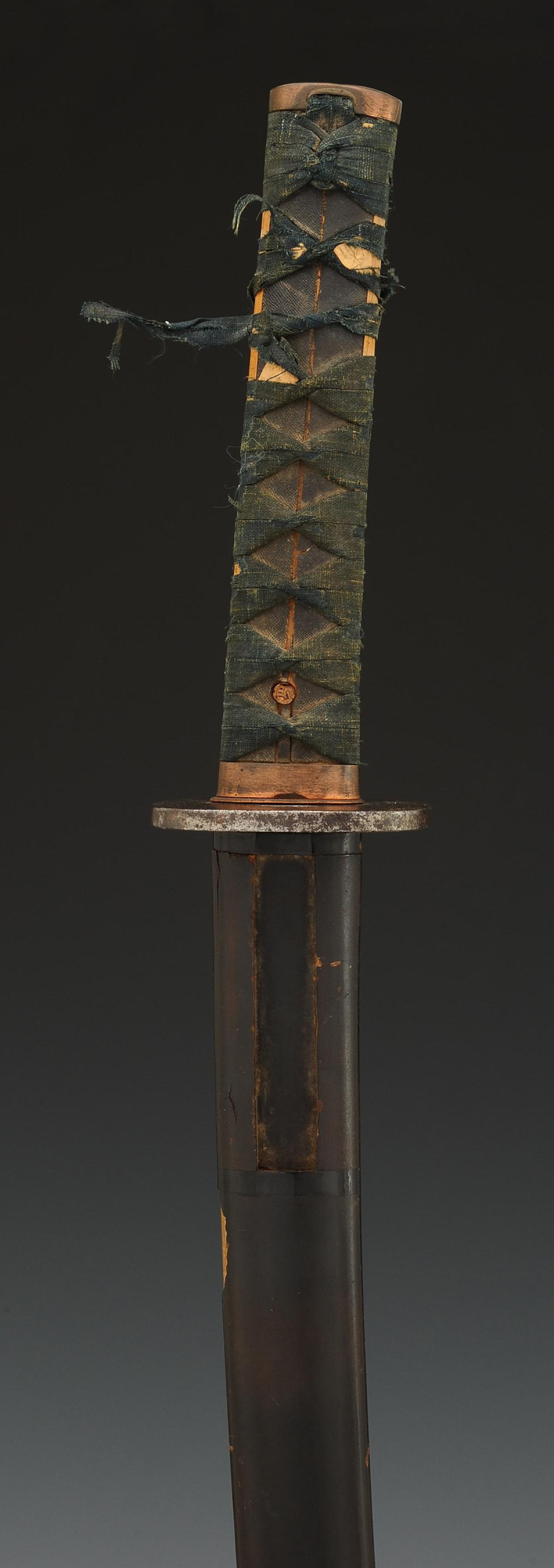
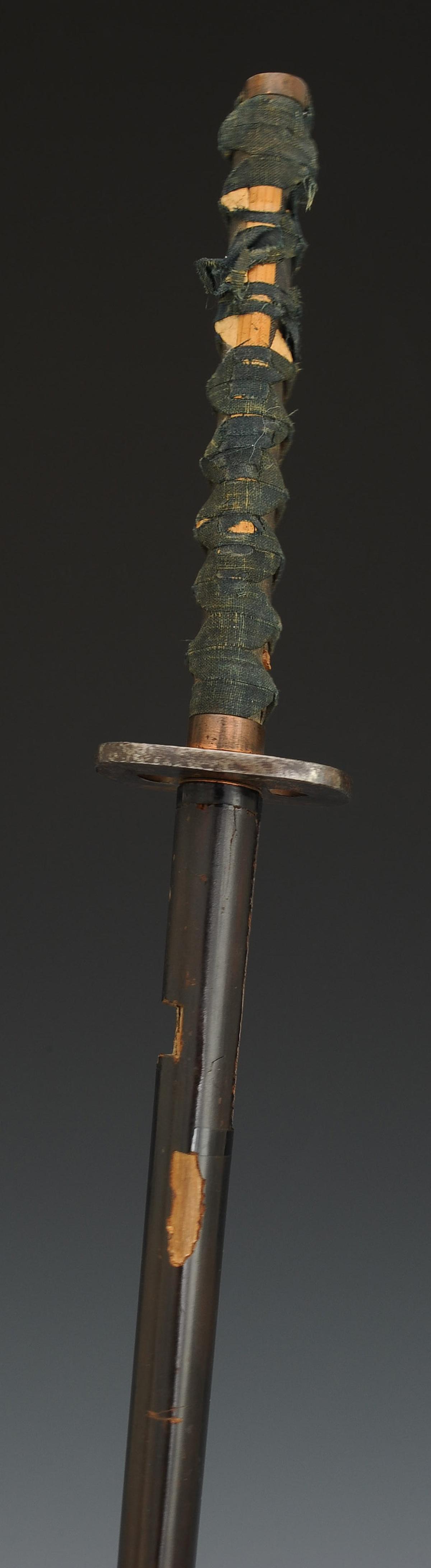
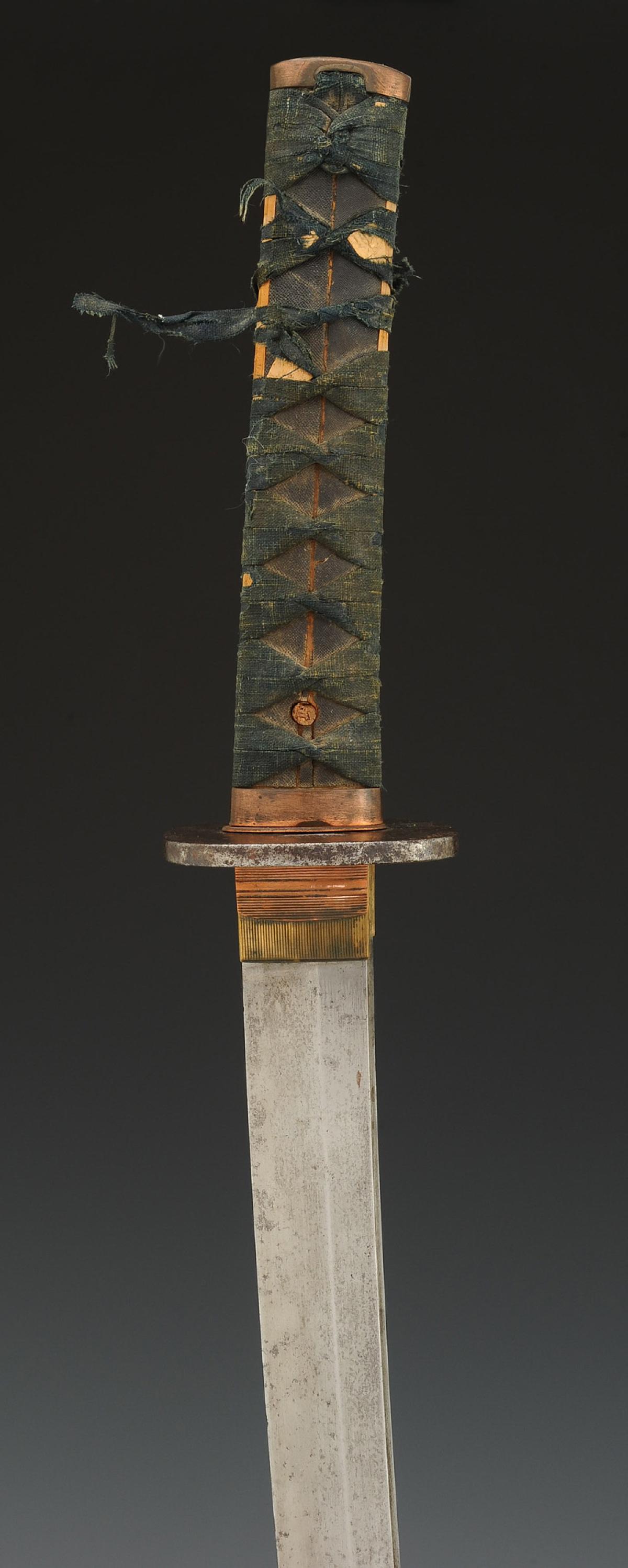
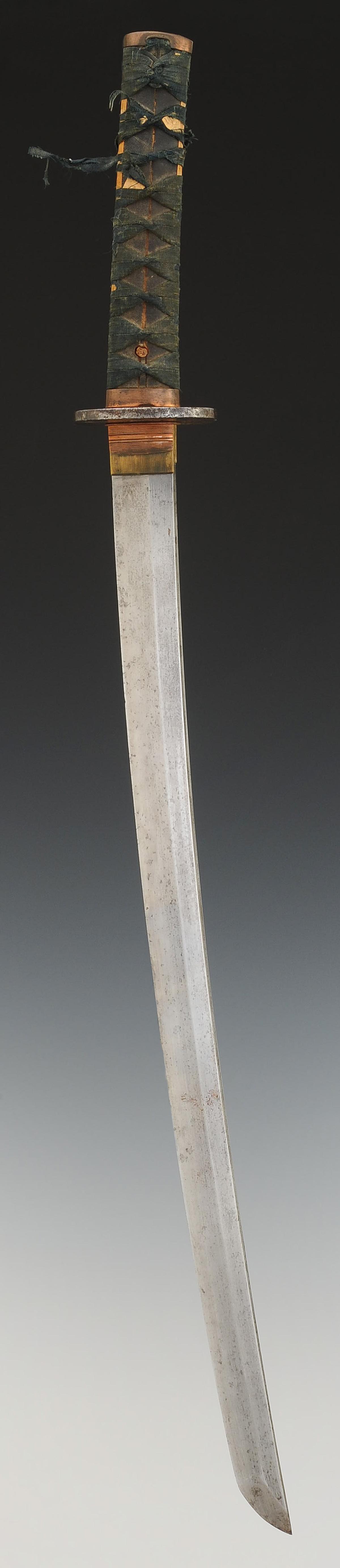
The handle of the katana, called "tsuka," is made in two parts of magnolia wood bound together, within which the blade's silk, "nakago," is inserted and adorned with ray skin, a cartilaginous fish leather known as "same-hada," covered with skillfully positioned wide black cloth cords called "tsuka-ito" passing through the "kashira." A bamboo peg "mekugi" secures the "nakago" in the handle. The pommel "kashira" and collar "fuchi" are undecorated copper. The guard "tsuba" is square in shape with rounded and flat edges, made of steel. The copper under-grip is known as "habaky." The blade is made of steel from the early Edo period, slightly curved with broad cutting edges "hon zuquri," and a curved end of the blade called "fukura-tsuku." The scabbard "saya" is composed of two half-shells made of magnolia wood with a matte black finish.
Handle length: 19 cm
Tsuba thickness: 5 mm
Blade length: 56.2 cm
Scabbard length: 57 cm
Imperial Japan.
Early Edo Period, 1603-1868.
In fair condition; some missing ray skin, handle lacing shows wear and tears, the "tsuba" has lost its black lacquer, the blade has lost its original polish, scabbard has a chip on its lacquer (approximately 3 cm high, 1 cm wide) on its side, missing suspension ring.
BIOGRAPHY:
Sesshuju Sukeharu (摂州住祐春).
Sesshu Sukeharu is relatively well-known; he is the nephew of a famous forger, and his production is of high quality.
HISTORICAL BACKGROUND:
This is the period when the Tokugawa clan's power is established over all of Japan after Tokugawa leyasu's victory at the Battle of Sekigahara. The Tokugawa Shogunate will be the first shogunate to rule over the entire archipelago, its dynasty being defeated only in 1868 with the overthrow of the shogunal government and the Meiji Imperial Restoration.
In the historical classification of swords forged in Japan, this is the "Shinto" period, translated as "new sword" in contrast to those produced before, classified as "Koto," or "ancient swords."
The Tokugawa period is considered a time of peace (imposed) following decades of turmoil and incessant wars between different clans. The forgers produced numerous swords of medium quality in the preceding years, and the demand waned. However, the quality increased, as artisans had more time to refine their craft. They were asked to forge swords in the manner of, to imitate blades that belonged to heroes of previous wars.
There is a high demand for wakisashi as the government allows the wearing of this category of sword for certain social classes not belonging to the samurai class (merchants, doctors, etc.).
The handle of the katana, called "tsuka," is made in two parts of magnolia wood bound together, within which the blade's silk, "nakago," is inserted and adorned with ray skin, a cartilaginous fish leather known as "same-hada," covered with skillfully positioned wide black cloth cords called "tsuka-ito" passing through the "kashira." A bamboo peg "mekugi" secures the "nakago" in the handle. The pommel "kashira" and collar "fuchi" are undecorated copper. The guard "tsuba" is square in shape with rounded and flat edges, made of steel. The copper under-grip is known as "habaky." The blade is made of steel from the early Edo period, slightly curved with broad cutting edges "hon zuquri," and a curved end of the blade called "fukura-tsuku." The scabbard "saya" is composed of two half-shells made of magnolia wood with a matte black finish.
Handle length: 19 cm
Tsuba thickness: 5 mm
Blade length: 56.2 cm
Scabbard length: 57 cm
Imperial Japan.
Early Edo Period, 1603-1868.
In fair condition; some missing ray skin, handle lacing shows wear and tears, the "tsuba" has lost its black lacquer, the blade has lost its original polish, scabbard has a chip on its lacquer (approximately 3 cm high, 1 cm wide) on its side, missing suspension ring.
BIOGRAPHY:
Sesshuju Sukeharu (摂州住祐春).
Sesshu Sukeharu is relatively well-known; he is the nephew of a famous forger, and his production is of high quality.
HISTORICAL BACKGROUND:
This is the period when the Tokugawa clan's power is established over all of Japan after Tokugawa leyasu's victory at the Battle of Sekigahara. The Tokugawa Shogunate will be the first shogunate to rule over the entire archipelago, its dynasty being defeated only in 1868 with the overthrow of the shogunal government and the Meiji Imperial Restoration.
In the historical classification of swords forged in Japan, this is the "Shinto" period, translated as "new sword" in contrast to those produced before, classified as "Koto," or "ancient swords."
The Tokugawa period is considered a time of peace (imposed) following decades of turmoil and incessant wars between different clans. The forgers produced numerous swords of medium quality in the preceding years, and the demand waned. However, the quality increased, as artisans had more time to refine their craft. They were asked to forge swords in the manner of, to imitate blades that belonged to heroes of previous wars.
There is a high demand for wakisashi as the government allows the wearing of this category of sword for certain social classes not belonging to the samurai class (merchants, doctors, etc.).
Reference :
33559
Next update Friday, April 24th at 13:30 PM
The shipping department will be closed from April 7th to April 21st. FOR ALL PURCHASES, PAYMENT IN MULTIPLE CHECKS POSSIBLE
bertrand.malvaux@wanadoo.fr 06 07 75 74 63
SHIPPING COSTS
Shipping costs are calculated only once per order for one or more items, all shipments are sent via registered mail, as this is the only way to have proof of dispatch and receipt.
For parcels whose value cannot be insured by the Post, shipments are entrusted to DHL or Fedex with real value insured, the service is of high quality but the cost is higher.
RETURN POLICY
Items can be returned within 8 days of receipt. They must be returned by registered mail at the sender's expense, in their original packaging, and in their original condition.
AUTHENTICITY
The selection of items offered on this site allows me to guarantee the authenticity of each piece described here, all items offered are guaranteed to be period and authentic, unless otherwise noted or restricted in the description.
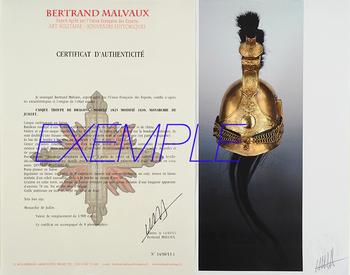
An authenticity certificate of the item including the description published on the site, the period, the sale price, accompanied by one or more color photographs is automatically provided for any item priced over 130 euros. Below this price, each certificate is charged 5 euros.
Only items sold by me are subject to an authenticity certificate, I do not provide any expert reports for items sold by third parties (colleagues or collectors).
The shipping department will be closed from April 7th to April 21st. FOR ALL PURCHASES, PAYMENT IN MULTIPLE CHECKS POSSIBLE
bertrand.malvaux@wanadoo.fr 06 07 75 74 63
An authenticity certificate of the item including the description published on the site, the period, the sale price, accompanied by one or more color photographs is automatically provided for any item priced over 130 euros. Below this price, each certificate is charged 5 euros.
Only items sold by me are subject to an authenticity certificate, I do not provide any expert reports for items sold by third parties (colleagues or collectors).