
Army of the Alps. LOT OF TWO LETTERS: autographed letter signed by LA TOUR D'AUVERGNE on October 9, 1792, TO THE MUNICIPAL OFFICERS OF CARHAIX; autographed letter signed by KELLERMANN TO THE MINISTER OF WAR on the 30th of Pluviôse, year 4 (July 30, 1796). 18915-24
Sold out
Army of the Alps. LOT OF TWO LETTERS: autographed letter signed LA TOUR D'AUVERGNE on October 9, 1792 TO THE MUNICIPAL OFFICERS OF CARHAIX; autographed letter signed KELLERMANN TO THE MINISTER OF WAR on 30 pluviôse year 4 (July 30, 1796). 18915-24
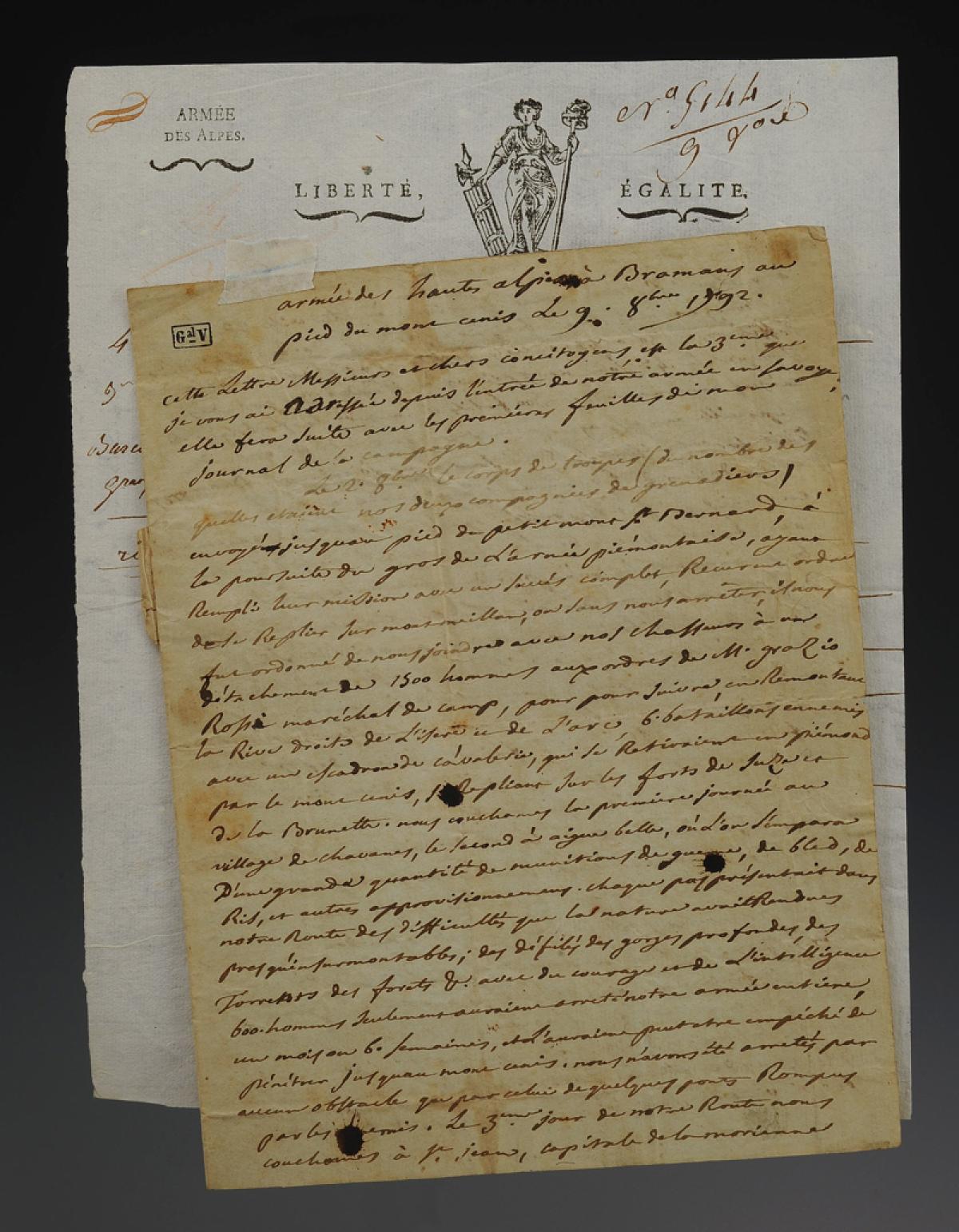
- Handwritten heading "Army of the High Alps, Bramans at the foot of the Cents mountain on October 9, 1792.
Lengthy autographed letter addressed by La Tour d'Auvergne, from the Army of the Alps, to the municipal officers of Carhaix (his hometown).
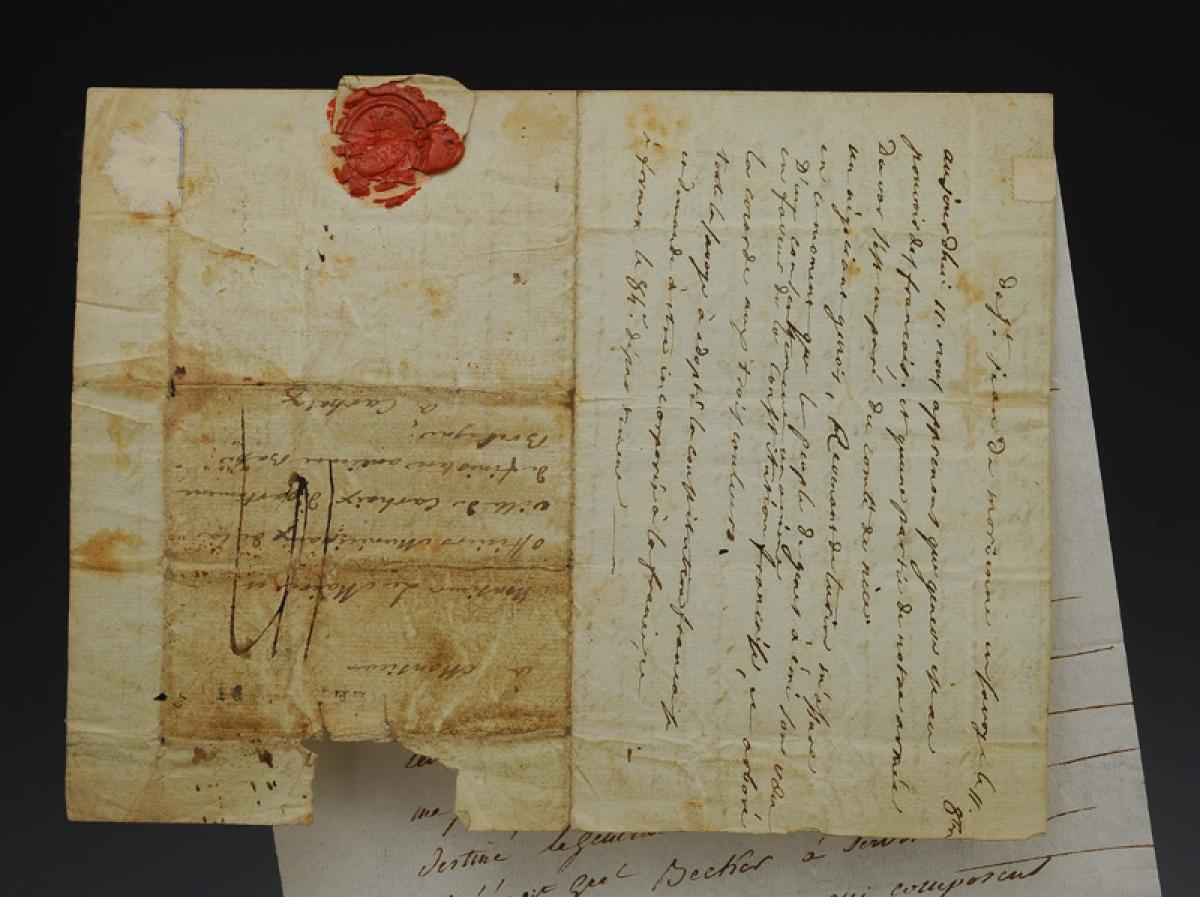
With address and red wax seal "To Mister / Mr. Mayor and / municipal officers of the / town of Carhaix, department / of Finistère former Lower / Brittany / To Carhaix".
This very detailed letter continues the campaign journal written by La Tour d'Auvergne since his Army entered Savoy.
It is signed "La Tour d'Auvergne captain of the grenadiers commanding 4 detached companies of the 80th Regiment in the Army of the Alps ».
Double sheet, 4 pages of dense writing. H 21 cm x 15.8 cm.
Fair condition, folds, foxing, damp stains, ink stains, tear with loss on the 4th page (where the wax seal would be, a few missing words in the text).
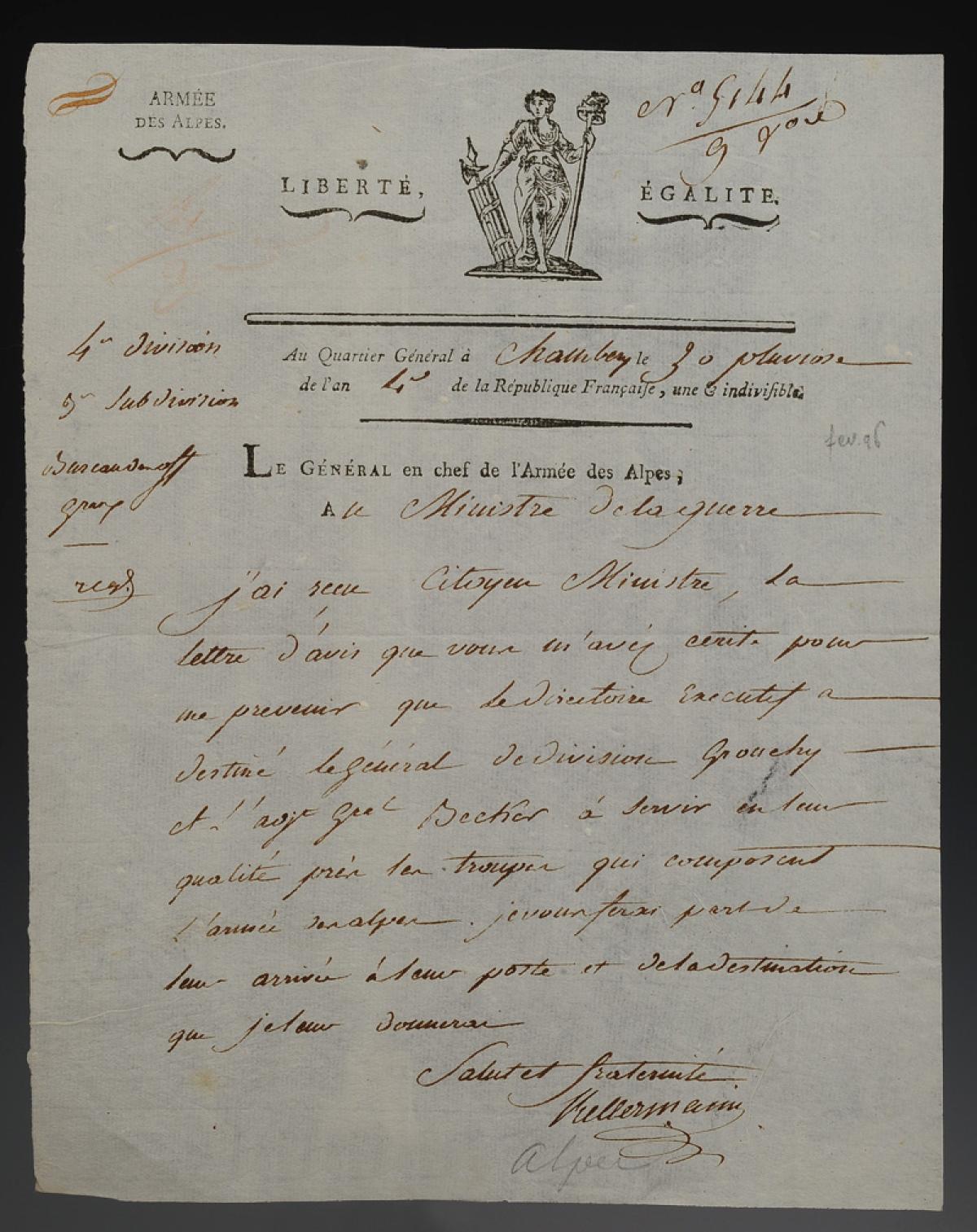
- Printed heading "ARMY OF THE ALPS / LIBERTY / EQUALITY", vignette of the Republic with its pike topped with the Phrygian cap and a bundle of weapons.
At the Headquarters in Chambéry on the 30th pluviôse of the 4th year of the French Republic, one & indivisible. 4th division. 9th subdivision.
General Kellermann writes to the Minister of War: "I have received, Citizen Minister, the letter of notice that you wrote to inform me that the executive directory has appointed the divisional general Grouchy and the adjutant general (Be..?) to serve in their capacity with the troops making up the army of the Alps. I will inform you of their arrival at their post and the assignment that I will give them.
Greetings and fraternity. Signed Kellermann."
H 24 cm x 19 cm. Piece numbered "No. 5144".
Good condition.
* Born in December 1743 in Carhaix and entered in 1767 in the 2nd company of the Musketeers of the King, Théophile Corret de Kerbeauffret, later known as La Tour d'Auvergne in 1779, remains an example of courage, modesty, and hard work. During the final years of Louis XVI's reign, he served in particular in the Angoumois infantry regiment and actively participated in operations against the British in the 1780s. When the revolution began, he was a captain, decorated with the Saint-Louis Cross, and chose to continue serving in the armies of the Republic. From Savoy in 1792 to Spain in 1793-1794, he defended the French borders attacked by the allied sovereigns and distinguished himself with his initiative in commanding a group of light infantry companies. He was then among the most well-known officers of his time, disciplined in troubled times, unwavering in matters of honor, and surprised his comrades and superiors by rejecting all promotions offered to him to remain in direct command of his men. He chose to leave the service in 1795 to dedicate himself to the study of history and the Breton language, becoming one of the greatest specialists. At nearly 55 years old, he requested a new commitment and joined the 46th demi-brigade in 1797, still as a captain, and notably stood out again during Masséna's Swiss campaign in 1799. His reputation for honesty was such that General Bonaparte, now First Consul, offered him a position in the Legislative Corps, an honor that La Tour d'Auvergne declined. To pay tribute to this exceptional soldier, esteemed by all, Bonaparte created a new title and a unique reward: on April 27, 1800, the captain was appointed the "First Grenadier of the armies of the Republic" and was presented a sword of honor a few days later. Despite being surrounded by esteem from all, he immediately returned to the army of the Rhine and died in combat on June 28, 1800, from a lance strike by an Austrian cavalryman in Oberhausen. An exemplary soldier and officer, his heart was laid to rest in Les Invalides, his ashes transferred to the Pantheon, and his name engraved under the Arc de Triomphe. La Tour d'Auvergne remains, among the great figures of the French infantry, one of the most endearing.
* François Étienne Christophe Kellermann (more commonly known as François Christophe Kellermann), born on May 28, 1735, in Strasbourg, and died on September 13, 1820, in Paris, was a French military officer and politician.
[...]
After the fall of Robespierre (July 1794), he was acquitted and returned to the head of his armies (January 1795). In September 1795, he was relieved of the command of the Army of Italy, entrusted in March 1796 to Napoleon Bonaparte, and he retained only the Army of the Alps, reduced to a secondary role. He resigned in the spring of 1797 after the great victories achieved by the Army of Italy.
- Handwritten heading "Army of the High Alps, Bramans at the foot of the Cents mountain on October 9, 1792.
Lengthy autographed letter addressed by La Tour d'Auvergne, from the Army of the Alps, to the municipal officers of Carhaix (his hometown).
With address and red wax seal "To Mister / Mr. Mayor and / municipal officers of the / town of Carhaix, department / of Finistère former Lower / Brittany / To Carhaix".
This very detailed letter continues the campaign journal written by La Tour d'Auvergne since his Army entered Savoy.
It is signed "La Tour d'Auvergne captain of the grenadiers commanding 4 detached companies of the 80th Regiment in the Army of the Alps ».
Double sheet, 4 pages of dense writing. H 21 cm x 15.8 cm.
Fair condition, folds, foxing, damp stains, ink stains, tear with loss on the 4th page (where the wax seal would be, a few missing words in the text).
- Printed heading "ARMY OF THE ALPS / LIBERTY / EQUALITY", vignette of the Republic with its pike topped with the Phrygian cap and a bundle of weapons.
At the Headquarters in Chambéry on the 30th pluviôse of the 4th year of the French Republic, one & indivisible. 4th division. 9th subdivision.
General Kellermann writes to the Minister of War: "I have received, Citizen Minister, the letter of notice that you wrote to inform me that the executive directory has appointed the divisional general Grouchy and the adjutant general (Be..?) to serve in their capacity with the troops making up the army of the Alps. I will inform you of their arrival at their post and the assignment that I will give them.
Greetings and fraternity. Signed Kellermann."
H 24 cm x 19 cm. Piece numbered "No. 5144".
Good condition.
* Born in December 1743 in Carhaix and entered in 1767 in the 2nd company of the Musketeers of the King, Théophile Corret de Kerbeauffret, later known as La Tour d'Auvergne in 1779, remains an example of courage, modesty, and hard work. During the final years of Louis XVI's reign, he served in particular in the Angoumois infantry regiment and actively participated in operations against the British in the 1780s. When the revolution began, he was a captain, decorated with the Saint-Louis Cross, and chose to continue serving in the armies of the Republic. From Savoy in 1792 to Spain in 1793-1794, he defended the French borders attacked by the allied sovereigns and distinguished himself with his initiative in commanding a group of light infantry companies. He was then among the most well-known officers of his time, disciplined in troubled times, unwavering in matters of honor, and surprised his comrades and superiors by rejecting all promotions offered to him to remain in direct command of his men. He chose to leave the service in 1795 to dedicate himself to the study of history and the Breton language, becoming one of the greatest specialists. At nearly 55 years old, he requested a new commitment and joined the 46th demi-brigade in 1797, still as a captain, and notably stood out again during Masséna's Swiss campaign in 1799. His reputation for honesty was such that General Bonaparte, now First Consul, offered him a position in the Legislative Corps, an honor that La Tour d'Auvergne declined. To pay tribute to this exceptional soldier, esteemed by all, Bonaparte created a new title and a unique reward: on April 27, 1800, the captain was appointed the "First Grenadier of the armies of the Republic" and was presented a sword of honor a few days later. Despite being surrounded by esteem from all, he immediately returned to the army of the Rhine and died in combat on June 28, 1800, from a lance strike by an Austrian cavalryman in Oberhausen. An exemplary soldier and officer, his heart was laid to rest in Les Invalides, his ashes transferred to the Pantheon, and his name engraved under the Arc de Triomphe. La Tour d'Auvergne remains, among the great figures of the French infantry, one of the most endearing.
* François Étienne Christophe Kellermann (more commonly known as François Christophe Kellermann), born on May 28, 1735, in Strasbourg, and died on September 13, 1820, in Paris, was a French military officer and politician.
[...]
After the fall of Robespierre (July 1794), he was acquitted and returned to the head of his armies (January 1795). In September 1795, he was relieved of the command of the Army of Italy, entrusted in March 1796 to Napoleon Bonaparte, and he retained only the Army of the Alps, reduced to a secondary role. He resigned in the spring of 1797 after the great victories achieved by the Army of Italy.
Reference :
18915-24
Next update Friday, march 20th at 13:30 PM
FOR ALL PURCHASES, PAYMENT IN MULTIPLE CHECKS POSSIBLE
bertrand.malvaux@wanadoo.fr 06 07 75 74 63
SHIPPING COSTS
Shipping costs are calculated only once per order for one or more items, all shipments are sent via registered mail, as this is the only way to have proof of dispatch and receipt.
For parcels whose value cannot be insured by the Post, shipments are entrusted to DHL or Fedex with real value insured, the service is of high quality but the cost is higher.
RETURN POLICY
Items can be returned within 8 days of receipt. They must be returned by registered mail at the sender's expense, in their original packaging, and in their original condition.
AUTHENTICITY
The selection of items offered on this site allows me to guarantee the authenticity of each piece described here, all items offered are guaranteed to be period and authentic, unless otherwise noted or restricted in the description.
An authenticity certificate of the item including the description published on the site, the period, the sale price, accompanied by one or more color photographs is automatically provided for any item priced over 130 euros. Below this price, each certificate is charged 5 euros.
Only items sold by me are subject to an authenticity certificate, I do not provide any expert reports for items sold by third parties (colleagues or collectors).
FOR ALL PURCHASES, PAYMENT IN MULTIPLE CHECKS POSSIBLE
bertrand.malvaux@wanadoo.fr 06 07 75 74 63
An authenticity certificate of the item including the description published on the site, the period, the sale price, accompanied by one or more color photographs is automatically provided for any item priced over 130 euros. Below this price, each certificate is charged 5 euros.
Only items sold by me are subject to an authenticity certificate, I do not provide any expert reports for items sold by third parties (colleagues or collectors).