
1st Battalion of Eure et Loir. EXCERPT FROM THE MINUTES OF MARCH 25, 1792 APPOINTING CITIZEN MARCEAU AS SECOND COLONEL OF SAID BATTALION, "D'Eulémond" (Deûlémont) on July 10, 1793. 18915-13
Sold out
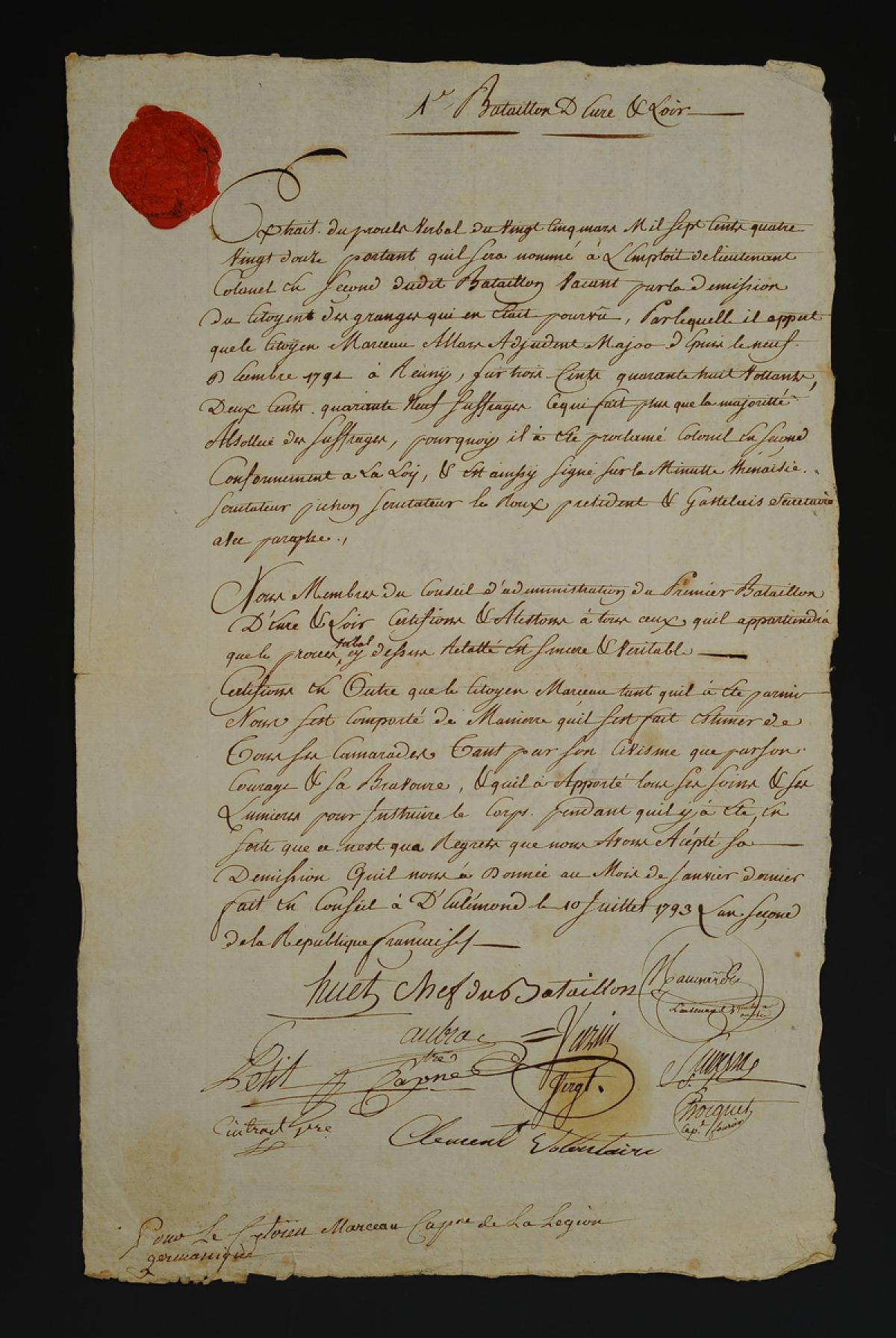
1st Battalion of Eure et Loir. EXCERPT FROM THE MINUTES OF MARCH 25, 1792 APPOINTING CITIZEN MARCEAU * AS SECOND COLONEL OF THE SAID BATTALION, "D'Eulémond" (Deûlémont) on July 10, 1793. 18915-13
Fully handwritten document, with the letterhead of the 1st Battalion of Eure & Loir.
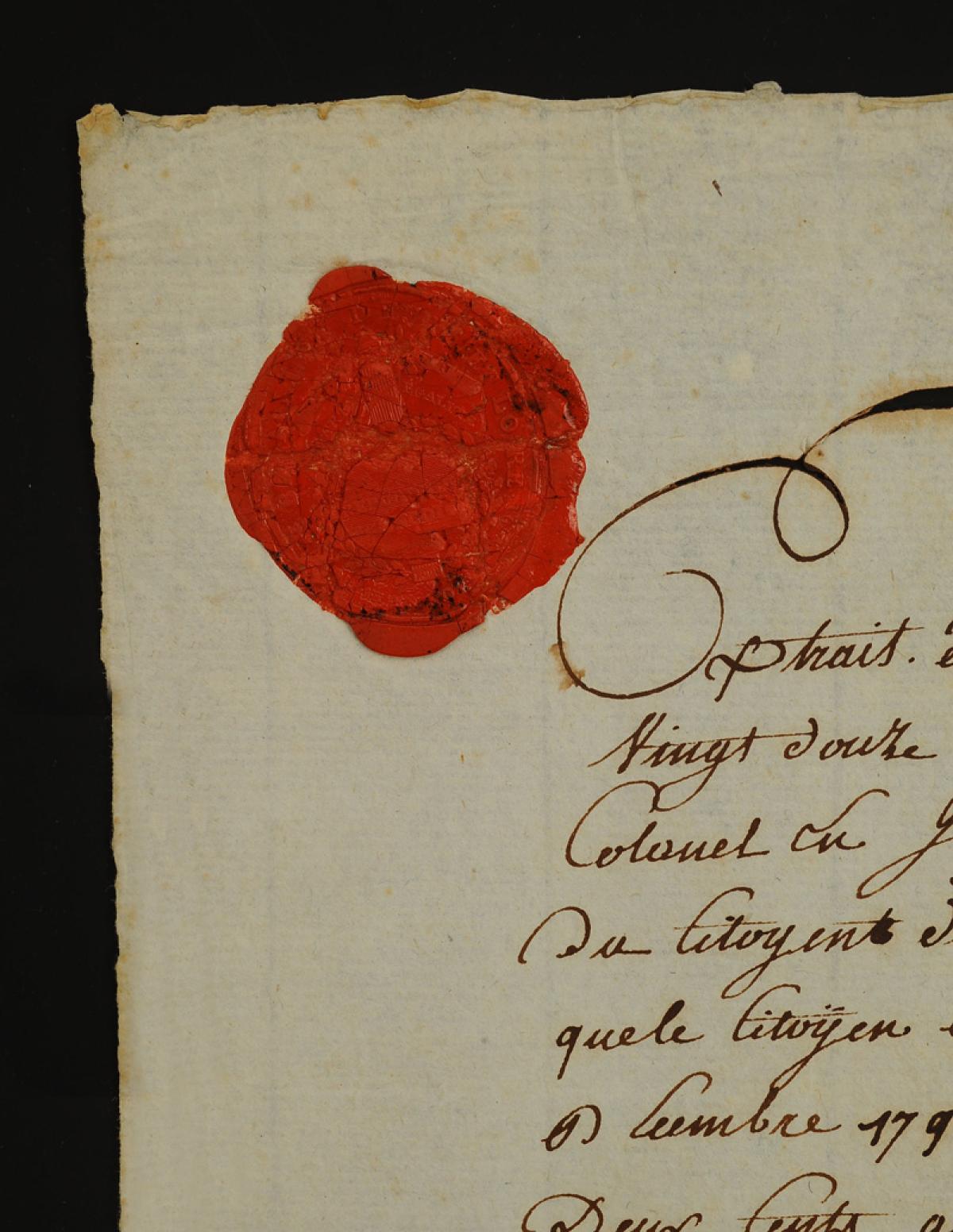
Red wax seal "1st BATTALION OF EURE ET LOIR".
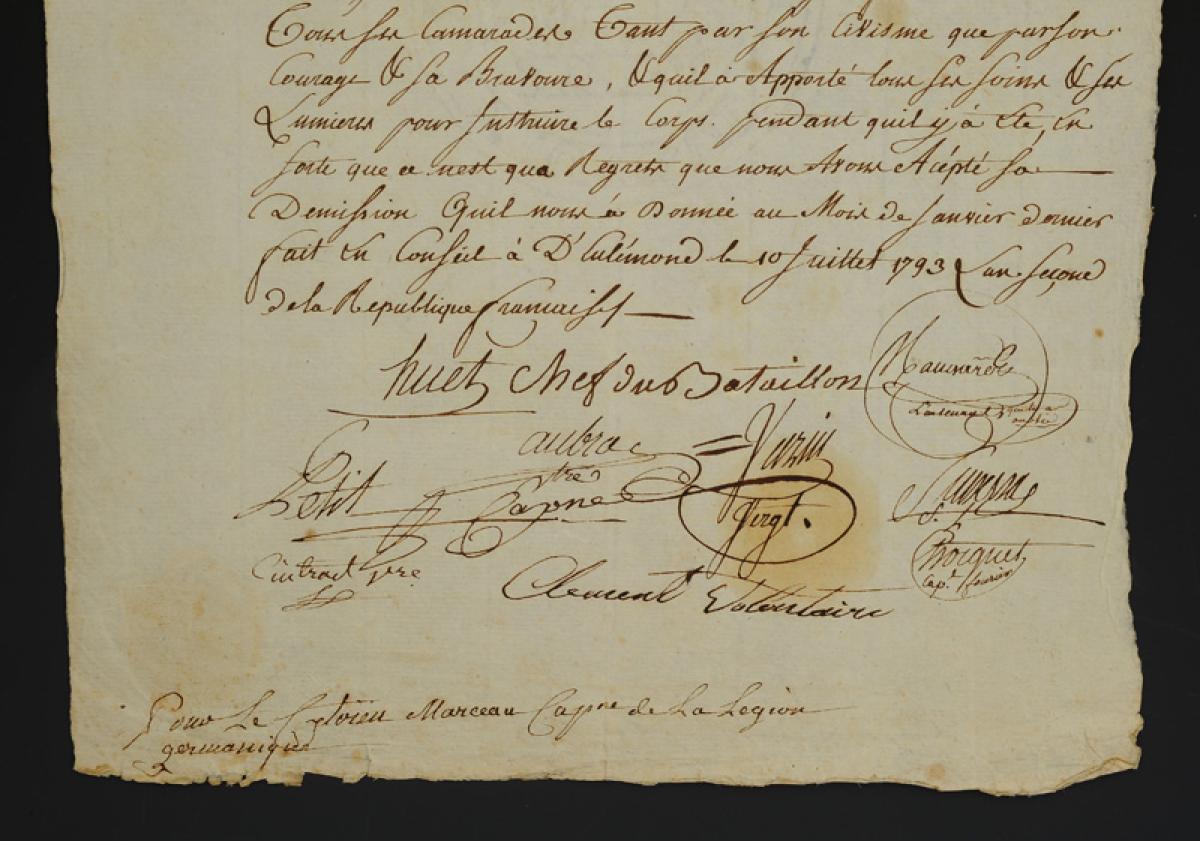
Citizen Marceau is an adjutant major in said battalion, and his appointment as second colonel is approved by the Council of Administration (nine signatories) in "D'Eulémond" (Deûlémont) on July 10, 1793, in the second year of the French Republic, with the majority of votes:
"... Out of three hundred and forty-eight voters, two hundred and forty-nine votes, which is more than the absolute majority of votes, which is why he was proclaimed second colonel in accordance with the law [...]".
Handwritten note at the bottom of the page "For Citizen Marceau, Captain of the Germanic Legion".
Dimensions: 35.5 cm x 22.5 cm.
Good condition, horizontal central fold, some foxing.
HISTORICAL BACKGROUND:
1st battalion of Eure-et-Loir, formed on November 1, 1791. It was composed of 570 volunteers from the districts of Eure-et-Loir, who were gathered in Chartres at a later date (November 1, 1791), immediately formed into companies, and organized into a battalion on November 6. It was reviewed to acknowledge its formation.
[...] In 1792:
On January 1, it was stationed in Reims. It distinguished itself during a bloody brawl with the 1st battalion of Côte d'Or (January 15). The brawl erupted due to bad elements and the prevailing indiscipline in the battalion, despite the efforts of the officers. It left Reims on May 5, to join General Lafayette's Central Army. It passed through Rethel, then Montmédy (May 9), where it remained garrisoned with an effective strength of 540 men. It was then sent to Sedan, and then to Verdun (August 30), participating in the city's defeat, which was very brief as the place shamefully surrendered after three days, following various betrayals and pressures in the city (September 2). It was allowed, by the terms of the surrender, to retreat and was sent to the rear, to the Interior Army. It arrived at Châlons, and 300 volunteers who had served for the duration of a campaign decided to return home as permitted by law and the terms of their engagements (September 7). The battalion was reorganized at Châlons camp under the care of MARCEAU, then served in the vanguard of General Dillon, camped in Futeau, participating in the Bienne encounter (September 20), and then joining the pursuit of the coalition forces (October). It was part of the invading troops of Belgium under the command of General Dumouriez (Army of the North), in the column of General Égalité (Duke of Chartres) [...]
BIOGRAPHY:
François Séverin Marceau-Desgraviers, born on March 1, 1769 in Chartres, and died on September 21, 1796 in Altenkirchen, Germany in the Rhineland-Palatinate, was a French general of the Revolution.
In service with the Ardennes Army:
At the Revolution, he joined the Paris National Guard on July 14, 1789, and took part in the storming of the Bastille. In October, he was a captain in the Chartres National Guard. In 1791, he enlisted in the 1st battalion of Eure-et-Loir volunteers, where he was elected captain of the 2nd company on November 6. He was promoted adjutant major on December 1, then second lieutenant-colonel on March 25, 1792.
He moved to the Army of the North and requested to join the light cuirassiers of the Germanic Legion, where he was admitted on September 4, 1792, with the rank of second lieutenant-colonel.
In service with the Army of the West:
In 1793, he served in Vendée with the Army of the West, where he was arrested with his commander Westermann, by the order of representative Pierre Bourbotte.
Released shortly after, he was captain in the 19th horse chasseurs on May 1, 1793, and on June 10, saved Bourbotte's life during the Battle of Saumur, when Bourbotte, surrounded by enemies, was about to succumb, and Marceau arrived and rescued him. This conduct earned him the rank of brigadier general on October 16, 1793, two months before Bonaparte.
Marceau was promoted to divisional general on November 10, 1793, at 24 years old. However, the mission representatives remained suspicious of generals Westermann and Kléber.
Given the need to eventually merge the Army of the West with the Army of the Côtes de Brest, they entrusted Marceau, on Kléber's proposal, with interim command of the Army of the West on November 27, 1793, in place of Rossignol, while waiting for Turreau to arrive on December 30, 1793.
On December 12 and 13, 1793, he won the Battle of Le Mans.
[...]
Fully handwritten document, with the letterhead of the 1st Battalion of Eure & Loir.
Red wax seal "1st BATTALION OF EURE ET LOIR".
Citizen Marceau is an adjutant major in said battalion, and his appointment as second colonel is approved by the Council of Administration (nine signatories) in "D'Eulémond" (Deûlémont) on July 10, 1793, in the second year of the French Republic, with the majority of votes:
"... Out of three hundred and forty-eight voters, two hundred and forty-nine votes, which is more than the absolute majority of votes, which is why he was proclaimed second colonel in accordance with the law [...]".
Handwritten note at the bottom of the page "For Citizen Marceau, Captain of the Germanic Legion".
Dimensions: 35.5 cm x 22.5 cm.
Good condition, horizontal central fold, some foxing.
HISTORICAL BACKGROUND:
1st battalion of Eure-et-Loir, formed on November 1, 1791. It was composed of 570 volunteers from the districts of Eure-et-Loir, who were gathered in Chartres at a later date (November 1, 1791), immediately formed into companies, and organized into a battalion on November 6. It was reviewed to acknowledge its formation.
[...] In 1792:
On January 1, it was stationed in Reims. It distinguished itself during a bloody brawl with the 1st battalion of Côte d'Or (January 15). The brawl erupted due to bad elements and the prevailing indiscipline in the battalion, despite the efforts of the officers. It left Reims on May 5, to join General Lafayette's Central Army. It passed through Rethel, then Montmédy (May 9), where it remained garrisoned with an effective strength of 540 men. It was then sent to Sedan, and then to Verdun (August 30), participating in the city's defeat, which was very brief as the place shamefully surrendered after three days, following various betrayals and pressures in the city (September 2). It was allowed, by the terms of the surrender, to retreat and was sent to the rear, to the Interior Army. It arrived at Châlons, and 300 volunteers who had served for the duration of a campaign decided to return home as permitted by law and the terms of their engagements (September 7). The battalion was reorganized at Châlons camp under the care of MARCEAU, then served in the vanguard of General Dillon, camped in Futeau, participating in the Bienne encounter (September 20), and then joining the pursuit of the coalition forces (October). It was part of the invading troops of Belgium under the command of General Dumouriez (Army of the North), in the column of General Égalité (Duke of Chartres) [...]
BIOGRAPHY:
François Séverin Marceau-Desgraviers, born on March 1, 1769 in Chartres, and died on September 21, 1796 in Altenkirchen, Germany in the Rhineland-Palatinate, was a French general of the Revolution.
In service with the Ardennes Army:
At the Revolution, he joined the Paris National Guard on July 14, 1789, and took part in the storming of the Bastille. In October, he was a captain in the Chartres National Guard. In 1791, he enlisted in the 1st battalion of Eure-et-Loir volunteers, where he was elected captain of the 2nd company on November 6. He was promoted adjutant major on December 1, then second lieutenant-colonel on March 25, 1792.
He moved to the Army of the North and requested to join the light cuirassiers of the Germanic Legion, where he was admitted on September 4, 1792, with the rank of second lieutenant-colonel.
In service with the Army of the West:
In 1793, he served in Vendée with the Army of the West, where he was arrested with his commander Westermann, by the order of representative Pierre Bourbotte.
Released shortly after, he was captain in the 19th horse chasseurs on May 1, 1793, and on June 10, saved Bourbotte's life during the Battle of Saumur, when Bourbotte, surrounded by enemies, was about to succumb, and Marceau arrived and rescued him. This conduct earned him the rank of brigadier general on October 16, 1793, two months before Bonaparte.
Marceau was promoted to divisional general on November 10, 1793, at 24 years old. However, the mission representatives remained suspicious of generals Westermann and Kléber.
Given the need to eventually merge the Army of the West with the Army of the Côtes de Brest, they entrusted Marceau, on Kléber's proposal, with interim command of the Army of the West on November 27, 1793, in place of Rossignol, while waiting for Turreau to arrive on December 30, 1793.
On December 12 and 13, 1793, he won the Battle of Le Mans.
[...]
Reference :
18915-13
Next update Friday, February 27 at 13:30 PM
FOR ALL PURCHASES, PAYMENT IN MULTIPLE CHECKS POSSIBLE
bertrand.malvaux@wanadoo.fr 06 07 75 74 63
SHIPPING COSTS
Shipping costs are calculated only once per order for one or more items, all shipments are sent via registered mail, as this is the only way to have proof of dispatch and receipt.
For parcels whose value cannot be insured by the Post, shipments are entrusted to DHL or Fedex with real value insured, the service is of high quality but the cost is higher.
RETURN POLICY
Items can be returned within 8 days of receipt. They must be returned by registered mail at the sender's expense, in their original packaging, and in their original condition.
AUTHENTICITY
The selection of items offered on this site allows me to guarantee the authenticity of each piece described here, all items offered are guaranteed to be period and authentic, unless otherwise noted or restricted in the description.
An authenticity certificate of the item including the description published on the site, the period, the sale price, accompanied by one or more color photographs is automatically provided for any item priced over 130 euros. Below this price, each certificate is charged 5 euros.
Only items sold by me are subject to an authenticity certificate, I do not provide any expert reports for items sold by third parties (colleagues or collectors).
FOR ALL PURCHASES, PAYMENT IN MULTIPLE CHECKS POSSIBLE
bertrand.malvaux@wanadoo.fr 06 07 75 74 63
An authenticity certificate of the item including the description published on the site, the period, the sale price, accompanied by one or more color photographs is automatically provided for any item priced over 130 euros. Below this price, each certificate is charged 5 euros.
Only items sold by me are subject to an authenticity certificate, I do not provide any expert reports for items sold by third parties (colleagues or collectors).