
SHAKO OF THE SPECIAL MILITARY SCHOOL OF SAINT-CYR, model of July 31, 1837, July Monarchy. 33348
Sold out
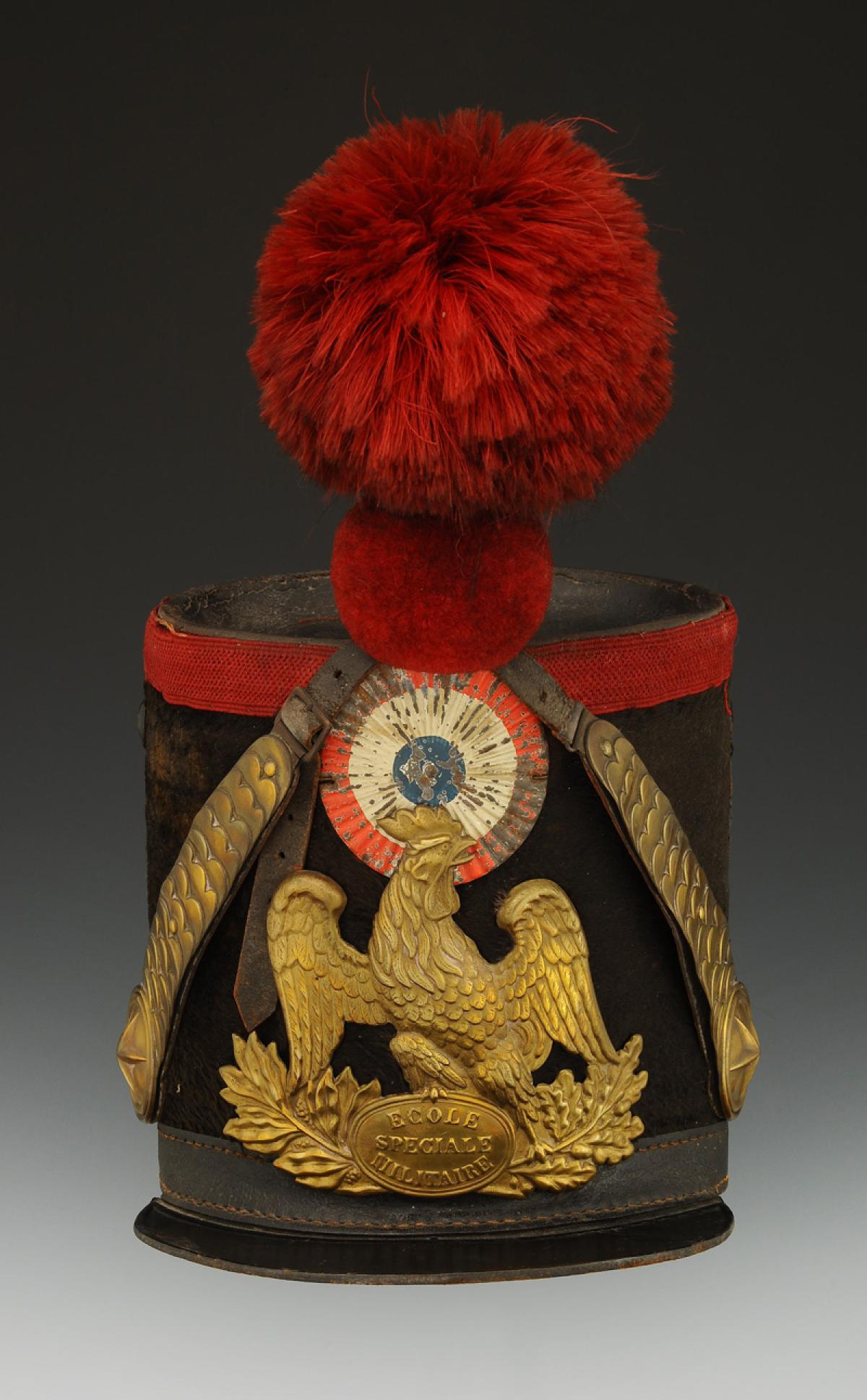
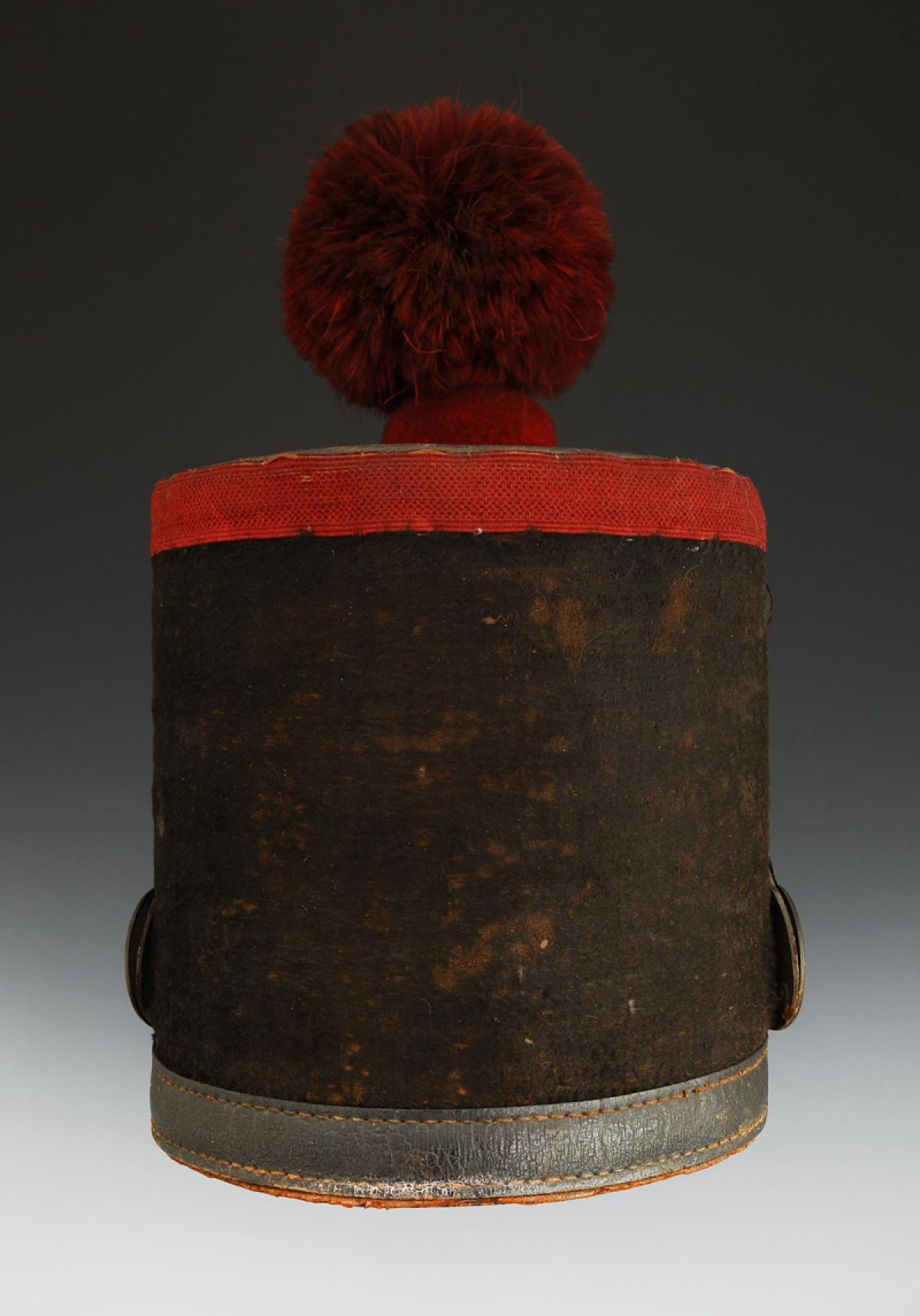
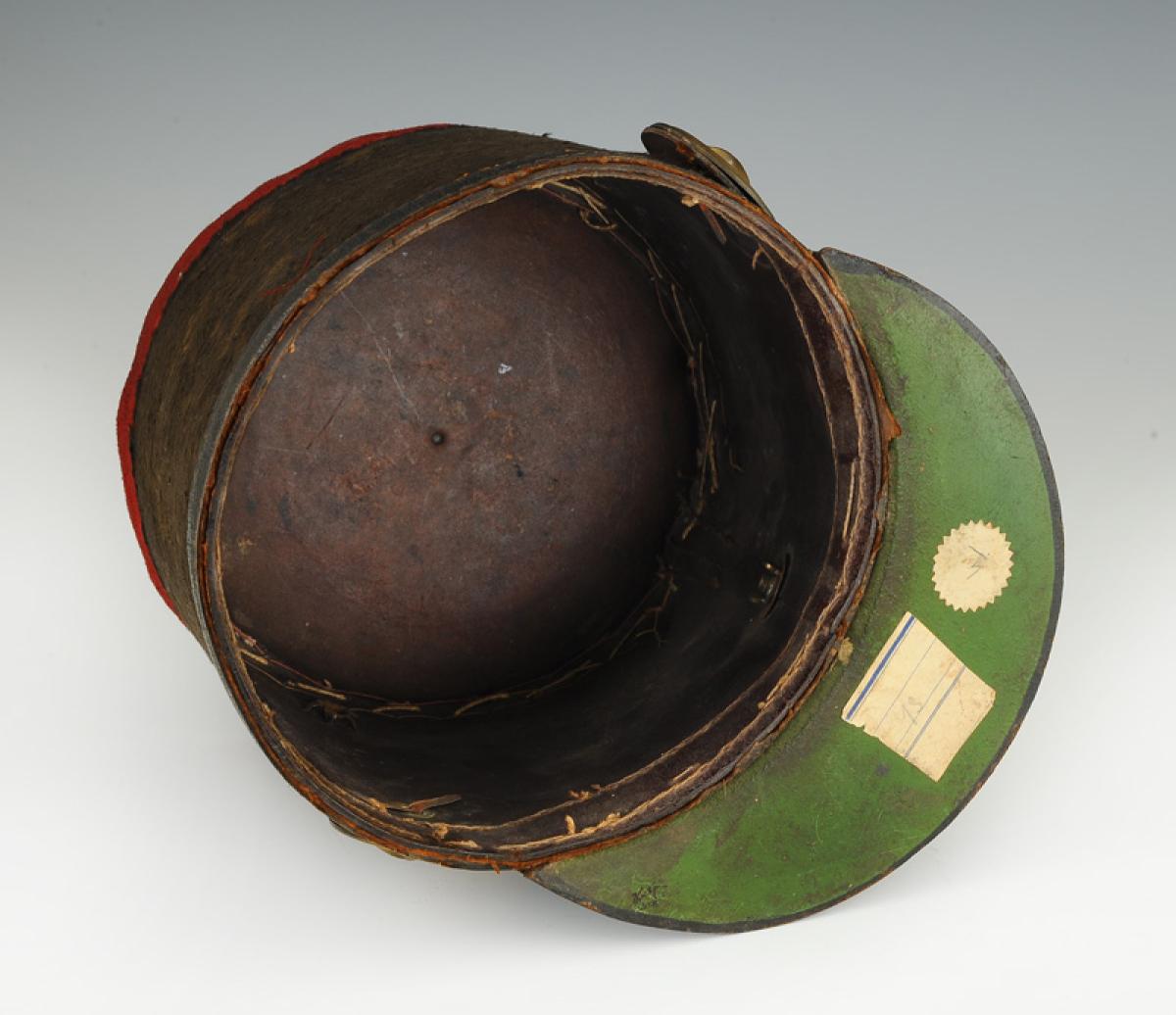
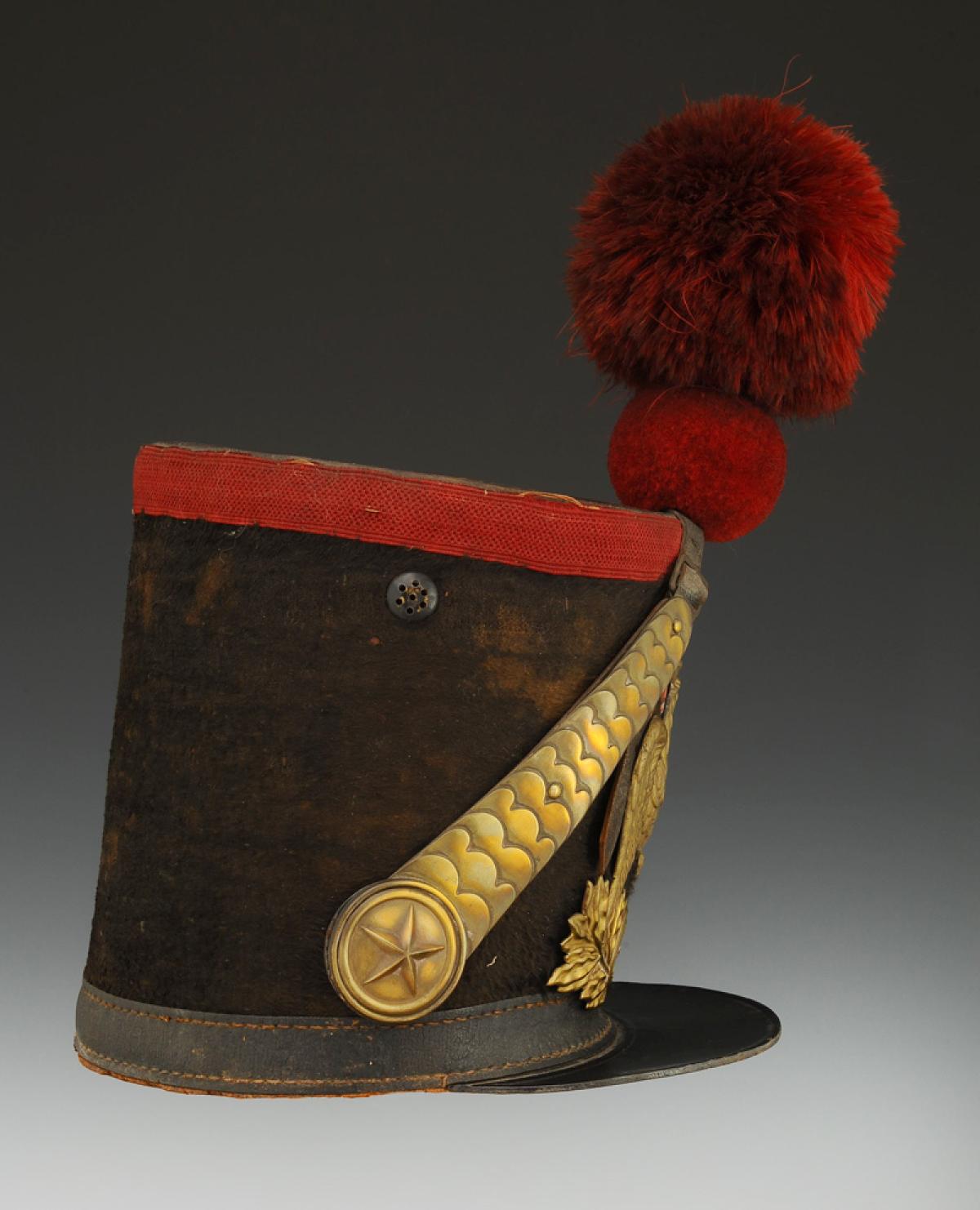
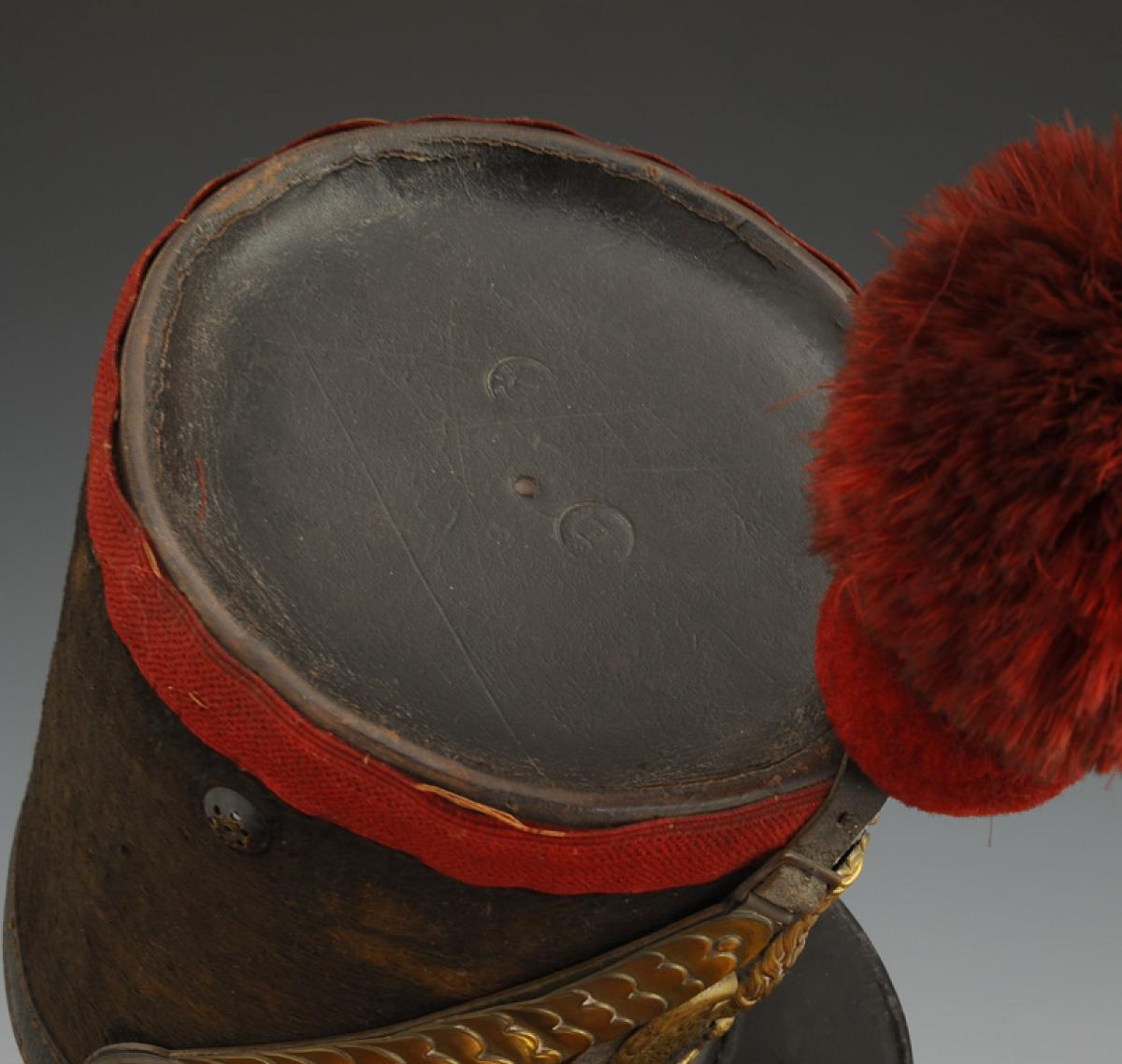
SHAKO FROM THE SPECIAL MILITARY SCHOOL OF SAINT-CYR, model of July 31, 1837, July Monarchy era. 33348
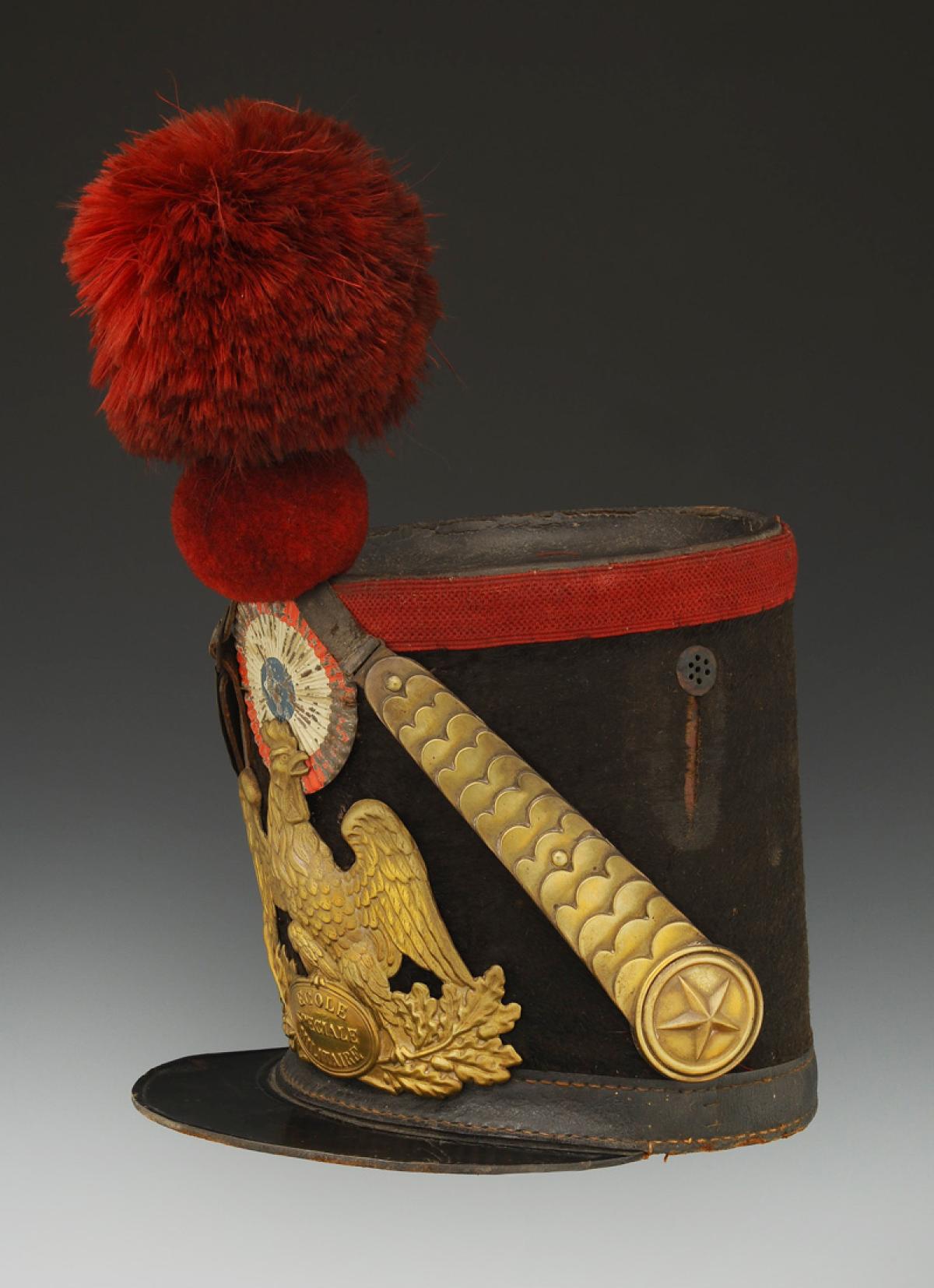
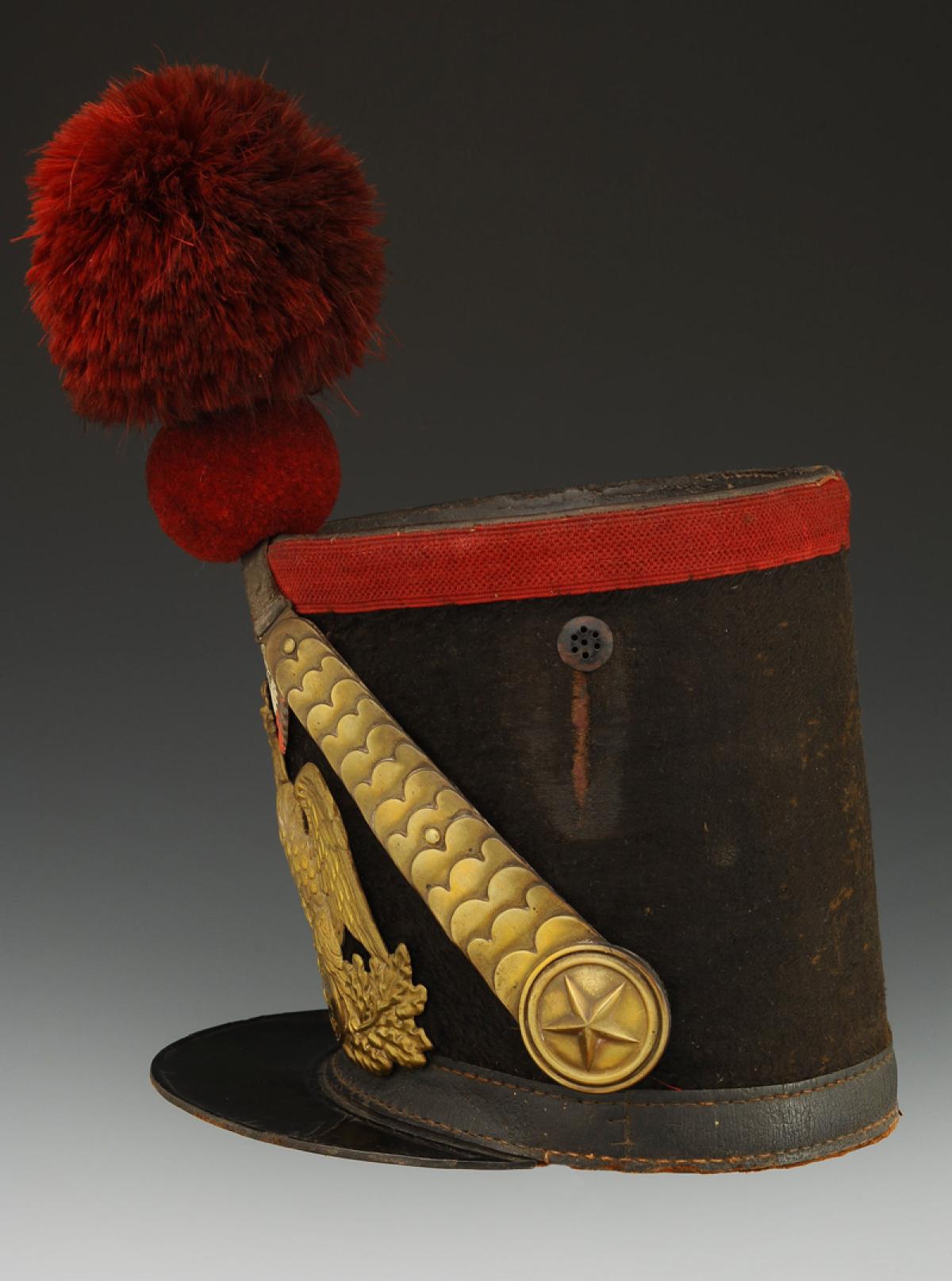
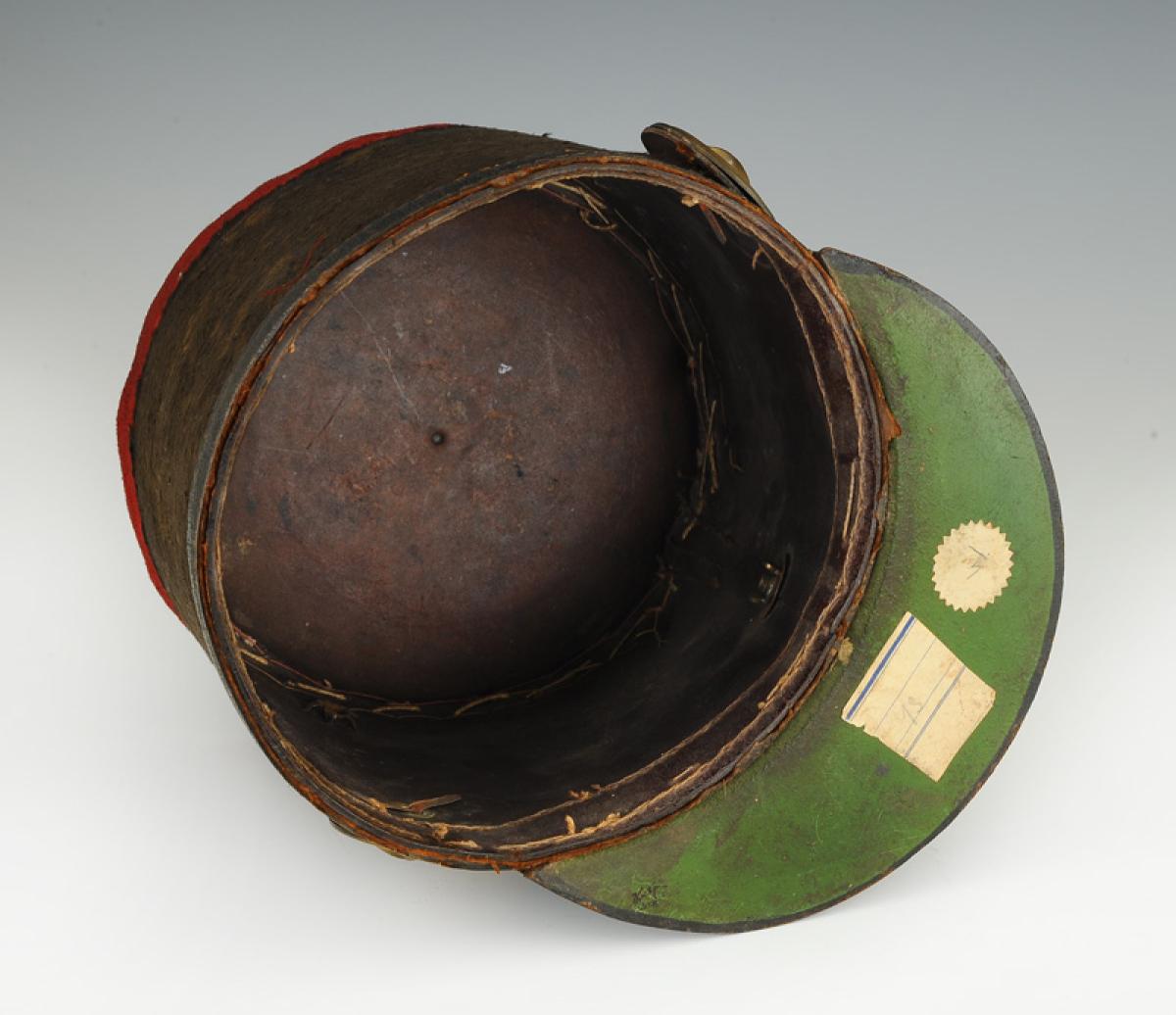
Body in leather covered with silk fabric trimmed at the top with a 2 cm scarlet braid and at the bottom with a 2.5 cm high black varnished leather band. Height at the front 18.5 cm and at the back 21.5 cm. On each side of the body, black lacquered metal ventilators are attached below the scarlet wool braid. Black leather crown, Ø 18.6 cm. Visor in black waxed leather on the outside, green on the inside.
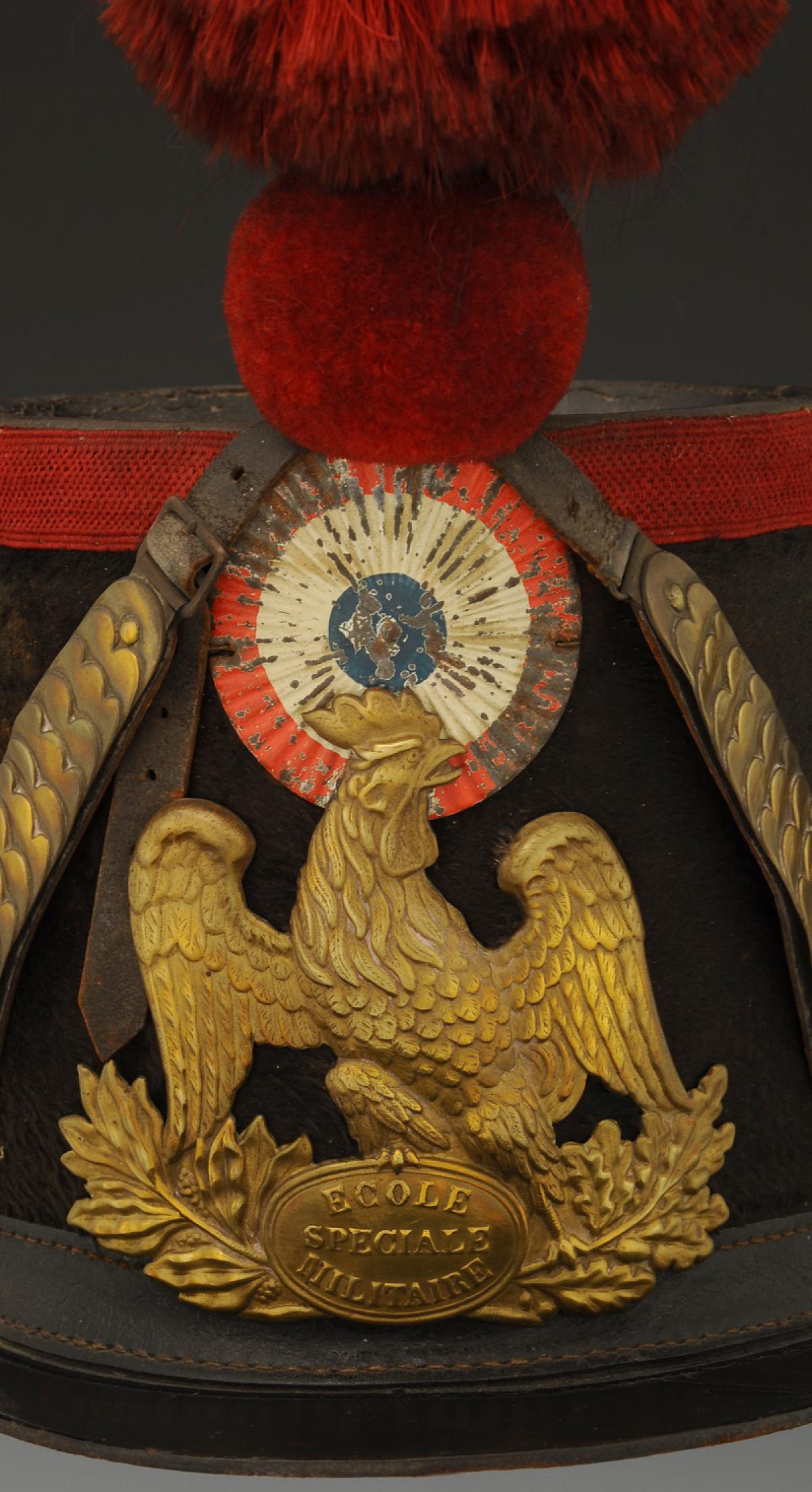
Metal cockade stamped with a radiant tricolor sun (Ø 6.9 cm).
Model 1837 brass plate stamped and cut with a Gallic rooster perched on a branch of oak and laurel holding in its claws an oval medallion bearing the inscription "ECOLE SPECIALE MILITAIRE". Jugulars composed of a leather chinstrap covered with a stamped brass plate shaped like a series of scalloped scales, round rosettes embossed with a star with a prominent outer border (Ø 3.9 cm).
Scarlet wool flame pompom.
France.
July Monarchy era.
In good condition, felt tear on the right side 4 cm high, missing the inner lining, pompom not of the model.
PROVENANCE:
Former collection of Hippolyte Marie-Joseph Boivin (Guermantes, September 8, 1857, Bouvresse, June 19, 1912).
This scholar from the late 19th century amassed a collection of patriotic earthenware of great importance, which has been exhibited several times in French museums.
As a dedicated collector, Hippolyte Boivin gathered earthenware from Rouen, Marseille, Strasbourg, Delft, Nevers, enamelled dial watches from the First Empire, old limbs, Norman and Picardy cabinets and clocks, chests and clocks from various eras, tapestries, rattles from all over France and abroad.
His grandson recounts that H. Boivin and his wife traveled from village to village, buying all items that they found of interest. These acquisitions enriched his own collections and those of the Beauvais museum where he was the curator from 1889 to 1912. In this collecting endeavor, he also developed a passion for military memorabilia, especially headgear, brassware, bridle bits, and various historical souvenirs.
He had a gallery built in his garden to house his military collections, which were later exhibited in the "Boivin room" at the Dejean barracks (Amiens), destroyed during the Second World War. Hippolyte Boivin expressed his fondness for patriotic earthenware by reproducing through drawings and watercolors the pieces he had collected. Two factors may explain his attraction: first, his family's exile from Champagne during the 1870 German invasion may have instilled in him a taste for patriotic and military items; second, his maternal grandfather's occupation of operating a stoneware pottery factory in La Chapelle-aux-Pots may have influenced his affinity for ceramics.
The objects comprising the collection of this enlightened amateur were all acquired opportunistically, seen through the lens of the collecting period: from the fall of Napoleon III up to the eve of the Great War, their homogeneity has been particularly well preserved.
Body in leather covered with silk fabric trimmed at the top with a 2 cm scarlet braid and at the bottom with a 2.5 cm high black varnished leather band. Height at the front 18.5 cm and at the back 21.5 cm. On each side of the body, black lacquered metal ventilators are attached below the scarlet wool braid. Black leather crown, Ø 18.6 cm. Visor in black waxed leather on the outside, green on the inside.
Metal cockade stamped with a radiant tricolor sun (Ø 6.9 cm).
Model 1837 brass plate stamped and cut with a Gallic rooster perched on a branch of oak and laurel holding in its claws an oval medallion bearing the inscription "ECOLE SPECIALE MILITAIRE". Jugulars composed of a leather chinstrap covered with a stamped brass plate shaped like a series of scalloped scales, round rosettes embossed with a star with a prominent outer border (Ø 3.9 cm).
Scarlet wool flame pompom.
France.
July Monarchy era.
In good condition, felt tear on the right side 4 cm high, missing the inner lining, pompom not of the model.
PROVENANCE:
Former collection of Hippolyte Marie-Joseph Boivin (Guermantes, September 8, 1857, Bouvresse, June 19, 1912).
This scholar from the late 19th century amassed a collection of patriotic earthenware of great importance, which has been exhibited several times in French museums.
As a dedicated collector, Hippolyte Boivin gathered earthenware from Rouen, Marseille, Strasbourg, Delft, Nevers, enamelled dial watches from the First Empire, old limbs, Norman and Picardy cabinets and clocks, chests and clocks from various eras, tapestries, rattles from all over France and abroad.
His grandson recounts that H. Boivin and his wife traveled from village to village, buying all items that they found of interest. These acquisitions enriched his own collections and those of the Beauvais museum where he was the curator from 1889 to 1912. In this collecting endeavor, he also developed a passion for military memorabilia, especially headgear, brassware, bridle bits, and various historical souvenirs.
He had a gallery built in his garden to house his military collections, which were later exhibited in the "Boivin room" at the Dejean barracks (Amiens), destroyed during the Second World War. Hippolyte Boivin expressed his fondness for patriotic earthenware by reproducing through drawings and watercolors the pieces he had collected. Two factors may explain his attraction: first, his family's exile from Champagne during the 1870 German invasion may have instilled in him a taste for patriotic and military items; second, his maternal grandfather's occupation of operating a stoneware pottery factory in La Chapelle-aux-Pots may have influenced his affinity for ceramics.
The objects comprising the collection of this enlightened amateur were all acquired opportunistically, seen through the lens of the collecting period: from the fall of Napoleon III up to the eve of the Great War, their homogeneity has been particularly well preserved.
Reference :
33448
Next update Friday, octobre 2 at 13:30 PM
FOR ALL PURCHASES, PAYMENT IN MULTIPLE CHECKS POSSIBLE
bertrand.malvaux@wanadoo.fr 06 07 75 74 63
SHIPPING COSTS
Shipping costs are calculated only once per order for one or more items, all shipments are sent via registered mail, as this is the only way to have proof of dispatch and receipt.
For parcels whose value cannot be insured by the Post, shipments are entrusted to DHL or Fedex with real value insured, the service is of high quality but the cost is higher.
RETURN POLICY
Items can be returned within 8 days of receipt. They must be returned by registered mail at the sender's expense, in their original packaging, and in their original condition.
AUTHENTICITY
The selection of items offered on this site allows me to guarantee the authenticity of each piece described here, all items offered are guaranteed to be period and authentic, unless otherwise noted or restricted in the description.
An authenticity certificate of the item including the description published on the site, the period, the sale price, accompanied by one or more color photographs is automatically provided for any item priced over 130 euros. Below this price, each certificate is charged 5 euros.
Only items sold by me are subject to an authenticity certificate, I do not provide any expert reports for items sold by third parties (colleagues or collectors).
FOR ALL PURCHASES, PAYMENT IN MULTIPLE CHECKS POSSIBLE
bertrand.malvaux@wanadoo.fr 06 07 75 74 63
An authenticity certificate of the item including the description published on the site, the period, the sale price, accompanied by one or more color photographs is automatically provided for any item priced over 130 euros. Below this price, each certificate is charged 5 euros.
Only items sold by me are subject to an authenticity certificate, I do not provide any expert reports for items sold by third parties (colleagues or collectors).