
CAPTAIN Olivier LE GONIDEC de TRAISSAN'S KEPI OF THE PONTIFICAL ZOUAVES, Second Empire, 1870. Item number: 32197
Sold out
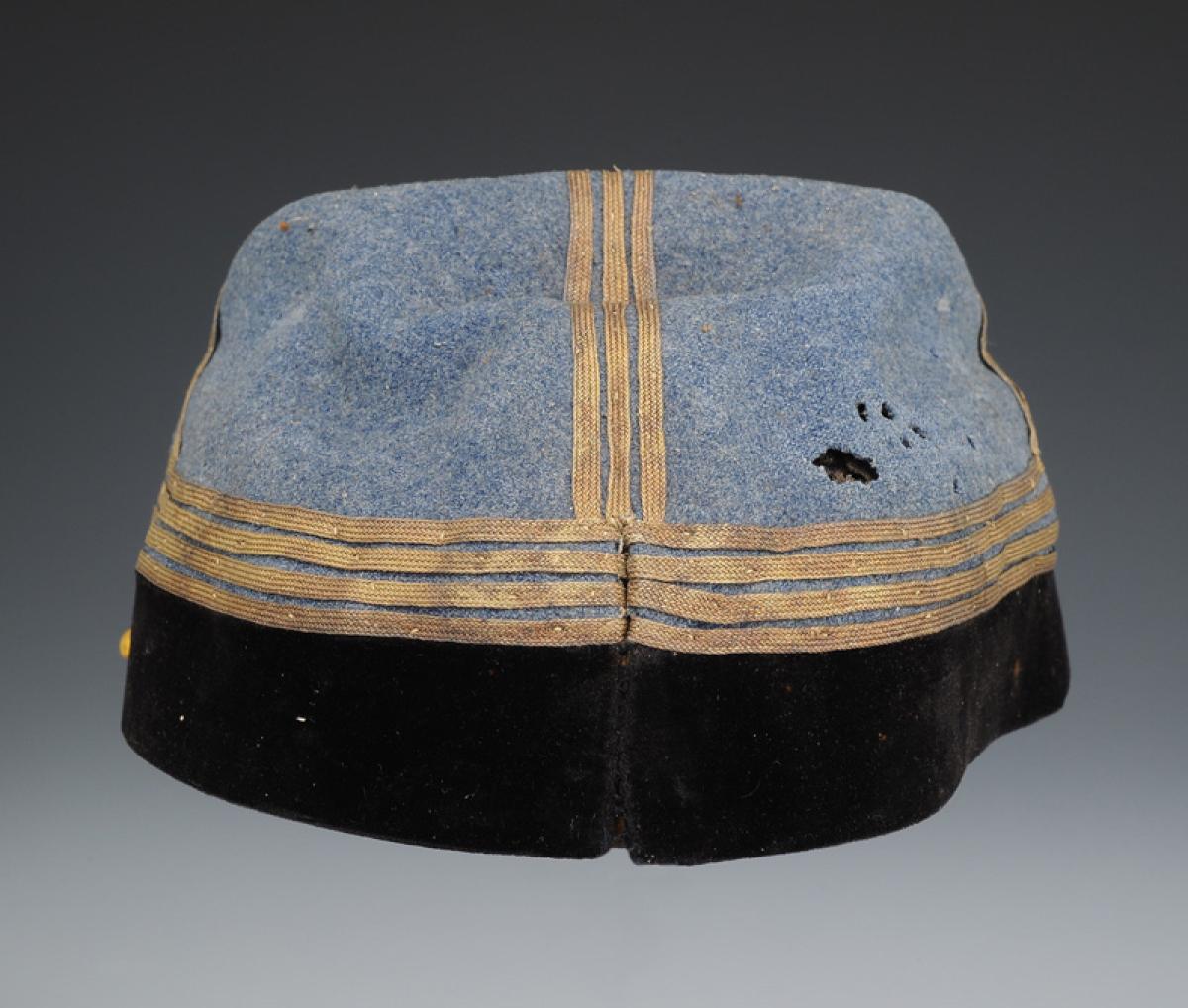
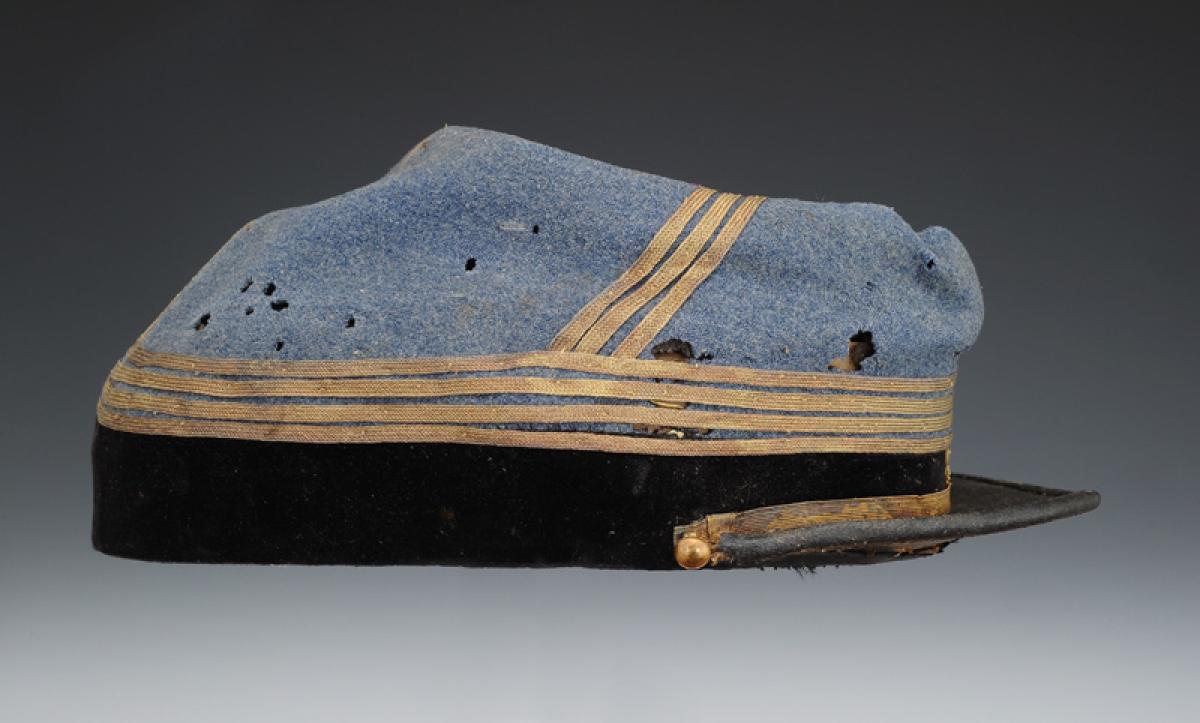
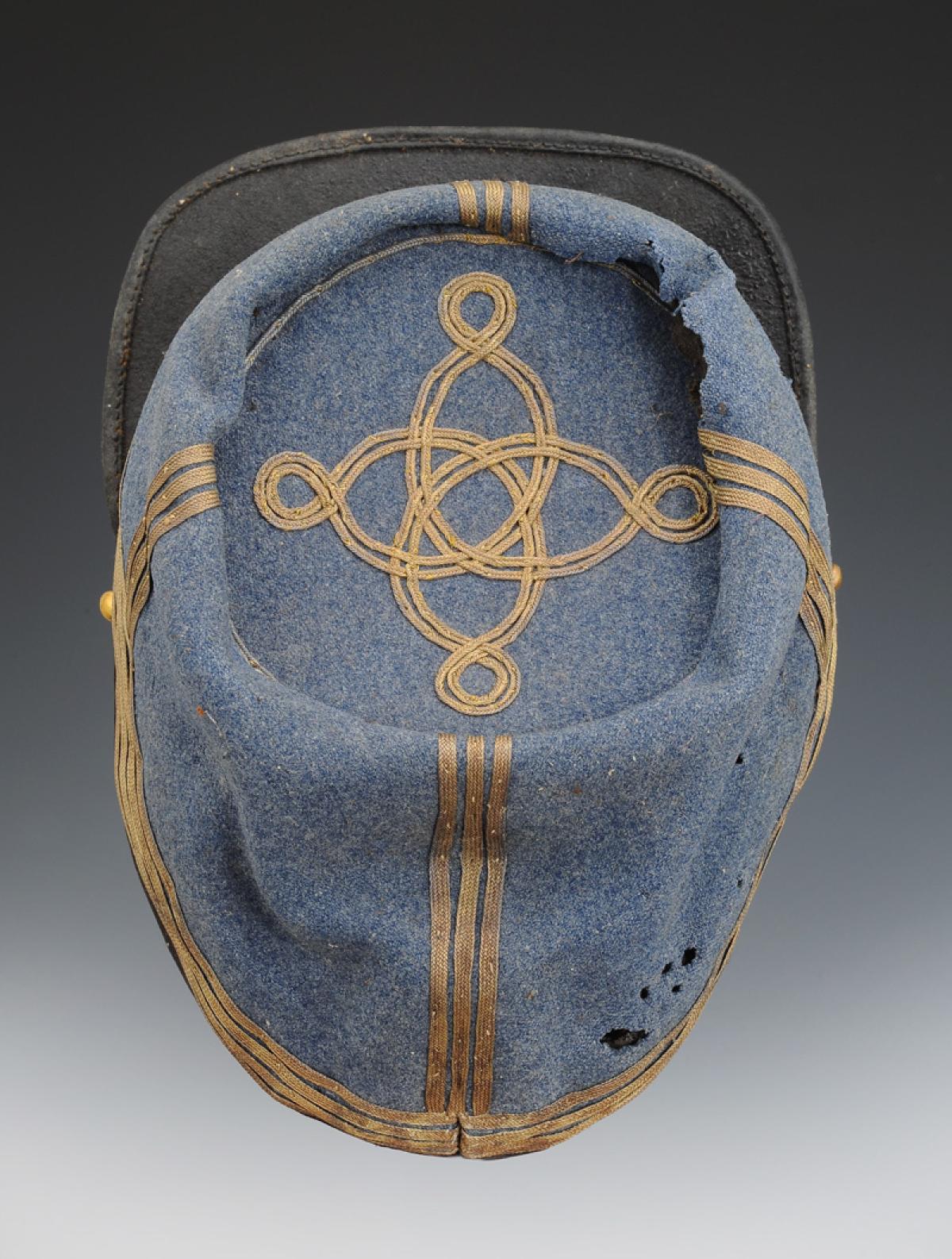
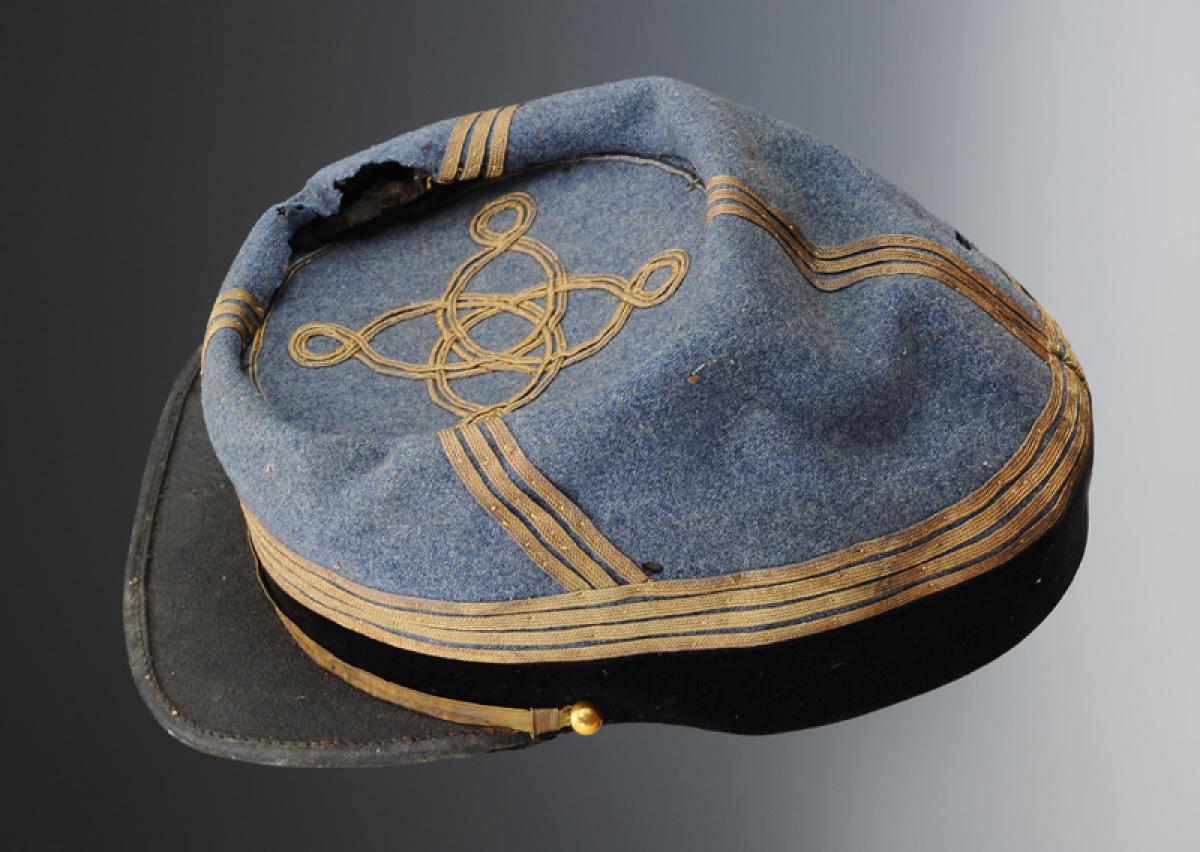
CAPTAIN Olivier LE GONIDEC de TRAISSAN DES ZOUAVES PONTIFICAUX KEPI, Second Empire, 1870. 32197
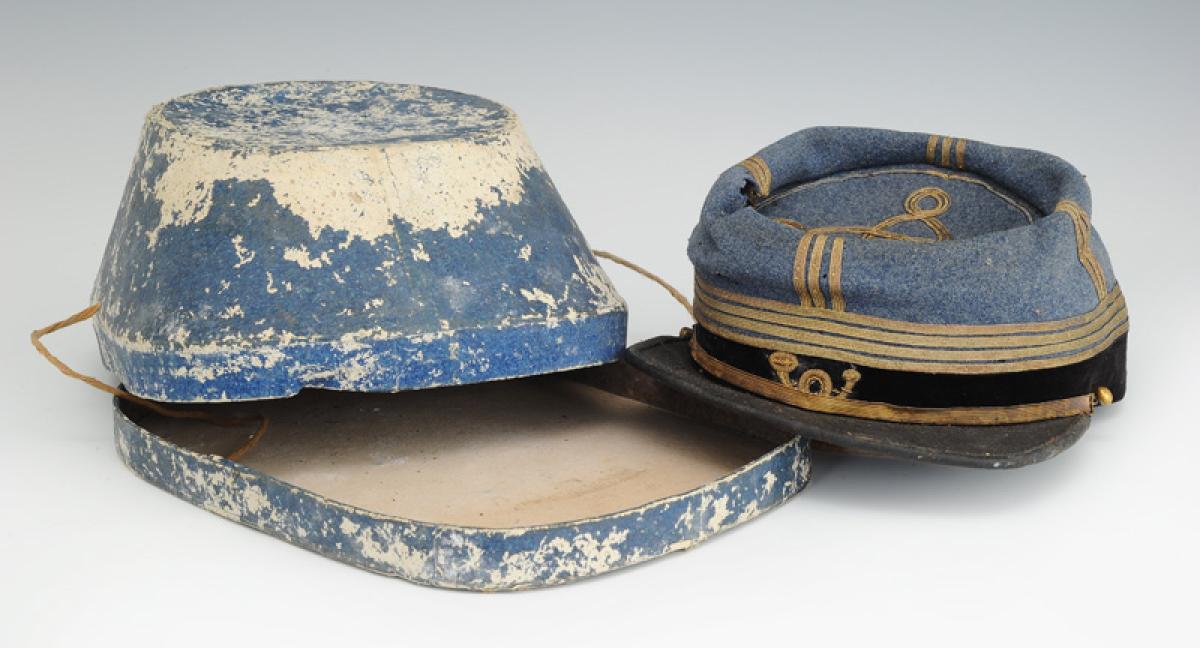
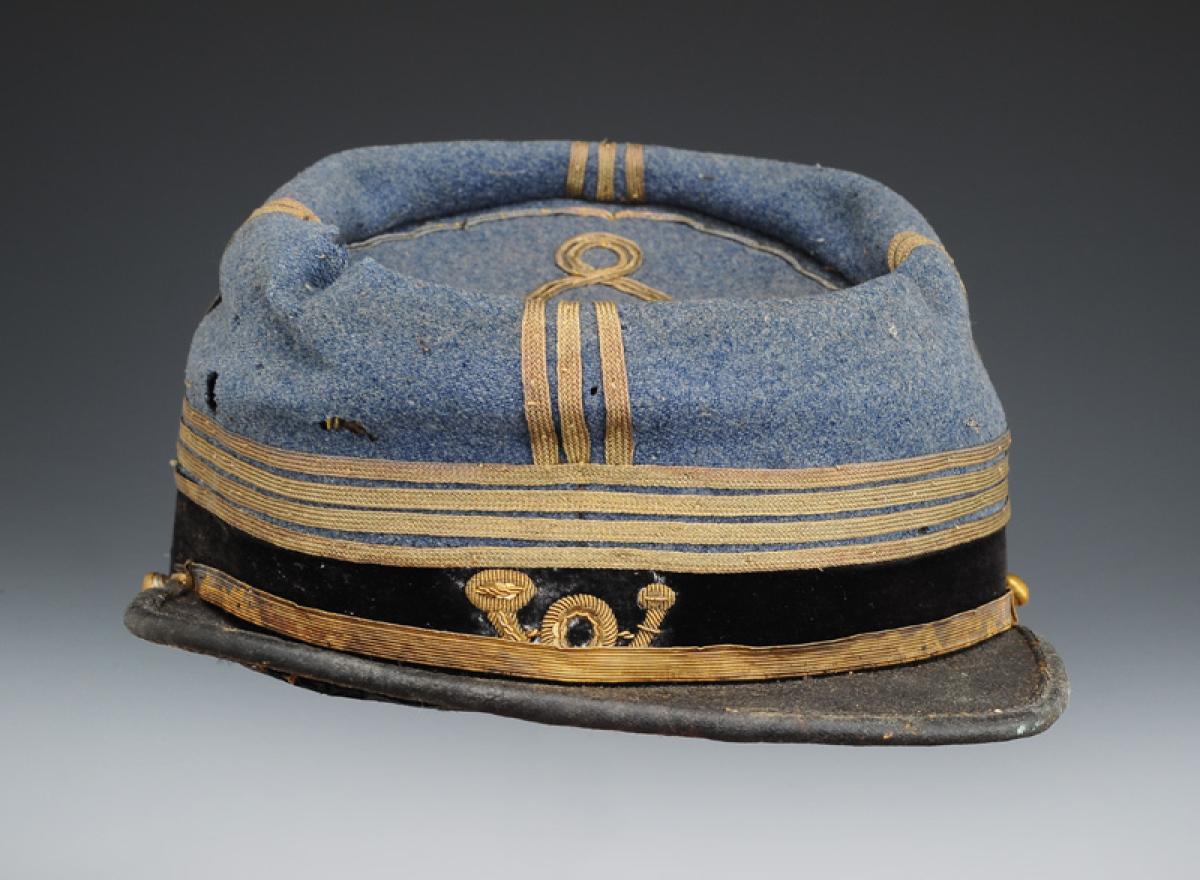
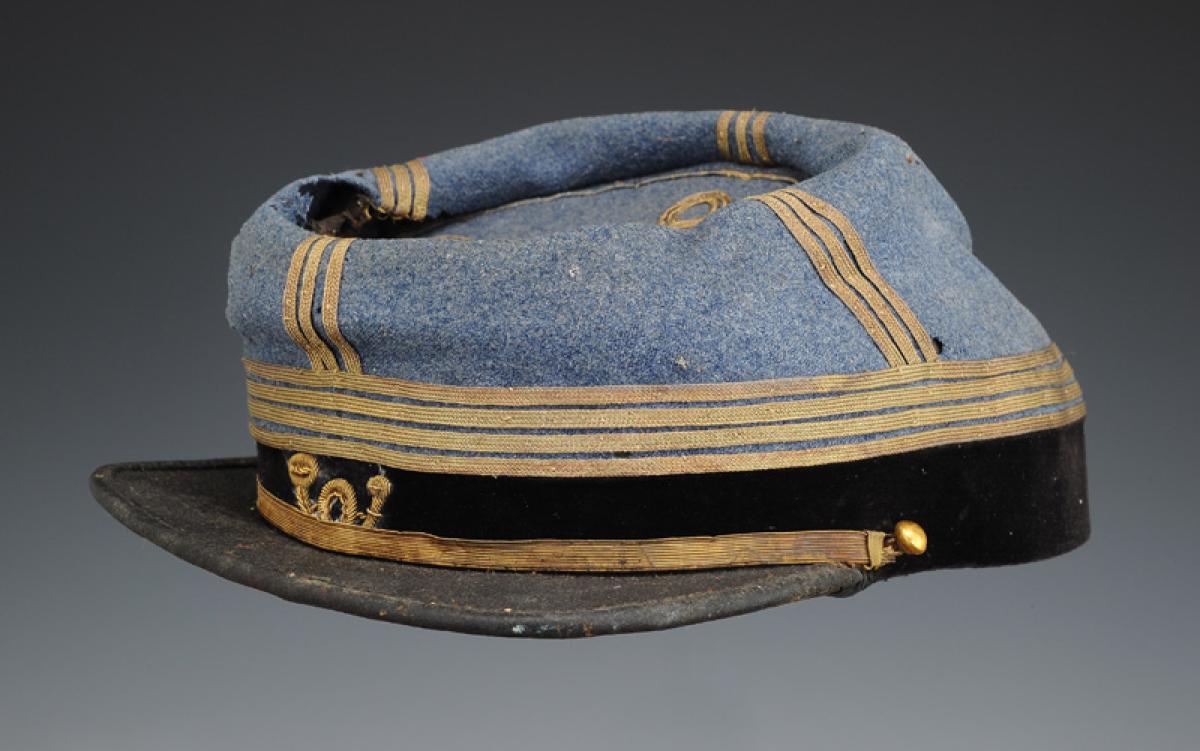
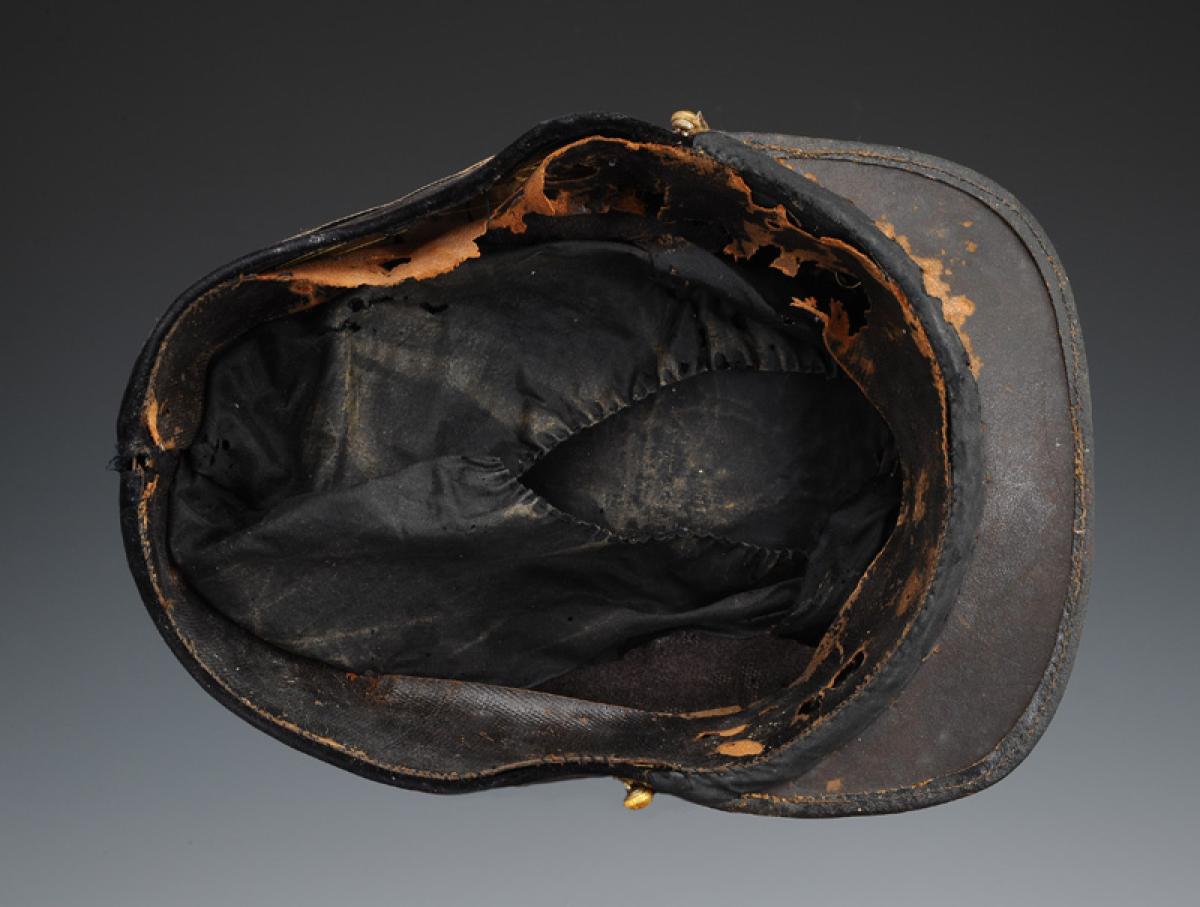
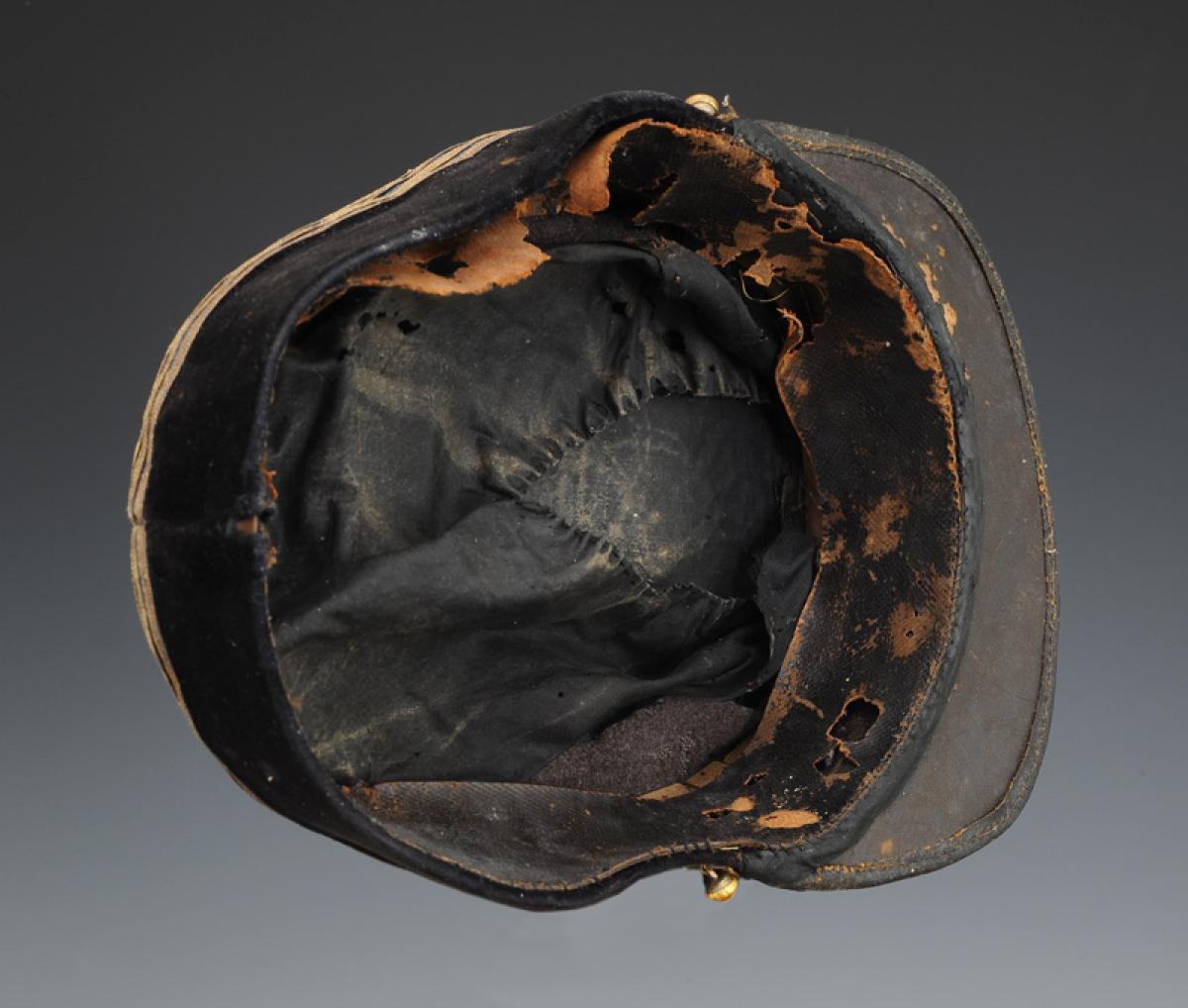
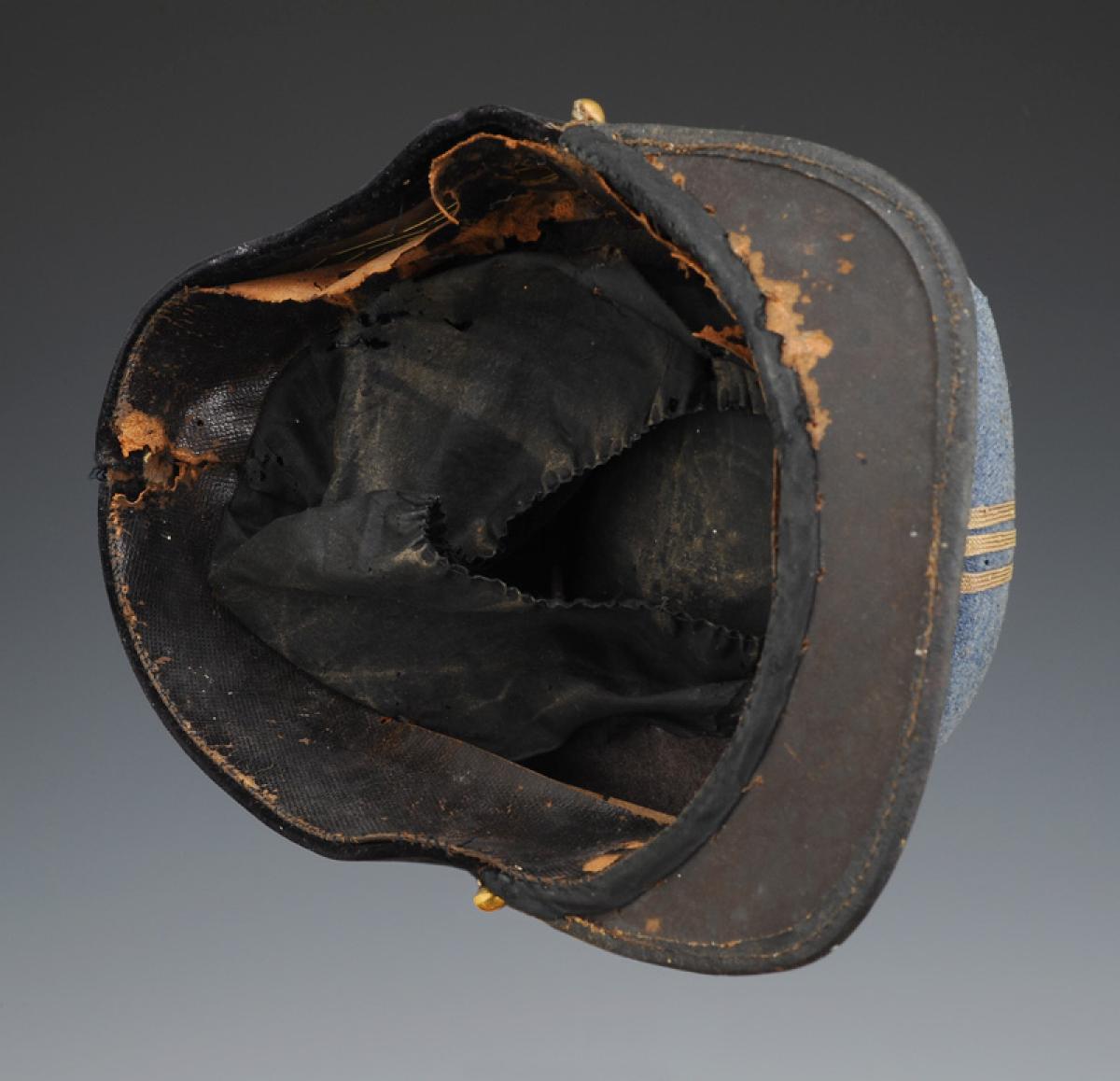
Cap in dark sky blue wool with three soutaches on the four sides and four flat silver-gilt braids. Black velvet headband (H 2.8 cm) embroidered at the front with a hunting horn in gold threads, bullion, and golden sequins.
Top decorated with a Hungarian knot made up of two flat gold braids. Square visor in black patent leather with a black patent leather welt folded over the outer edge. Height of the cap at the front 6 cm, at the back 14 cm.
False gold braided chinstrap attached to the headband with two gold half-bell buttons. Interior lining composed of a black patent leather headband and a black silk liner.
Transport box in cardboard covered with blue paper.
France.
Second Empire.
Fair condition, moth holes and missing parts on the outer wool, worn-out inner lining with damage and missing parts.
BIOGRAPHY:
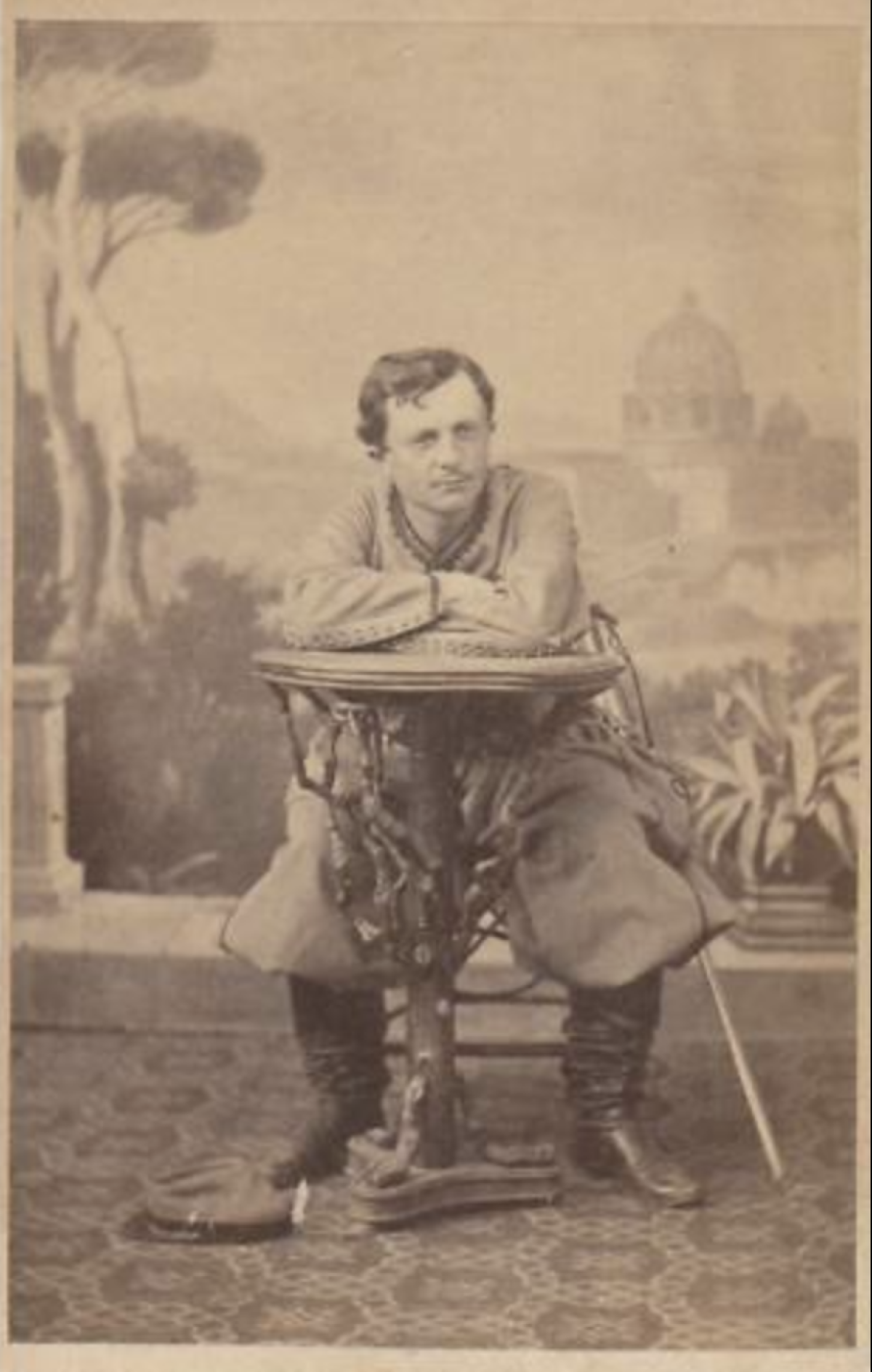
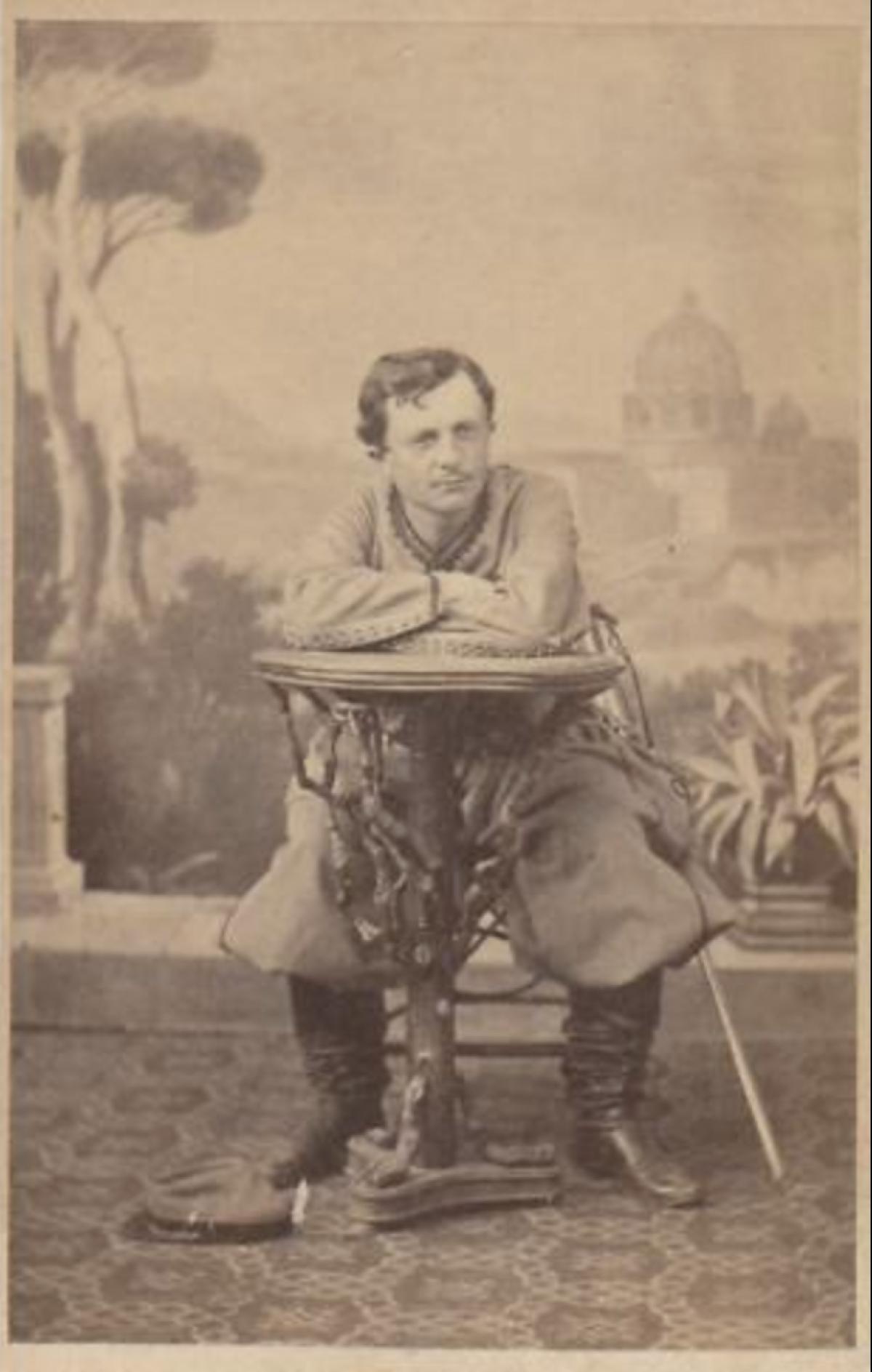
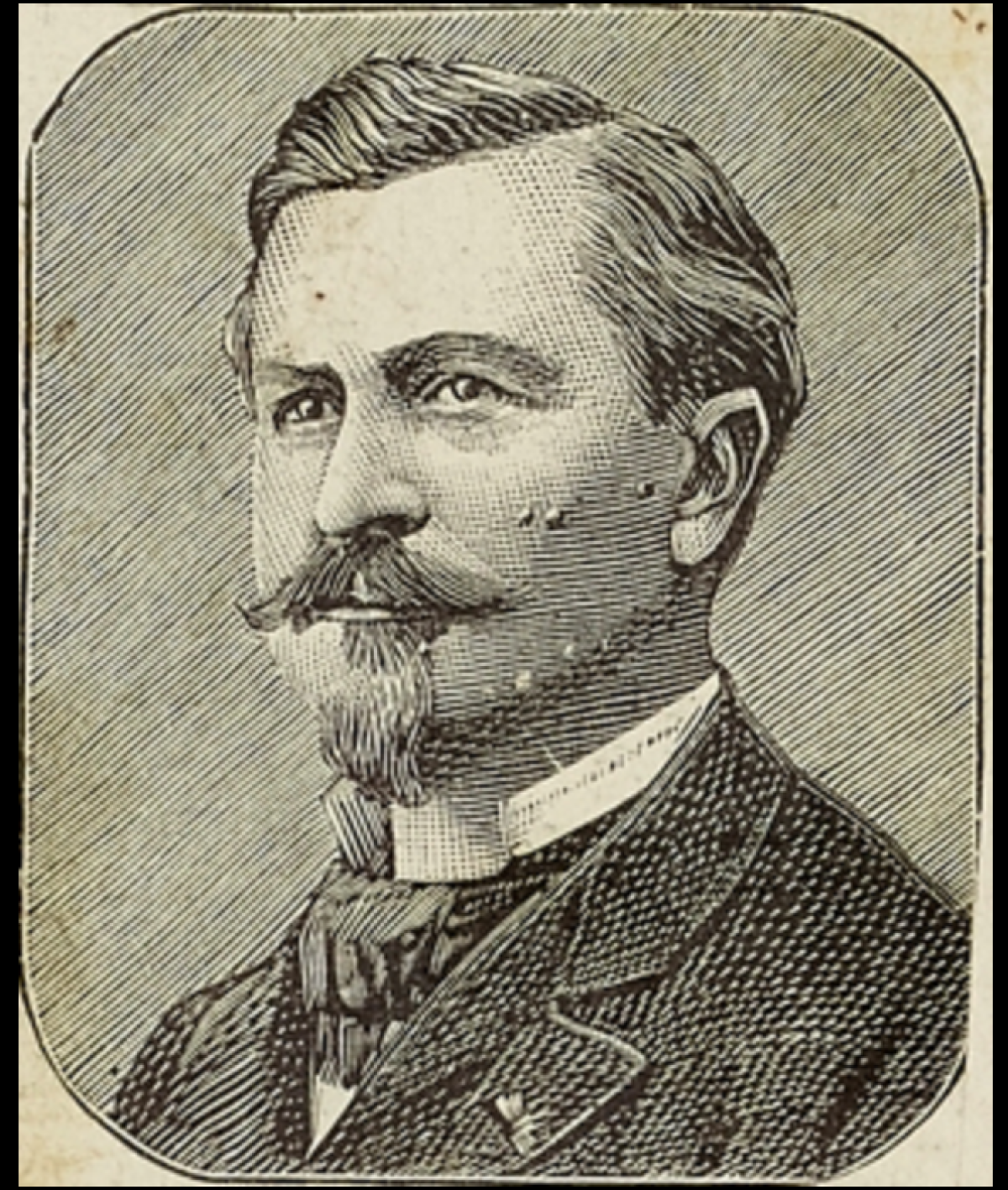
Olivier-Marie-Mériadec Le Gonidec, Count of Traissan, born at Château de La Baratière in Vitré on February 24, 1839, and died in Paris on January 18, 1912, was a French military officer and politician. He came from an aristocratic family originating from the Rennes region. Son of Alfred Marie-Mériadec Le Gonidec de Traissan (1807-1889) and Claire-Marie-Louise du Plessis d'Argentré, he was known from an early age for his strong royalist and Catholic sentiments.
He enlisted in Rome under the serial number 55 on May 29, 1860, rejoining service on June 1, 1860, and was assigned to the Franco-Belgian Riflemen, a unit of volunteers formed to defend the Papal States.
Appointed corporal in the pontifical zouaves on September 3, 1860 (serial number 10). He rose through the ranks: sergeant on January 1, 1861; second lieutenant on March 19, 1861; lieutenant on August 11, 1862; he was promoted to captain on January 1, 1867.
He participated in the campaigns of Rome in 1860, 1867, and 1870, being engaged in the battles of Castelfidardo (September 18, 1860), Ponte-Correze, near Rome (January 28, 1861), Mentana (November 3, 1867), and the siege of Rome in 1870.
Released from the oath of fidelity to the Holy See on September 20, 1870.
Returning to France during the Franco-Prussian War of 1870-1871, he joined the volunteers from the West with his rank of captain on October 10, 1870, promoted to battalion commander on October 16, 1870. During the Franco-Prussian War of 1870, he joined the Legion of the Volunteers from the West and took part in the Loire campaign with Charette's corps. He participated in the battles of Cercottes (Loiret) on October 10, Brou (Eure-et-Loir) on November 25, and Loigny (Eure-et-Loir) on December 2, 1870.
After returning to civilian life, he maintained close relationships with monarchist circles and former pontifical zouaves.
As a councilor in Vitré, he ran as a monarchist candidate in the 1876 legislative elections, and was elected on March 5 in the second round, as the deputy for Ille-et-Vilaine, with 9,997 votes (out of 14,803 voters and 19,692 registered), against 4,841 for Mr. de Montluc.
He sat on the far-right, was one of the secretaries of the Chamber, consistently voted with the minority, supported the Seize-mai government against the 363 coalition. Re-elected on October 14, 1877, with 13,022 votes (out of 17,316 voters and 20,391 registered), against 4,237 for Mr. de Montluc, he followed the same political line as before, voting against the invalidation of right-wing deputies, against the Dufaure ministry, against article 7, against the Ferry laws on education, against the amnesty, etc., and was re-elected again in the same constituency in the elections of August 21, 1881, with 10,319 votes (out of 15,555 voters and 20,350 registered) against 5,142 for Ragot.
Opposed to all successive cabinets during the legislature, he voted against the budget for the Tonkin expedition. In the elections of October 4, 1885, on the conservative list in Ille-et-Vilaine, he failed with 59,414 votes, but regained his seat on September 22, 1889, which he held until his death in 1912. He remained in his anti-Republican opposition stance.
Following the death of General Baron de Charette on October 9, 1911, Count Olivier Le Gonidec de Tressan became head of the former regiment of the Pontifical Zouaves on December 2, 1911. As the lord of La Baratière, he died in Paris on January 18, 1912, and was buried in Vitré.
Honors
Knight of the Order of Pius IX.
Castelfidardo Medal "Pro Petri Sede".
Mentana Cross "Fidei et Virtute".
Pontifical Medal "Bene Merenti".
Knight of the Legion of Honor (July 29, 1871).
Olivier's brother, Paul Le Gonidec of Traissan (1840-1888), also had a brilliant career in the zouaves, being demobilized as a battalion commander in 1870 and made a Knight of the Legion of Honor. Their first cousin, Frédéric, also a zouave, maintained special relations with General Athanase de Charette and was made a Roman count by the Pope.
Reference :
32197
Next update Friday, octobre 23 at 13:30 PM
FOR ALL PURCHASES, PAYMENT IN MULTIPLE CHECKS POSSIBLE
bertrand.malvaux@wanadoo.fr 06 07 75 74 63
SHIPPING COSTS
Shipping costs are calculated only once per order for one or more items, all shipments are sent via registered mail, as this is the only way to have proof of dispatch and receipt.
For parcels whose value cannot be insured by the Post, shipments are entrusted to DHL or Fedex with real value insured, the service is of high quality but the cost is higher.
RETURN POLICY
Items can be returned within 8 days of receipt. They must be returned by registered mail at the sender's expense, in their original packaging, and in their original condition.
AUTHENTICITY
The selection of items offered on this site allows me to guarantee the authenticity of each piece described here, all items offered are guaranteed to be period and authentic, unless otherwise noted or restricted in the description.
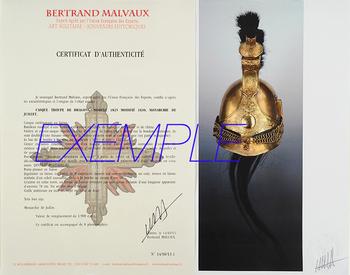
An authenticity certificate of the item including the description published on the site, the period, the sale price, accompanied by one or more color photographs is automatically provided for any item priced over 130 euros. Below this price, each certificate is charged 5 euros.
Only items sold by me are subject to an authenticity certificate, I do not provide any expert reports for items sold by third parties (colleagues or collectors).
FOR ALL PURCHASES, PAYMENT IN MULTIPLE CHECKS POSSIBLE
bertrand.malvaux@wanadoo.fr 06 07 75 74 63
An authenticity certificate of the item including the description published on the site, the period, the sale price, accompanied by one or more color photographs is automatically provided for any item priced over 130 euros. Below this price, each certificate is charged 5 euros.
Only items sold by me are subject to an authenticity certificate, I do not provide any expert reports for items sold by third parties (colleagues or collectors).