
CUIRASSIER HELMET OF THE 2nd CUIRASSIER REGIMENT, MODEL 1845, SECOND EMPIRE.
Sold out
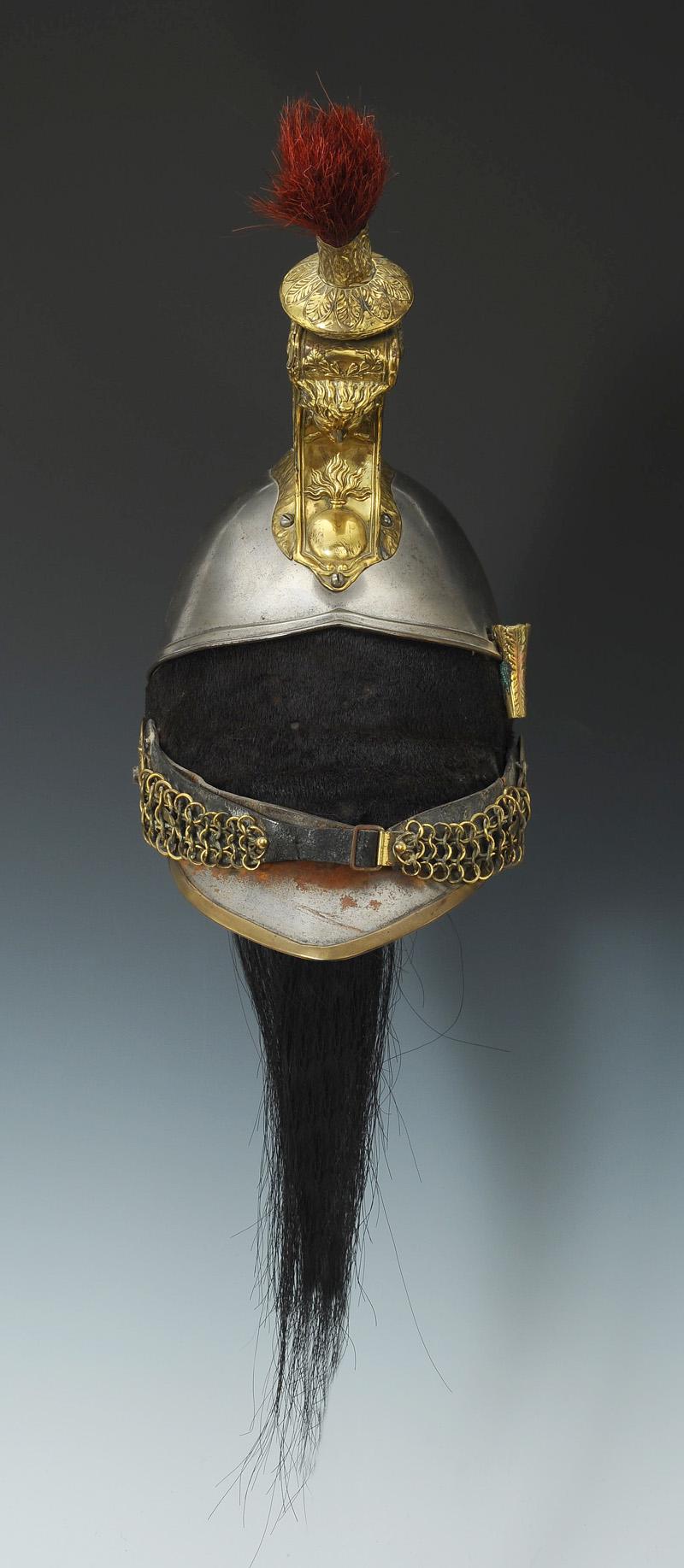
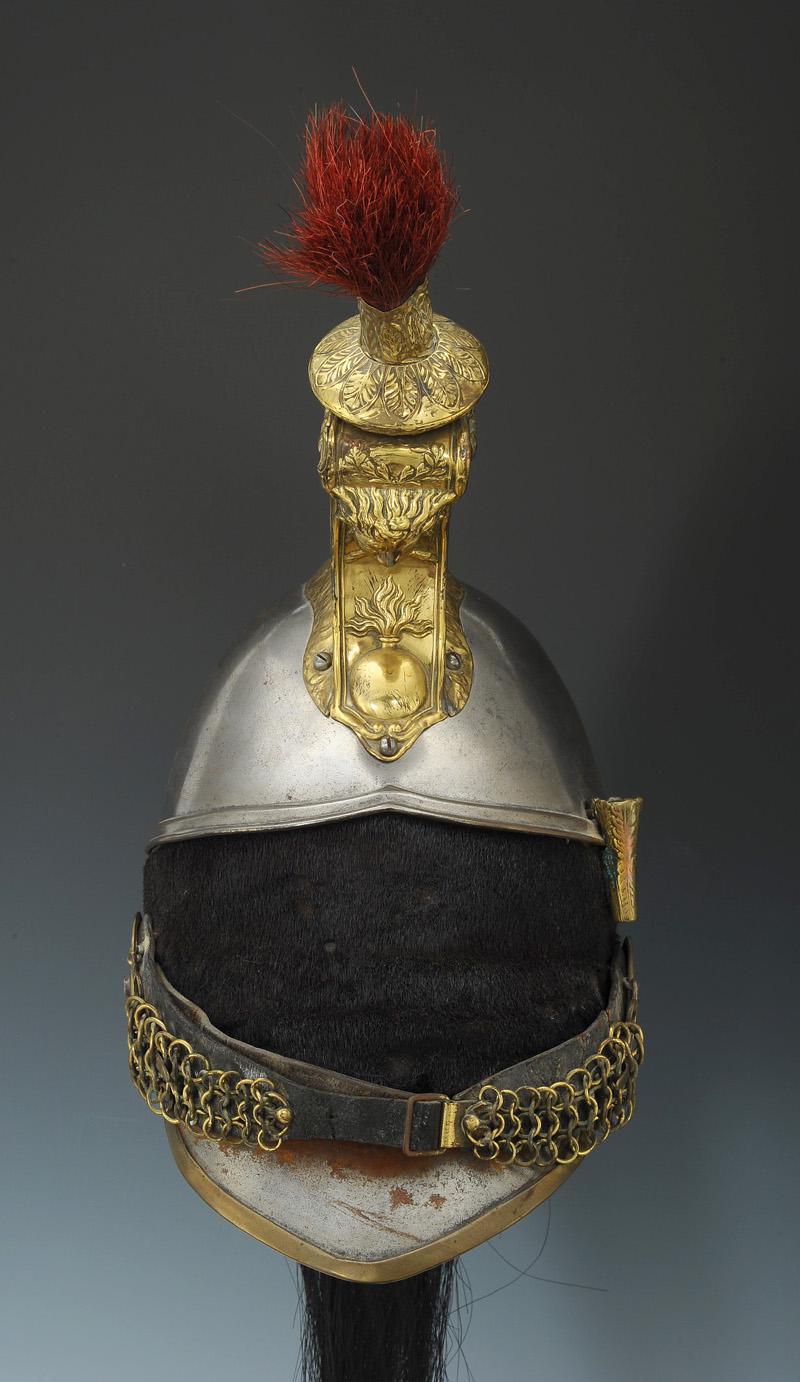
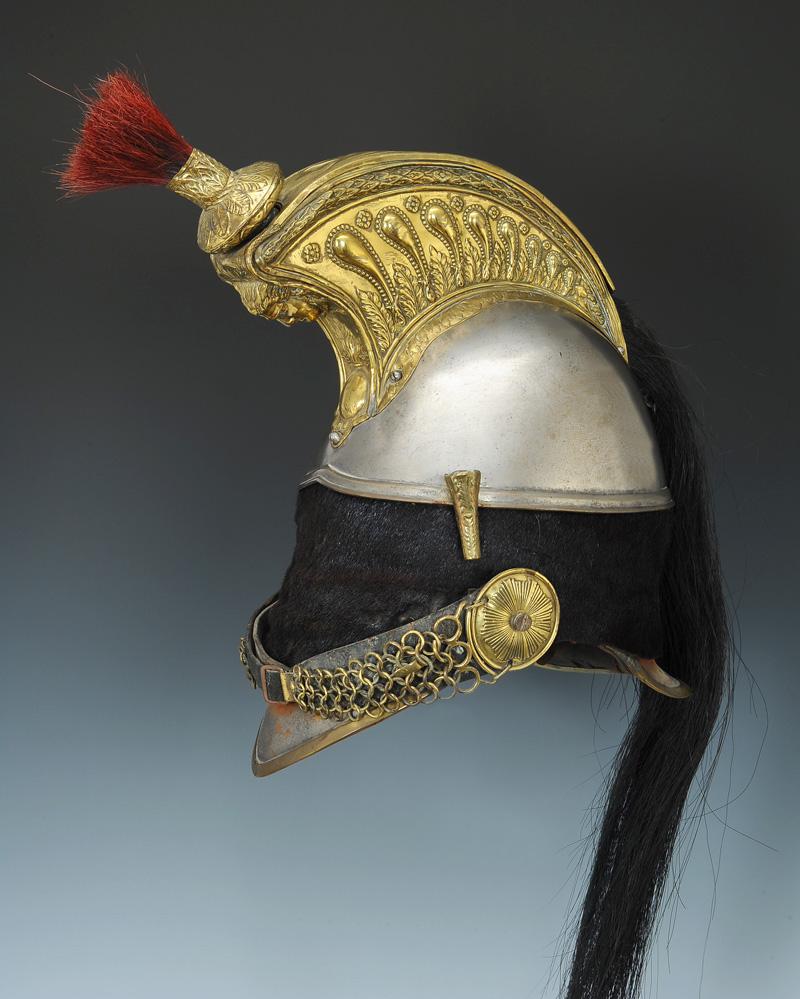
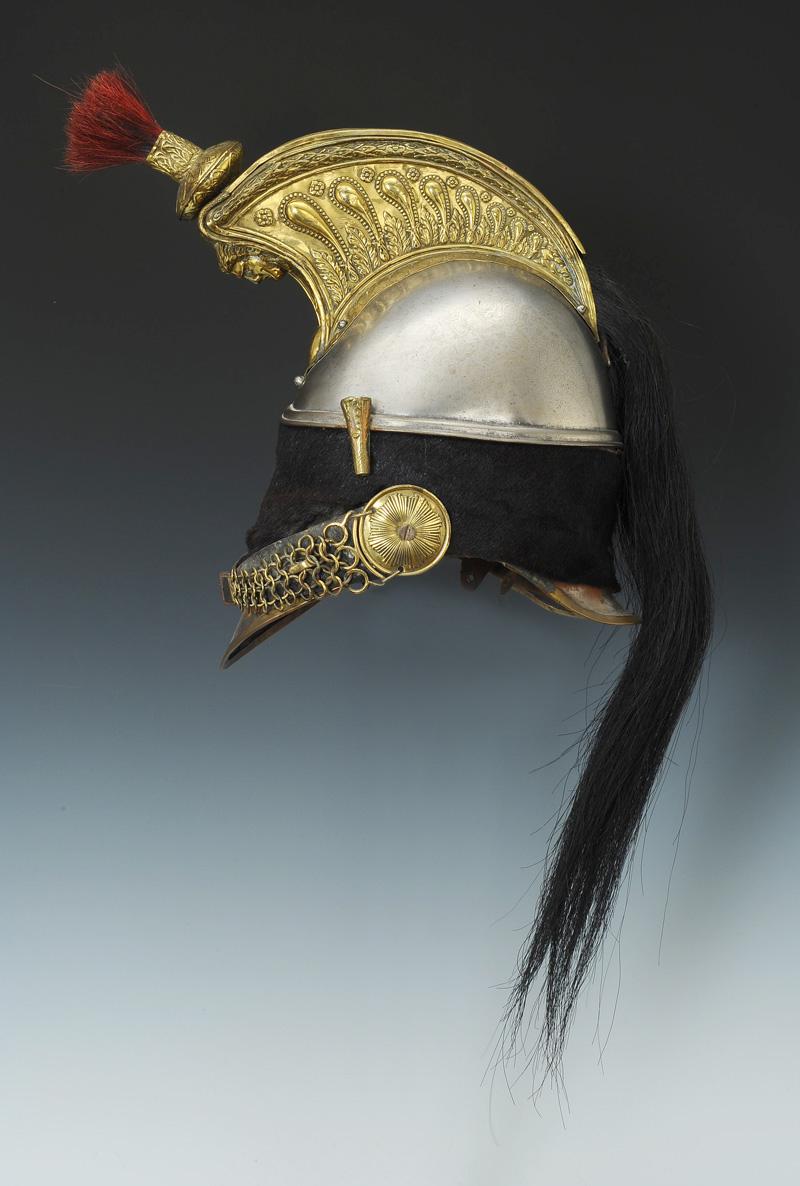
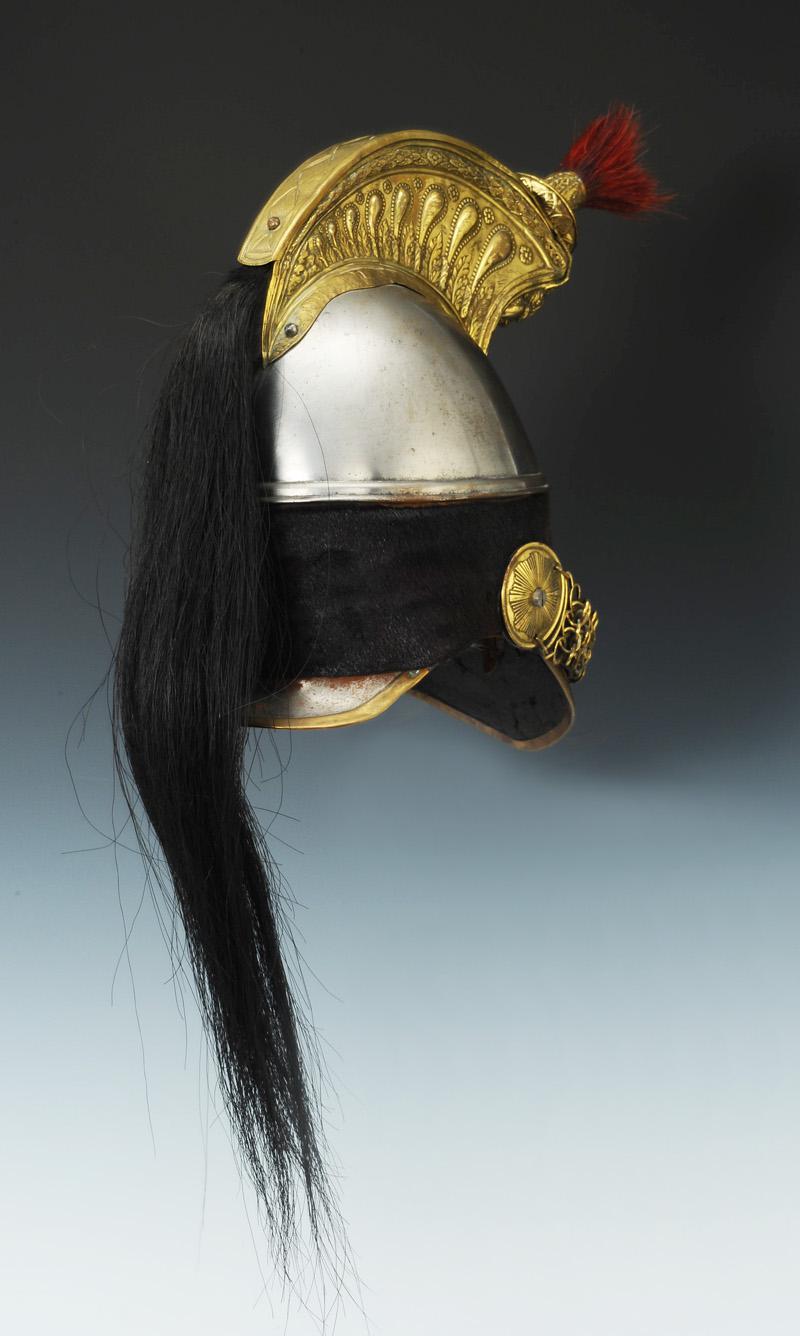
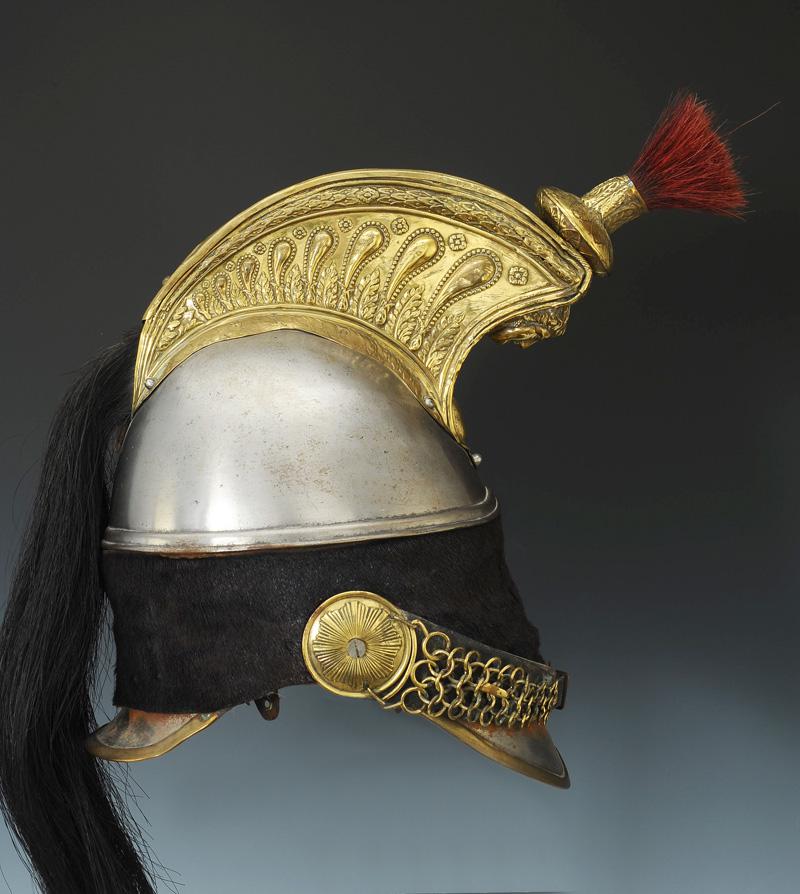
HELMET OF THE 2nd REGIMENT OF CUIRASSIERS, MODEL 1845, SECOND EMPIRE.
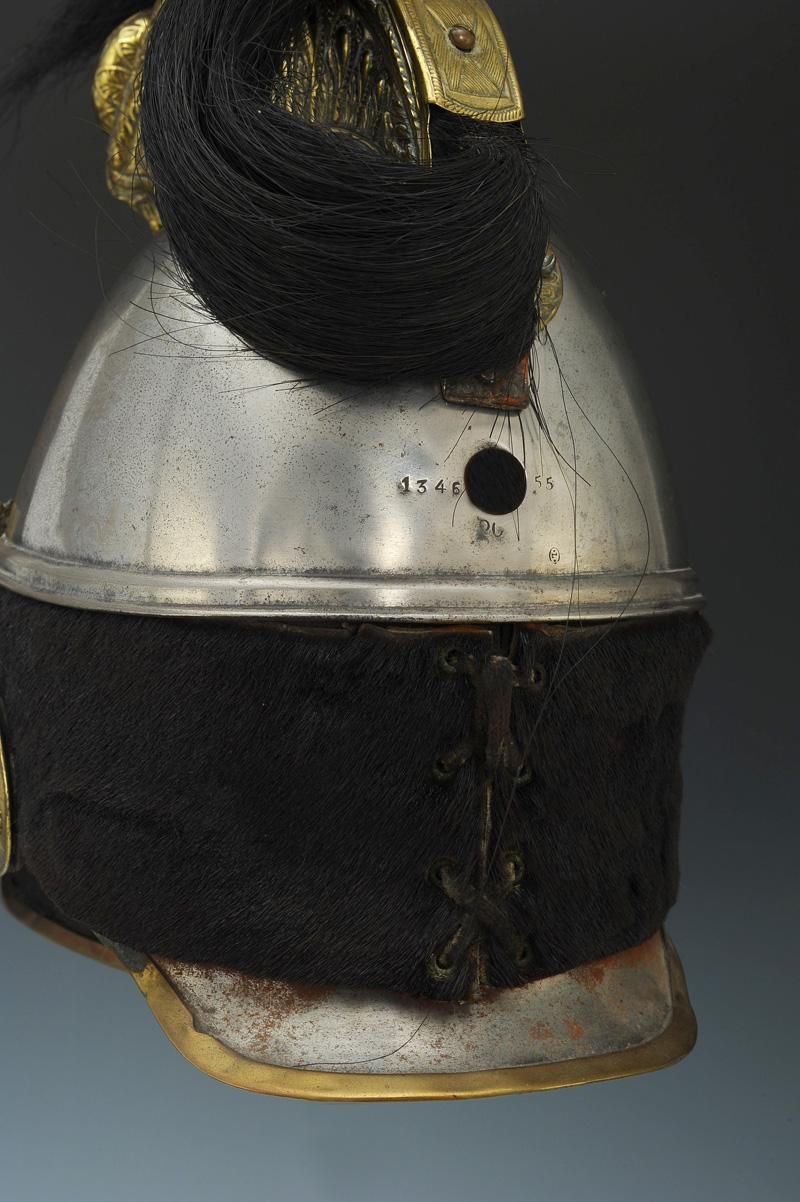
Bomb made of stamped steel with a date stamp "55" (1855) at the back, marked "1346" and with the "2C" stamp (for 2nd Cuirassiers).
The rim of the base of the bomb is of the 1845 model with a prominent molding consisting of a square thread and another round one.
Turban made of strong leather covered with a black band of period marine cowhide (seal) that laces up at the back using eight metal eyelets.
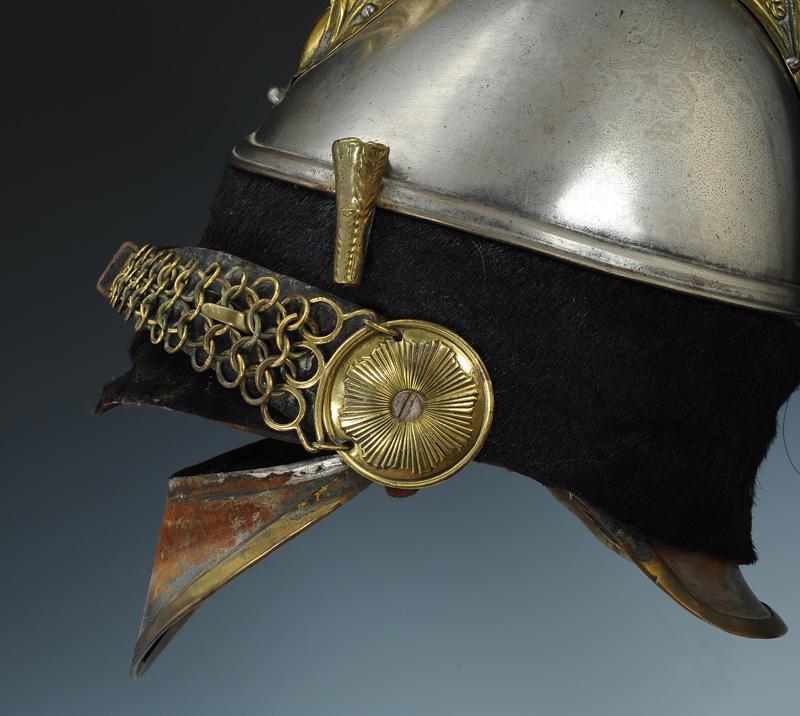
Visor and neck cover made of steel plate, each edged with a brass rim folded over the outer edge. The visor and neck cover are lined with black sheepskin.
Crest made of stamped brass, featuring a mask surmounted by a flaming bomb topped with a relief head of Medusa, above which is a crown of laurel and oak branches; two flaps stamped with a decreasing series of 8 ridges framed by acanthus leaf beads and palmettes, and in the upper part a series of laurel leaves; stamped covering plate with a decorative braided mane. Crest attached to the bomb by five steel screws with hemispherical heads.
Brass crest decoration consists of a lens decorated with palmettes, a socket with laurel branches and palmettes, and a tuft of scarlet horsehair.
Brass plume holder shaped like a socket decorated with foliage.
Chinstraps, each composed of black varnished leather to which a triple row of chains made of rings connected to a round rosette stamped with a radiant sun is fixed to the bomb by means of a brass screw.
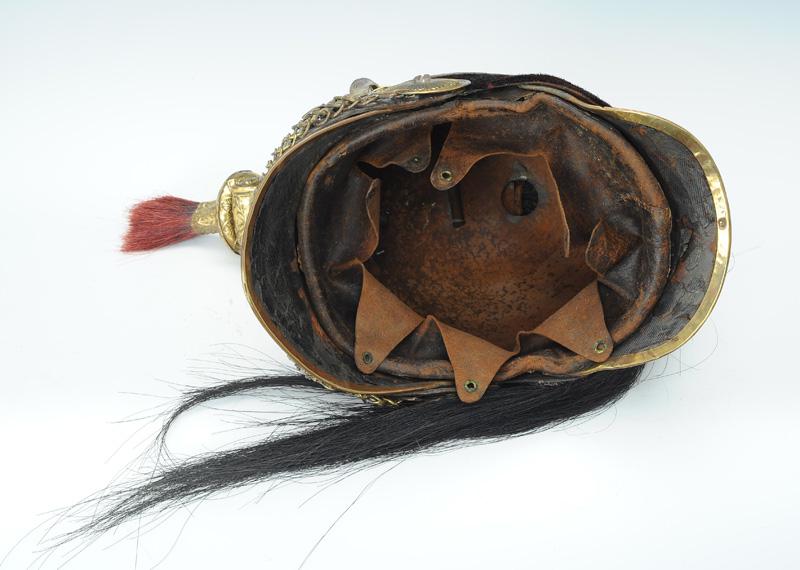
Black horsehair mane, with an apparent length of about 56 cm.
Internal leather lining cut into eight teeth.
In good to very good condition, the helmet remains in its original state with some small dents on the crest and crest ornament, turban previously changed, sheepskin lining the neck cover and visor in poor condition with some missing parts, interior lining in good condition, worn. The visor is attached to the helmet but the central rivet is detached.
France.
Second Empire.
History:
Remaining on the sidelines of the major external campaigns of the monarchy and the 2nd Empire, (Algeria, Crimea, Italy, Mexico), the regiment, however, participated in the first Franco-German clashes. The war broke out on July 15, 1870. The regiment belonged to the cuirassier division of General de Bonnemains, and formed a brigade with the 1st cuirassier regiment. It valiantly participated in the Battle of Froeschwiller.
The Regiment lost 6 officers and 141 non-commissioned officers and enlisted men, as well as its colonel, who fell into the hands of the enemy. With the battle lost and Alsace evacuated, the regiment moved to Saverne, Sarrebourg, Blamont, where the command reconstituted an army intended to relieve the French forces besieged in Metz. However, the flanking maneuver undertaken by this army bogged down at Sedan. Surrounded by the Germans, it capitulated, despite vain attempts to break the encirclement, falling victim much more to the inertia and indecision of Napoleon III than to the superiority of the opponent. After stoically enduring the enemy cannon fire all day in anticipation of the charge, the regiment was taken prisoner and disarmed. The resistance continued, but it was ultimately the downfall of the Empire, the armistice of Versailles, and the treaty of Frankfurt on May 10, 1871, where France was forced to concede the Alsace and Lorraine territories.
On October 5, 1870, by decree of the government of National Defense, the squadron of the Hundred Guards was dissolved. Its elements were incorporated into the 2nd march regiment of cuirassiers, forming its first squadron.
Bomb made of stamped steel with a date stamp "55" (1855) at the back, marked "1346" and with the "2C" stamp (for 2nd Cuirassiers).
The rim of the base of the bomb is of the 1845 model with a prominent molding consisting of a square thread and another round one.
Turban made of strong leather covered with a black band of period marine cowhide (seal) that laces up at the back using eight metal eyelets.
Visor and neck cover made of steel plate, each edged with a brass rim folded over the outer edge. The visor and neck cover are lined with black sheepskin.
Crest made of stamped brass, featuring a mask surmounted by a flaming bomb topped with a relief head of Medusa, above which is a crown of laurel and oak branches; two flaps stamped with a decreasing series of 8 ridges framed by acanthus leaf beads and palmettes, and in the upper part a series of laurel leaves; stamped covering plate with a decorative braided mane. Crest attached to the bomb by five steel screws with hemispherical heads.
Brass crest decoration consists of a lens decorated with palmettes, a socket with laurel branches and palmettes, and a tuft of scarlet horsehair.
Brass plume holder shaped like a socket decorated with foliage.
Chinstraps, each composed of black varnished leather to which a triple row of chains made of rings connected to a round rosette stamped with a radiant sun is fixed to the bomb by means of a brass screw.
Black horsehair mane, with an apparent length of about 56 cm.
Internal leather lining cut into eight teeth.
In good to very good condition, the helmet remains in its original state with some small dents on the crest and crest ornament, turban previously changed, sheepskin lining the neck cover and visor in poor condition with some missing parts, interior lining in good condition, worn. The visor is attached to the helmet but the central rivet is detached.
France.
Second Empire.
History:
Remaining on the sidelines of the major external campaigns of the monarchy and the 2nd Empire, (Algeria, Crimea, Italy, Mexico), the regiment, however, participated in the first Franco-German clashes. The war broke out on July 15, 1870. The regiment belonged to the cuirassier division of General de Bonnemains, and formed a brigade with the 1st cuirassier regiment. It valiantly participated in the Battle of Froeschwiller.
The Regiment lost 6 officers and 141 non-commissioned officers and enlisted men, as well as its colonel, who fell into the hands of the enemy. With the battle lost and Alsace evacuated, the regiment moved to Saverne, Sarrebourg, Blamont, where the command reconstituted an army intended to relieve the French forces besieged in Metz. However, the flanking maneuver undertaken by this army bogged down at Sedan. Surrounded by the Germans, it capitulated, despite vain attempts to break the encirclement, falling victim much more to the inertia and indecision of Napoleon III than to the superiority of the opponent. After stoically enduring the enemy cannon fire all day in anticipation of the charge, the regiment was taken prisoner and disarmed. The resistance continued, but it was ultimately the downfall of the Empire, the armistice of Versailles, and the treaty of Frankfurt on May 10, 1871, where France was forced to concede the Alsace and Lorraine territories.
On October 5, 1870, by decree of the government of National Defense, the squadron of the Hundred Guards was dissolved. Its elements were incorporated into the 2nd march regiment of cuirassiers, forming its first squadron.
Reference :
17409
Next update Friday, octobre 23 at 13:30 PM
FOR ALL PURCHASES, PAYMENT IN MULTIPLE CHECKS POSSIBLE
bertrand.malvaux@wanadoo.fr 06 07 75 74 63
SHIPPING COSTS
Shipping costs are calculated only once per order for one or more items, all shipments are sent via registered mail, as this is the only way to have proof of dispatch and receipt.
For parcels whose value cannot be insured by the Post, shipments are entrusted to DHL or Fedex with real value insured, the service is of high quality but the cost is higher.
RETURN POLICY
Items can be returned within 8 days of receipt. They must be returned by registered mail at the sender's expense, in their original packaging, and in their original condition.
AUTHENTICITY
The selection of items offered on this site allows me to guarantee the authenticity of each piece described here, all items offered are guaranteed to be period and authentic, unless otherwise noted or restricted in the description.
An authenticity certificate of the item including the description published on the site, the period, the sale price, accompanied by one or more color photographs is automatically provided for any item priced over 130 euros. Below this price, each certificate is charged 5 euros.
Only items sold by me are subject to an authenticity certificate, I do not provide any expert reports for items sold by third parties (colleagues or collectors).
FOR ALL PURCHASES, PAYMENT IN MULTIPLE CHECKS POSSIBLE
bertrand.malvaux@wanadoo.fr 06 07 75 74 63
An authenticity certificate of the item including the description published on the site, the period, the sale price, accompanied by one or more color photographs is automatically provided for any item priced over 130 euros. Below this price, each certificate is charged 5 euros.
Only items sold by me are subject to an authenticity certificate, I do not provide any expert reports for items sold by third parties (colleagues or collectors).