
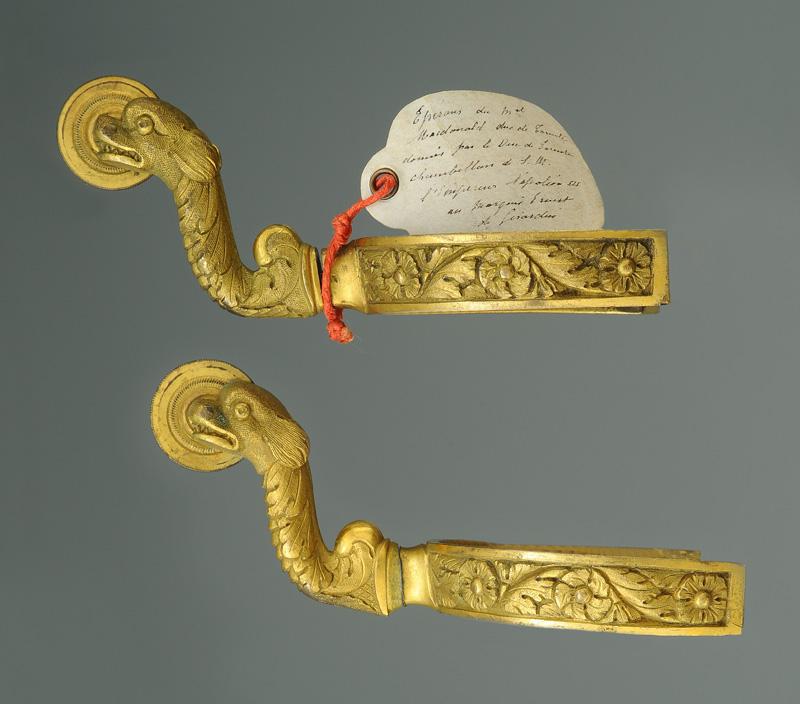
PAIR OF SPURS BELONGING TO MARSHAL McDONALD, 1765-1840, DUKE OF TARENTE, FROM THE FORMER NAPOLEONIC COLLECTION OF THE PRINCELY PALACE OF MONACO, First Empire - Restoration. 33617(16743)
Sold out
PAIR OF SPURS BELONGING TO MARSHAL McDONALD, 1765-1840, DUKE OF TARANTE, FROM THE FORMER NAPOLEONIC COLLECTION OF THE PRINCELY PALACE OF MONACO, First Empire - Restoration. 33617(16743)
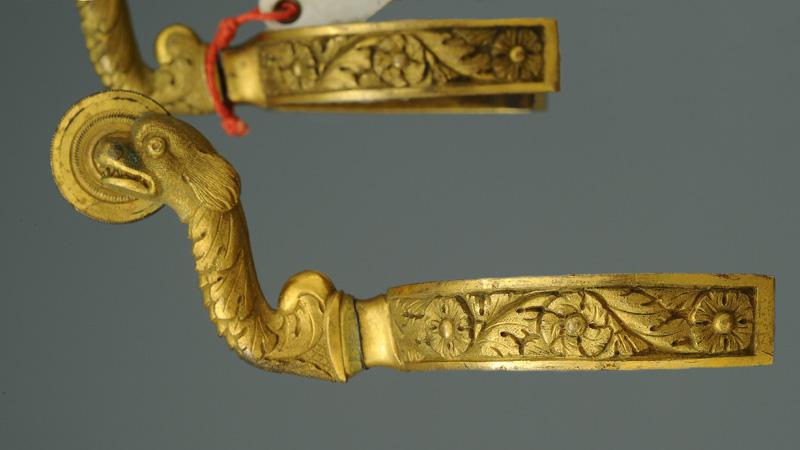
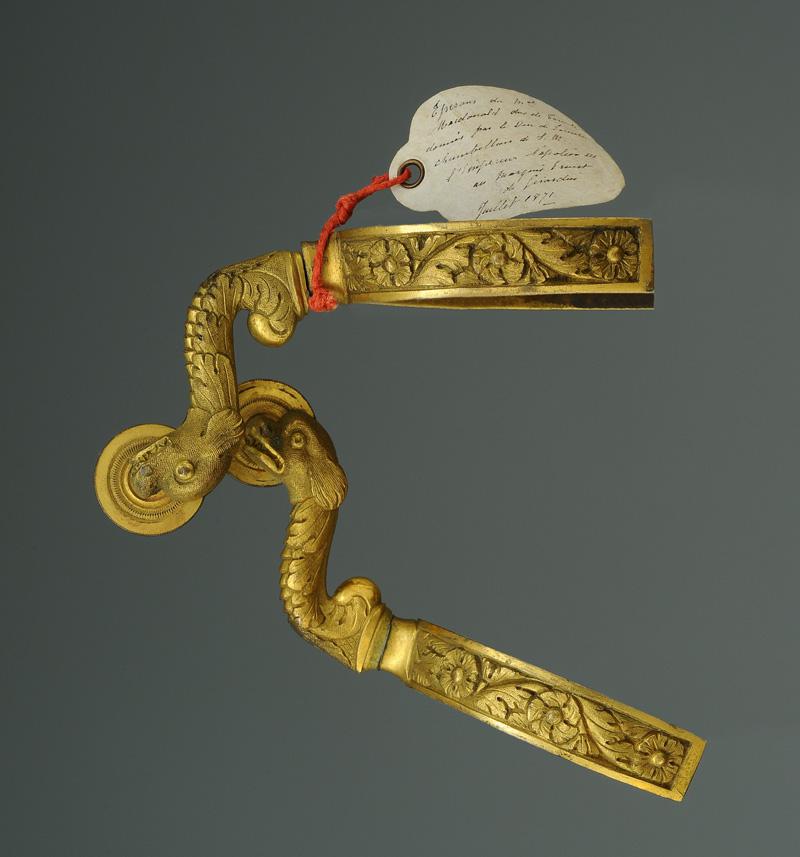
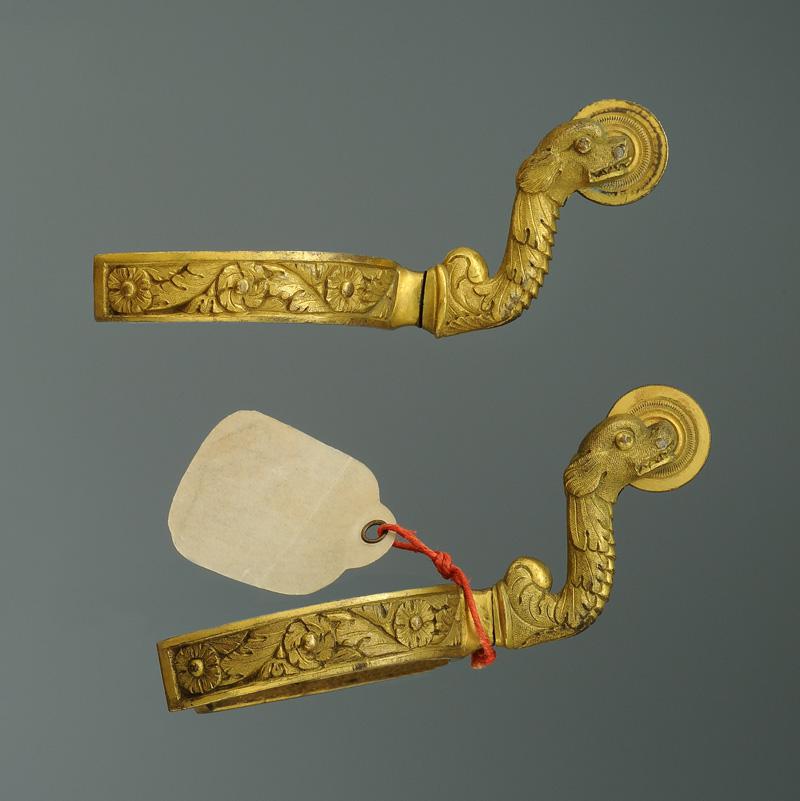
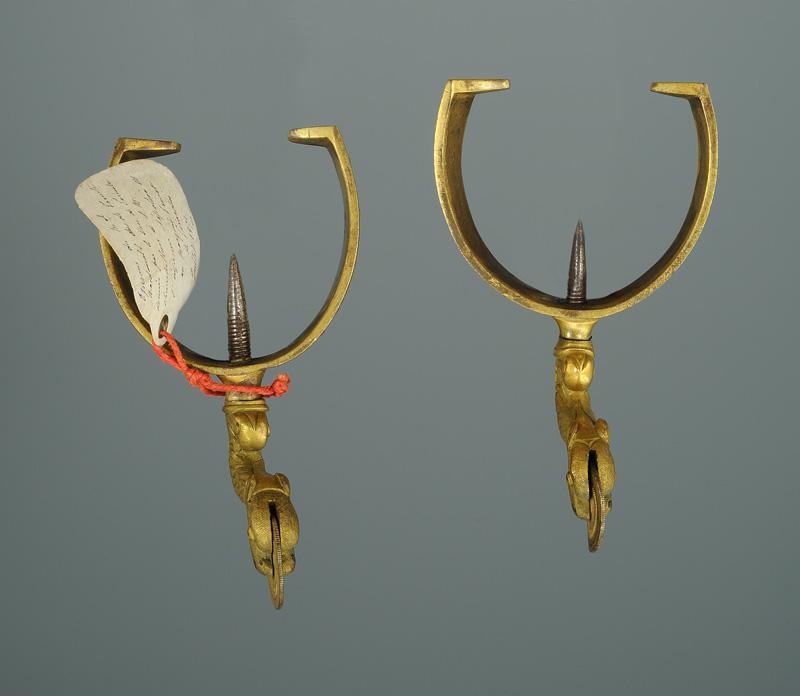
In chiseled and gilded bronze. The two branches are decorated with an oak branch and flowers. The back part features a dragon head from mythology holding in its mouth a round wheel. This part is screwed onto the two branches by a threaded steel rod. Height of the lateral branches 1.4 cm. Height of the back part, including the wheel, 4.1 cm. Width of the spurs 6.1 cm.
France.
First Empire - Restoration.
Perfect condition, retaining all its gilding and of great chiseling quality.
PROVENANCE:
Pair of spurs from the Napoleonic collection of the Prince's Palace of Monaco.
Lot n°139 from the sale on Sunday, November 16, 2014 in Fontainebleau.
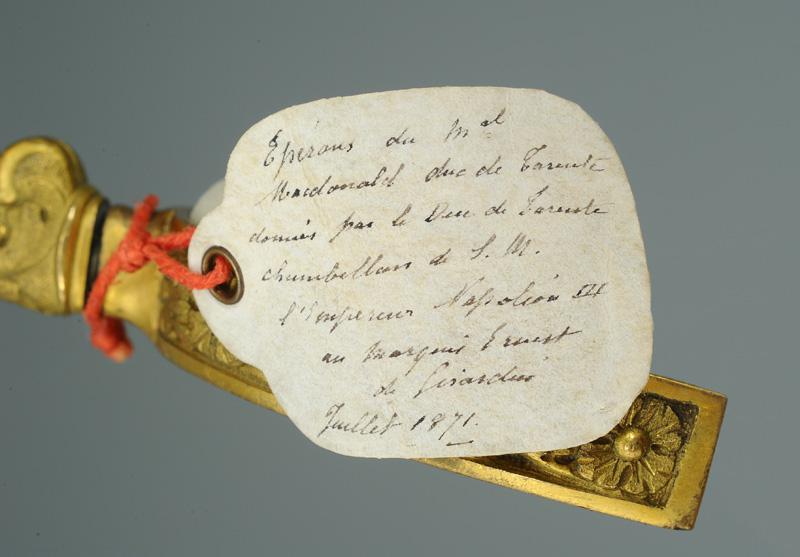
This pair of spurs bears an ancient handwritten label on vellum "Spurs of Marshal McDonald given by the Duke of Tarente, chamberlain of His Majesty the Emperor Napoleon III to Marquis Ernest de Girardin, July 1871."
BIOGRAPHY:
Etienne Jacques Joseph Alexandre Macdonald, 1st Duke of Tarente, born on November 17, 1765 in Sedan (Ardennes) and died on September 25, 1840 in his castle of Courcelles-le-Roy, in Beaulieu-sur-Loire (Loiret), was a French general of the Revolution and a Marshal of the Empire. Coming from a Scottish family originating from the Isle of South Uist in the Hebrides, his father, Neil MacEachen (later MacDonald) of Howbeg, assisted in the escape of Prince Charles Edward Stuart to France. Neil joined around fifteen Jacobites exiled in Sancerre since 1752. Neil MacDonald settled there with his wife Marie-Alexandrine Gonaut and their children, including Etienne. The latter was a boarder at the College of Sancerre before studying at the Military School of Douai. Alexandre served in the Ogilvy regiment. Macdonald served initially in the Irish Dillon regiment in 1784 in Holland before becoming a cadet in the 87th infantry in 1787.
French Revolution:
At Jemappes, he was made colonel of the 2nd infantry regiment formerly Picardie. He was provisionally appointed brigadier general on August 26, 1793. He replaced Souham in command of the 1st division of the Army of the North. In 1795, in Pichegru's Army of the North, he chased the English under Frederick, Duke of York and Albany, crossed frozen rivers, and with his cavalry captured the Dutch fleet trapped in the ice. He was then promoted to division general on November 28, 1795.
After serving in the armies of the Rhine and Italy, he was appointed governor of Rome and the Papal States. In 1799, when the French evacuated Rome, he campaigned against the allied armies. He fought the three-day battle of the Trebbia, facing an army of 50,000 men while he had only 35,000, received several wounds, and managed to join with General Moreau.
Consulate-First Empire:
He commanded the Versailles companies during the 18th Brumaire Year VIII and supported Napoleon Bonaparte. After the Battle of Marengo and the Grisons campaign, Macdonald was sent to Denmark as a plenipotentiary minister until 1803. Upon his return, he received the title of Grand Officer of the Legion of Honor. Disgraced for supporting General Moreau under whom he had served, he went through a period of exile in Berry. Macdonald purchased the Chateau de Courcelles-le-Roy and Bois-Sir-Aimé. It was during this time he became the governor of the 7th military region and resided in Bourges, rue Jacques Cœur.
It was not until 1809 that he resumed command of a division in Italy. It was at Wagram that he was appointed a Marshal, after breaking through the center of the enemy army protected by 200 cannons. Upon his return to Paris in 1810, he was appointed Duke of Tarente and took command of an army corps in Spain. In 1812, he led the X Corps in Russia. In 1813, he participated in the battles of Lützen, Bautzen, and Leipzig. There, he swam across the Elster, where Poniatowski perished, and on October 30 witnessed the Battle of Hanau. During the 1814 campaign, he commanded the left wing of the army and was present at Fontainebleau for Napoleon's abdication, to which he contributed.
Restoration and July Monarchy:
After the abdication at Fontainebleau, he accepted the peerage on June 4, 1814. On the night of March 19-20, 1815, he left Paris with Louis XVIII, and after accompanying him to Menin, he returned, refused any position from Napoleon, and enlisted in the National Guard as a simple grenadier. After Waterloo, he was appointed Grand Chancellor of the Legion of Honor. Upon the return of the Bourbons, the Duke of Tarente was tasked with disbanding the Loire army, created by Napoleon on May 17, 1815, to fight the Vendéens who had once again revolted. He was appointed Major-General of Louis XVIII's Royal Guard in September 1815. On July 2, 1815, he was appointed Grand Chancellor of the Order of the Legion of Honor, a dignity he held until 1831.
From his marriage on September 25, 1821, to Ernestine Thérèse Gasparine (May 21, 1789 - Hamburg ✝ April 13, 1870 - Paris), daughter of the diplomat Jean-François de Bourgoing (1748-1811), and Marie-Benoîte-Joséphine Prévost de La Croix (1759-1838), he had a son, Alexandre (1824-1881), the 2nd Duke of Tarente who served as chamberlain to Napoleon III, councilor general, and deputy of Loiret (1852-1869), then a senator of the Second Empire (1869-1870). On August 10, 1830, he presented the royal crown of Louis-Philippe to the Assembly. Three other Marshals of France accompanied him: Molitor, Oudinot, and Mortier. This was his final official appearance. He ceased his functions as Grand Chancellor of the Legion of Honor on August 23, 1831, and died on September 25, 1840, at his chateau of Courcelles-le-Roy, in Beaulieu-sur-Loire (Loiret), at the age of 75, leaving a 15-year-old son. He rests in the Père-Lachaise cemetery (division 37) in Paris.
In chiseled and gilded bronze. The two branches are decorated with an oak branch and flowers. The back part features a dragon head from mythology holding in its mouth a round wheel. This part is screwed onto the two branches by a threaded steel rod. Height of the lateral branches 1.4 cm. Height of the back part, including the wheel, 4.1 cm. Width of the spurs 6.1 cm.
France.
First Empire - Restoration.
Perfect condition, retaining all its gilding and of great chiseling quality.
PROVENANCE:
Pair of spurs from the Napoleonic collection of the Prince's Palace of Monaco.
Lot n°139 from the sale on Sunday, November 16, 2014 in Fontainebleau.
This pair of spurs bears an ancient handwritten label on vellum "Spurs of Marshal McDonald given by the Duke of Tarente, chamberlain of His Majesty the Emperor Napoleon III to Marquis Ernest de Girardin, July 1871."
BIOGRAPHY:
Etienne Jacques Joseph Alexandre Macdonald, 1st Duke of Tarente, born on November 17, 1765 in Sedan (Ardennes) and died on September 25, 1840 in his castle of Courcelles-le-Roy, in Beaulieu-sur-Loire (Loiret), was a French general of the Revolution and a Marshal of the Empire. Coming from a Scottish family originating from the Isle of South Uist in the Hebrides, his father, Neil MacEachen (later MacDonald) of Howbeg, assisted in the escape of Prince Charles Edward Stuart to France. Neil joined around fifteen Jacobites exiled in Sancerre since 1752. Neil MacDonald settled there with his wife Marie-Alexandrine Gonaut and their children, including Etienne. The latter was a boarder at the College of Sancerre before studying at the Military School of Douai. Alexandre served in the Ogilvy regiment. Macdonald served initially in the Irish Dillon regiment in 1784 in Holland before becoming a cadet in the 87th infantry in 1787.
French Revolution:
At Jemappes, he was made colonel of the 2nd infantry regiment formerly Picardie. He was provisionally appointed brigadier general on August 26, 1793. He replaced Souham in command of the 1st division of the Army of the North. In 1795, in Pichegru's Army of the North, he chased the English under Frederick, Duke of York and Albany, crossed frozen rivers, and with his cavalry captured the Dutch fleet trapped in the ice. He was then promoted to division general on November 28, 1795.
After serving in the armies of the Rhine and Italy, he was appointed governor of Rome and the Papal States. In 1799, when the French evacuated Rome, he campaigned against the allied armies. He fought the three-day battle of the Trebbia, facing an army of 50,000 men while he had only 35,000, received several wounds, and managed to join with General Moreau.
Consulate-First Empire:
He commanded the Versailles companies during the 18th Brumaire Year VIII and supported Napoleon Bonaparte. After the Battle of Marengo and the Grisons campaign, Macdonald was sent to Denmark as a plenipotentiary minister until 1803. Upon his return, he received the title of Grand Officer of the Legion of Honor. Disgraced for supporting General Moreau under whom he had served, he went through a period of exile in Berry. Macdonald purchased the Chateau de Courcelles-le-Roy and Bois-Sir-Aimé. It was during this time he became the governor of the 7th military region and resided in Bourges, rue Jacques Cœur.
It was not until 1809 that he resumed command of a division in Italy. It was at Wagram that he was appointed a Marshal, after breaking through the center of the enemy army protected by 200 cannons. Upon his return to Paris in 1810, he was appointed Duke of Tarente and took command of an army corps in Spain. In 1812, he led the X Corps in Russia. In 1813, he participated in the battles of Lützen, Bautzen, and Leipzig. There, he swam across the Elster, where Poniatowski perished, and on October 30 witnessed the Battle of Hanau. During the 1814 campaign, he commanded the left wing of the army and was present at Fontainebleau for Napoleon's abdication, to which he contributed.
Restoration and July Monarchy:
After the abdication at Fontainebleau, he accepted the peerage on June 4, 1814. On the night of March 19-20, 1815, he left Paris with Louis XVIII, and after accompanying him to Menin, he returned, refused any position from Napoleon, and enlisted in the National Guard as a simple grenadier. After Waterloo, he was appointed Grand Chancellor of the Legion of Honor. Upon the return of the Bourbons, the Duke of Tarente was tasked with disbanding the Loire army, created by Napoleon on May 17, 1815, to fight the Vendéens who had once again revolted. He was appointed Major-General of Louis XVIII's Royal Guard in September 1815. On July 2, 1815, he was appointed Grand Chancellor of the Order of the Legion of Honor, a dignity he held until 1831.
From his marriage on September 25, 1821, to Ernestine Thérèse Gasparine (May 21, 1789 - Hamburg ✝ April 13, 1870 - Paris), daughter of the diplomat Jean-François de Bourgoing (1748-1811), and Marie-Benoîte-Joséphine Prévost de La Croix (1759-1838), he had a son, Alexandre (1824-1881), the 2nd Duke of Tarente who served as chamberlain to Napoleon III, councilor general, and deputy of Loiret (1852-1869), then a senator of the Second Empire (1869-1870). On August 10, 1830, he presented the royal crown of Louis-Philippe to the Assembly. Three other Marshals of France accompanied him: Molitor, Oudinot, and Mortier. This was his final official appearance. He ceased his functions as Grand Chancellor of the Legion of Honor on August 23, 1831, and died on September 25, 1840, at his chateau of Courcelles-le-Roy, in Beaulieu-sur-Loire (Loiret), at the age of 75, leaving a 15-year-old son. He rests in the Père-Lachaise cemetery (division 37) in Paris.
Reference :
33617(16743)
Next update Friday, septembre 25 at 13:30 PM
FOR ALL PURCHASES, PAYMENT IN MULTIPLE CHECKS POSSIBLE
bertrand.malvaux@wanadoo.fr 06 07 75 74 63
SHIPPING COSTS
Shipping costs are calculated only once per order for one or more items, all shipments are sent via registered mail, as this is the only way to have proof of dispatch and receipt.
For parcels whose value cannot be insured by the Post, shipments are entrusted to DHL or Fedex with real value insured, the service is of high quality but the cost is higher.
RETURN POLICY
Items can be returned within 8 days of receipt. They must be returned by registered mail at the sender's expense, in their original packaging, and in their original condition.
AUTHENTICITY
The selection of items offered on this site allows me to guarantee the authenticity of each piece described here, all items offered are guaranteed to be period and authentic, unless otherwise noted or restricted in the description.
An authenticity certificate of the item including the description published on the site, the period, the sale price, accompanied by one or more color photographs is automatically provided for any item priced over 130 euros. Below this price, each certificate is charged 5 euros.
Only items sold by me are subject to an authenticity certificate, I do not provide any expert reports for items sold by third parties (colleagues or collectors).
FOR ALL PURCHASES, PAYMENT IN MULTIPLE CHECKS POSSIBLE
bertrand.malvaux@wanadoo.fr 06 07 75 74 63
An authenticity certificate of the item including the description published on the site, the period, the sale price, accompanied by one or more color photographs is automatically provided for any item priced over 130 euros. Below this price, each certificate is charged 5 euros.
Only items sold by me are subject to an authenticity certificate, I do not provide any expert reports for items sold by third parties (colleagues or collectors).