
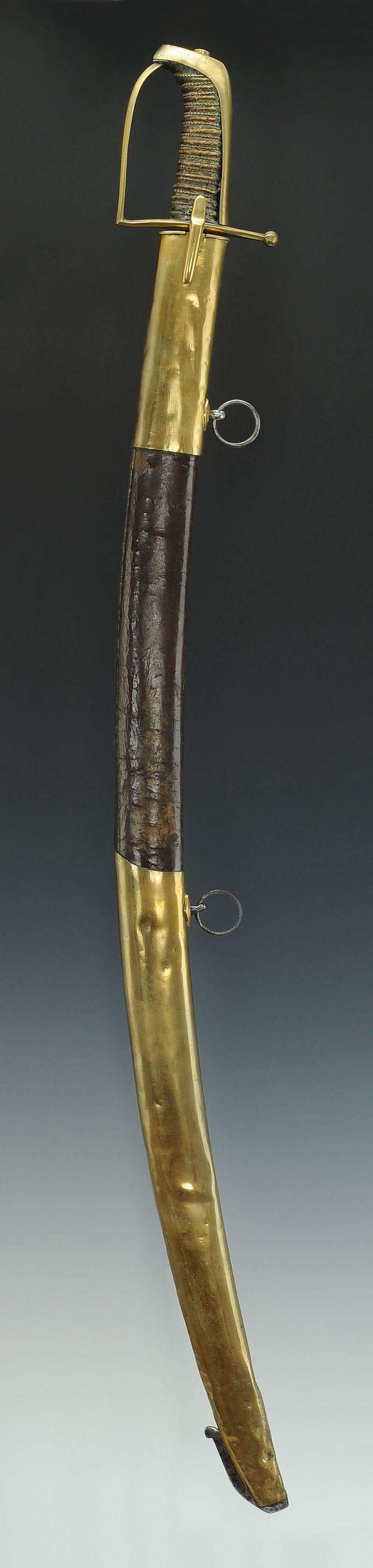
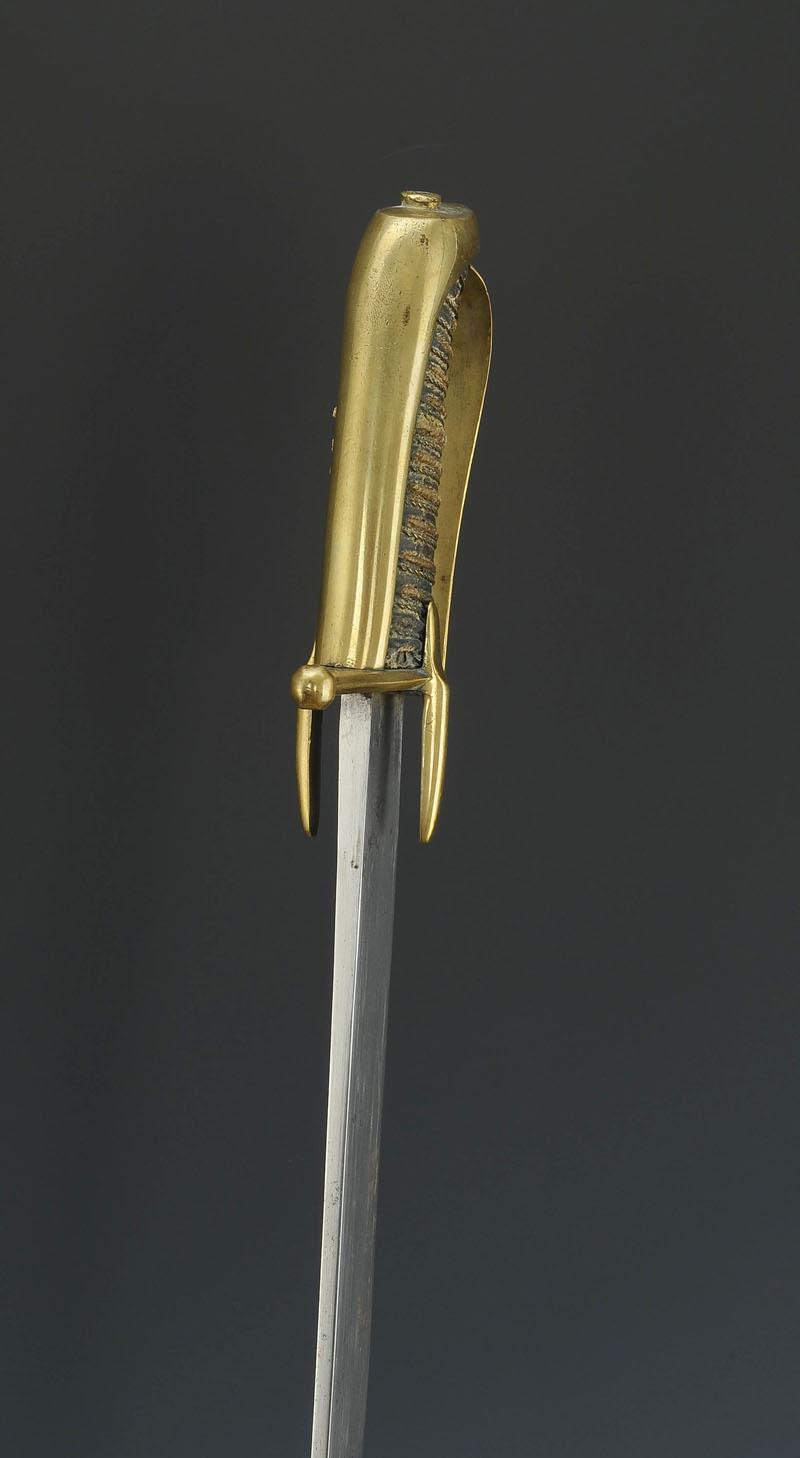
Hussar Saber, 1767 model, second type. Former Monarchy (1767-1776).
Sold out
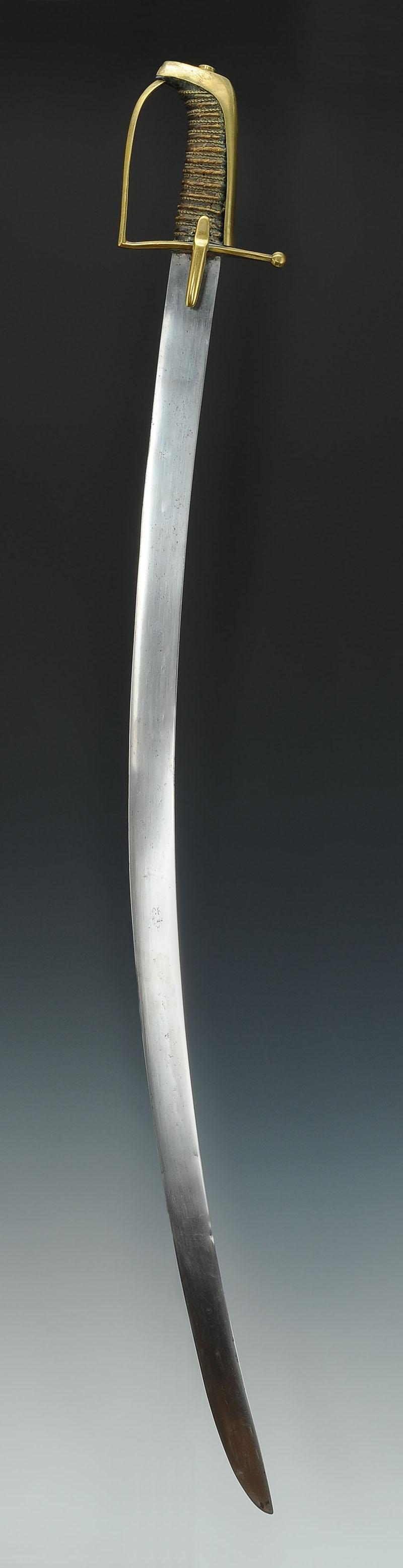
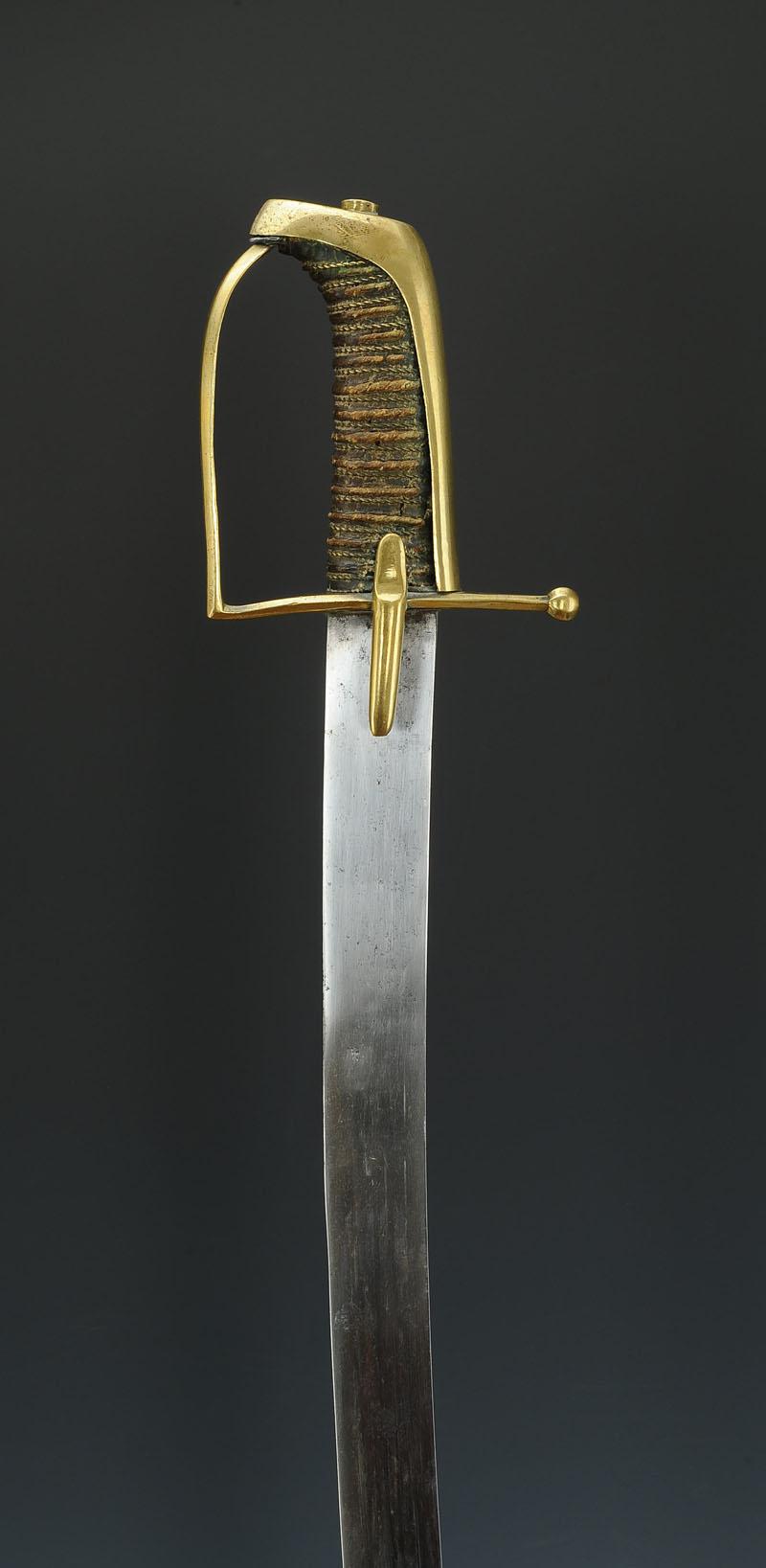
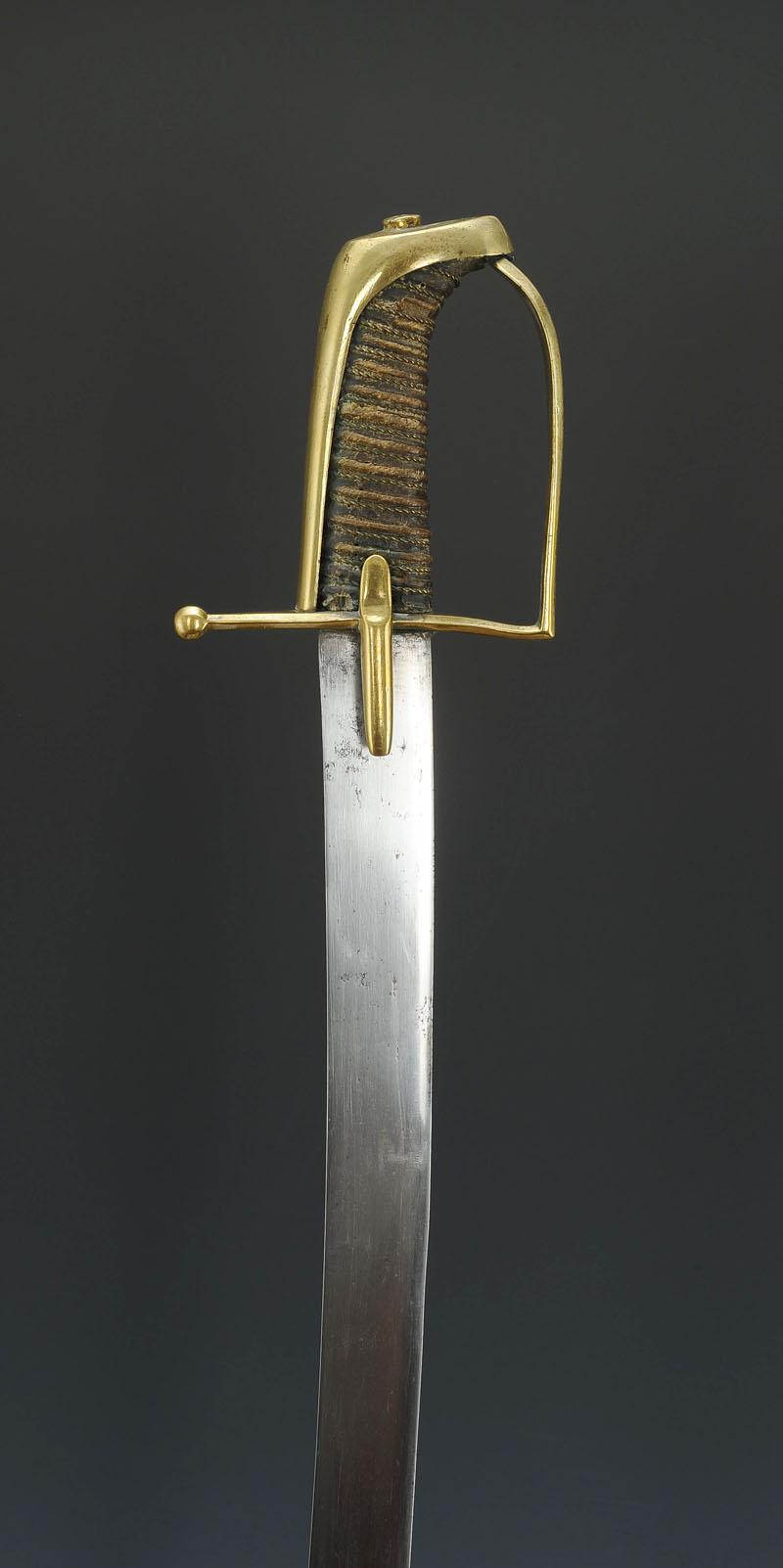
Hussar Sabre, Model 1767, Ancient Monarchy (1767-1776).
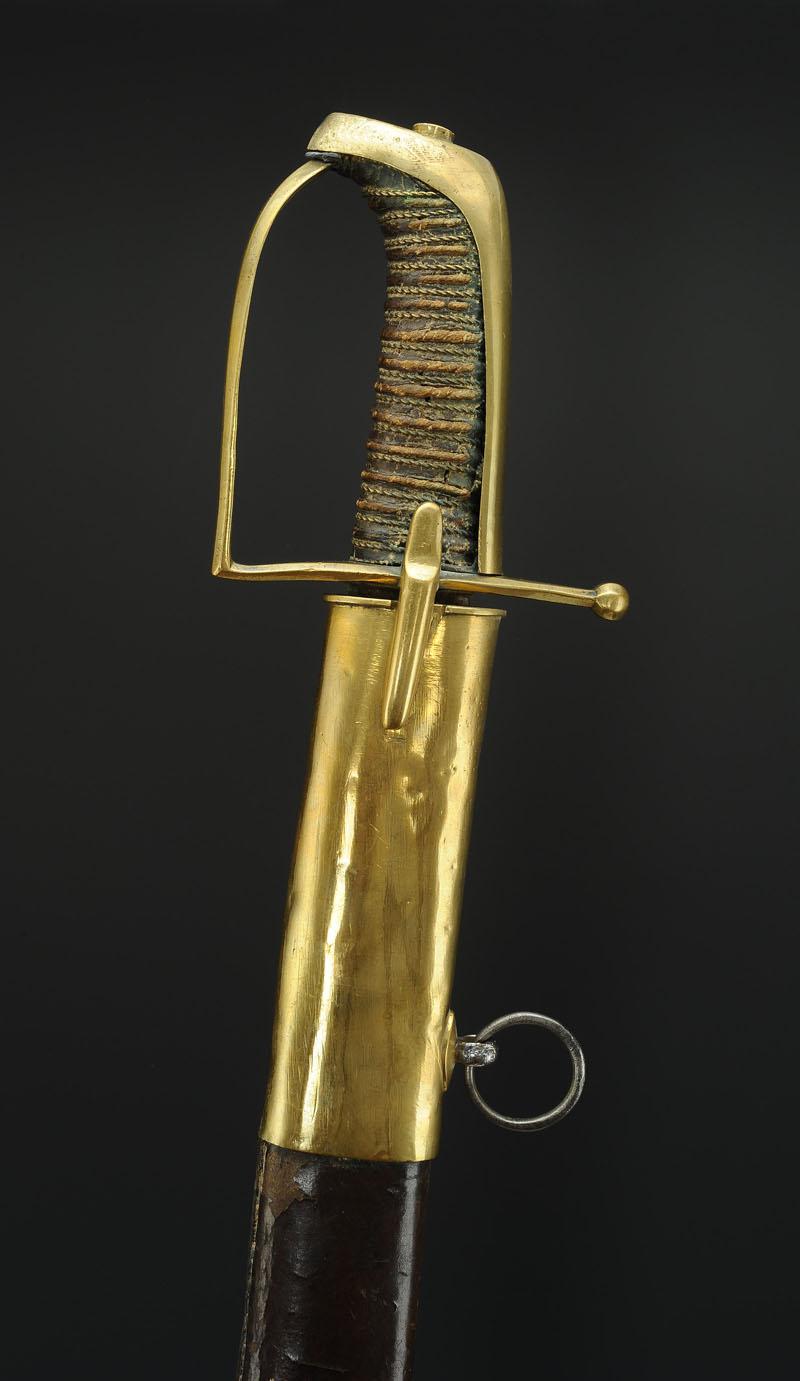
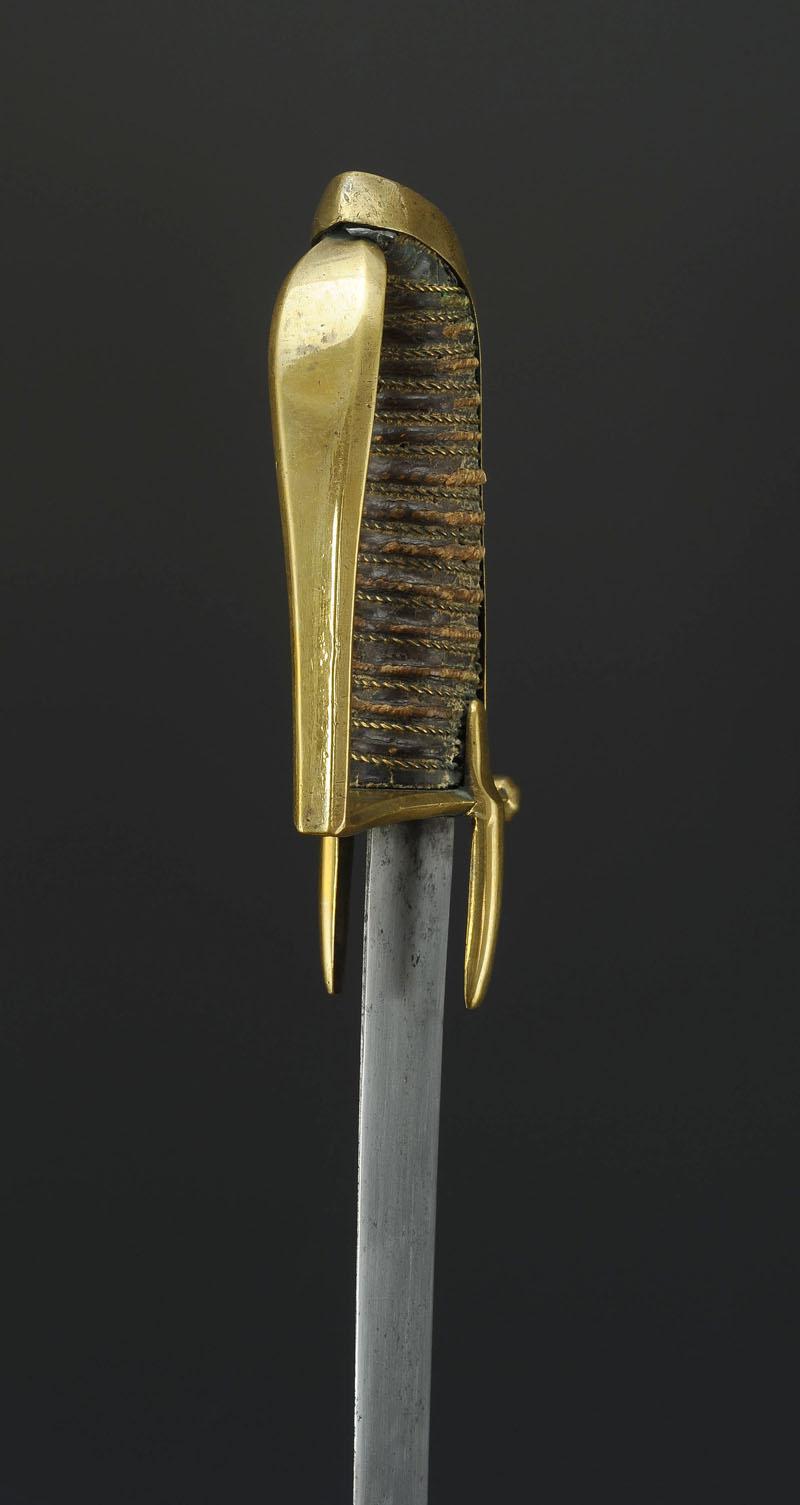
Brass hilt, Hungarian-style guard with a single branch in a cross shape, cap with a long tail. Wooden handle covered with "bouilly" leather, filigreed brass.
Curved flat blade devoid of engravings and stamps.
Width at the heel 3.5 cm, total length 88.1 cm.
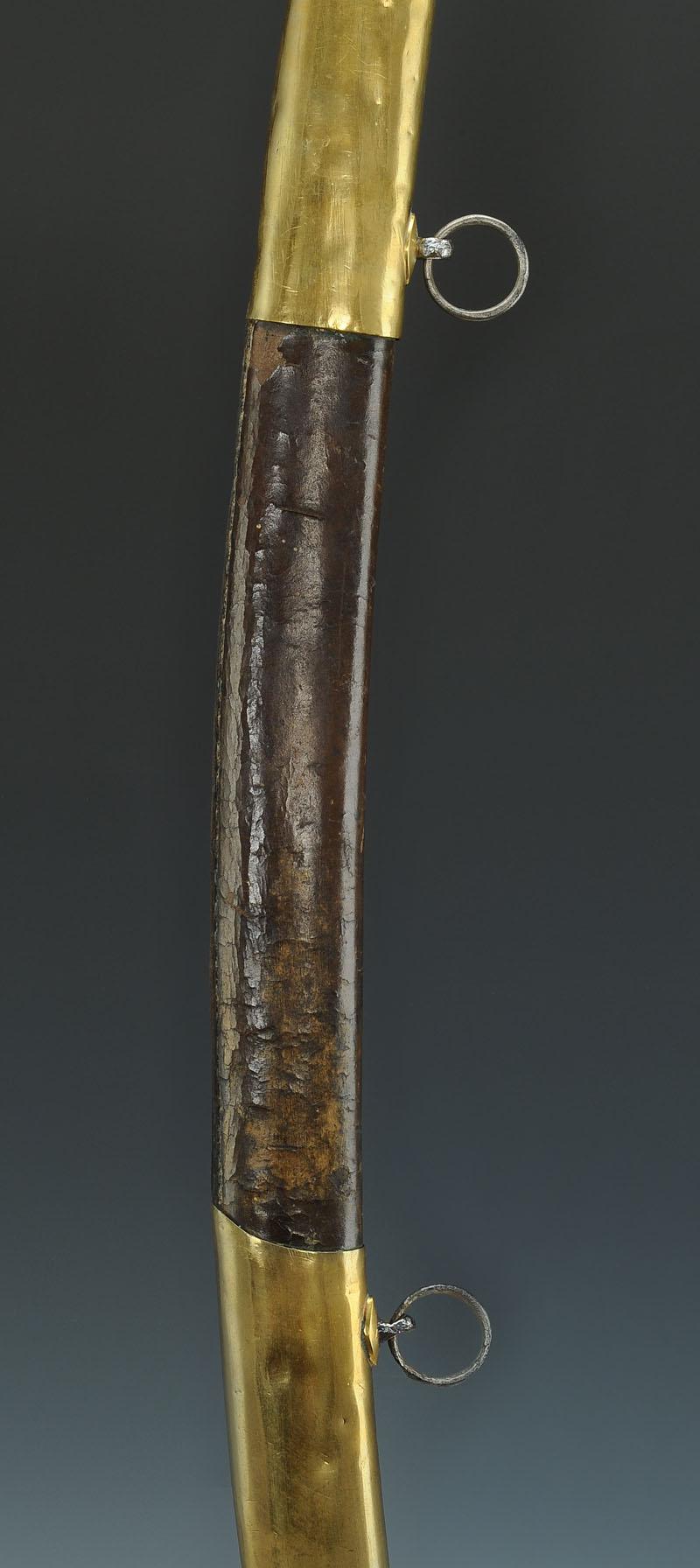
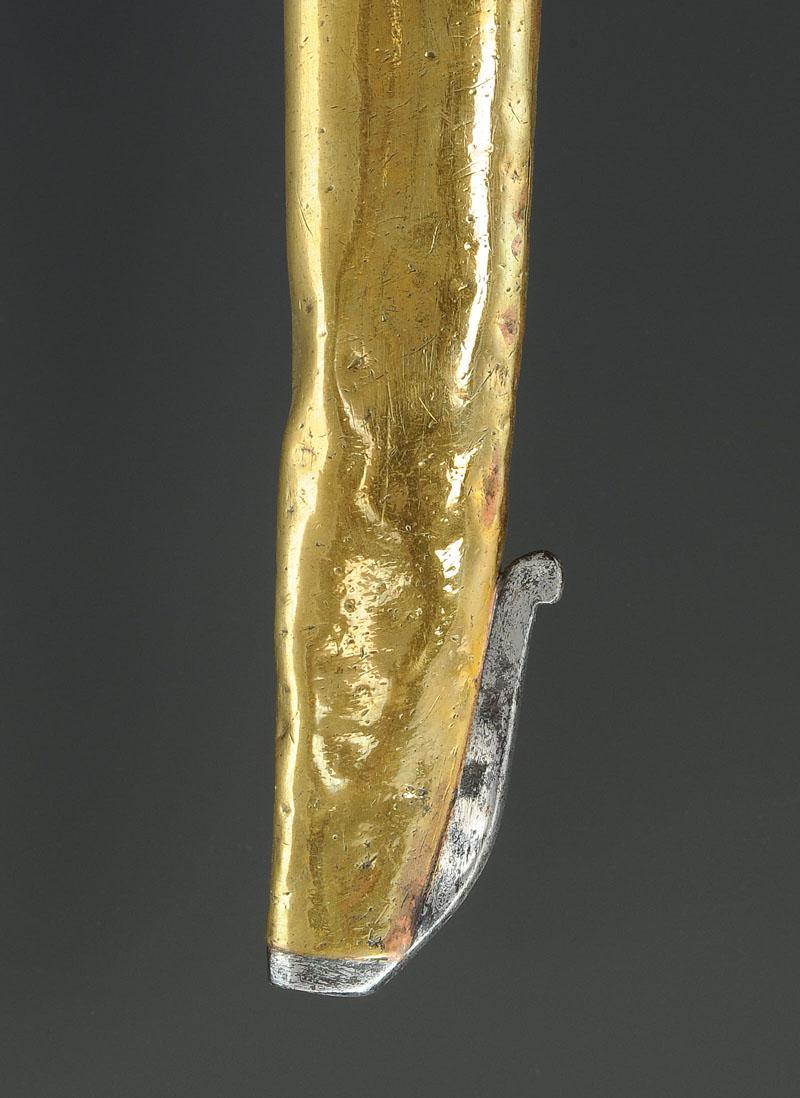
Wooden scabbard covered in brown waxed leather with two brass fittings (the chape is cut straight at the bottom, the locket is cut diagonally at the top), iron belt loop and rings, iron tip of the scabbard.
Very good condition.
France.
Revolution.
COLLECTIBLE ITEM:
This regulation hussar troop saber is probably one of the rarest to come across in a collection, as we only know of a few examples: the Army museums in Paris, Empéri in Salon de Provence, and the Hussar Museum (Musée Massey) in Tarbes each possess a specimen, to which we can add two or three examples in private collections.
NOTE:
In the book "Hussar Sabers - The history of hussar sabers from Louis XIV to the present day" by Michel Pétard, this description can be found on page 41:
"25 April 1767.
The saber will be in the Hungarian style with a copper mount, single cross-shaped branch; the handle will be covered with a bouilly leather, crenellated with a twisted brass wire, adorned on the back with a copper plate: the blade will be back, solid and curved with a 2-inch curve (5.4 cm) and a thickness of 4 l (0.9 cm) near the tang, 33 and a half inches long (90.7 cm), 16 l (3.6 cm) wide at the heel, and 14 l at the tip (3.2 cm) which will be curled and sharp on the back for about 8 inches (21.6 cm); the cowhide scabbard with splines or a round barrel, will be decorated with a copper chape of 5 and a half inches long (14.9 cm) with an inside cup, and iron suspension rings; it will be adorned at its end with a copper tip 17 inches long (46 cm) and an iron heel."
In the same book, photos ref. 23 and 24, pages 40 and 41, are completed with the following comments:
Ref. 23 - Model 1767 saber:
Established in 1765, the weapon is produced in 1766 and materialized under the name "model of 1767" as part of a vast modernization plan for the royal army published that year. Sacrificing nothing in terms of aesthetics, this saber, with its Germanic character, is a rational tool (...) The scabbard is sturdy, with a round barrel, wrapped in calf leather and adorned with brass.
Ref. 24 - Evolved version of the 1767 model:
Users quickly noticed the significant discomfort caused to the hand by the excessive thickness of the handle, exacerbated by the over thickness of the ferrules. From now on, new deliveries will include shaved upper ferrules in terms of thickness, and the handle barrel will be slimmed down. As for the scabbard tip, it will be formed like a lyre, possibly from 1775.
Brass hilt, Hungarian-style guard with a single branch in a cross shape, cap with a long tail. Wooden handle covered with "bouilly" leather, filigreed brass.
Curved flat blade devoid of engravings and stamps.
Width at the heel 3.5 cm, total length 88.1 cm.
Wooden scabbard covered in brown waxed leather with two brass fittings (the chape is cut straight at the bottom, the locket is cut diagonally at the top), iron belt loop and rings, iron tip of the scabbard.
Very good condition.
France.
Revolution.
COLLECTIBLE ITEM:
This regulation hussar troop saber is probably one of the rarest to come across in a collection, as we only know of a few examples: the Army museums in Paris, Empéri in Salon de Provence, and the Hussar Museum (Musée Massey) in Tarbes each possess a specimen, to which we can add two or three examples in private collections.
NOTE:
In the book "Hussar Sabers - The history of hussar sabers from Louis XIV to the present day" by Michel Pétard, this description can be found on page 41:
"25 April 1767.
The saber will be in the Hungarian style with a copper mount, single cross-shaped branch; the handle will be covered with a bouilly leather, crenellated with a twisted brass wire, adorned on the back with a copper plate: the blade will be back, solid and curved with a 2-inch curve (5.4 cm) and a thickness of 4 l (0.9 cm) near the tang, 33 and a half inches long (90.7 cm), 16 l (3.6 cm) wide at the heel, and 14 l at the tip (3.2 cm) which will be curled and sharp on the back for about 8 inches (21.6 cm); the cowhide scabbard with splines or a round barrel, will be decorated with a copper chape of 5 and a half inches long (14.9 cm) with an inside cup, and iron suspension rings; it will be adorned at its end with a copper tip 17 inches long (46 cm) and an iron heel."
In the same book, photos ref. 23 and 24, pages 40 and 41, are completed with the following comments:
Ref. 23 - Model 1767 saber:
Established in 1765, the weapon is produced in 1766 and materialized under the name "model of 1767" as part of a vast modernization plan for the royal army published that year. Sacrificing nothing in terms of aesthetics, this saber, with its Germanic character, is a rational tool (...) The scabbard is sturdy, with a round barrel, wrapped in calf leather and adorned with brass.
Ref. 24 - Evolved version of the 1767 model:
Users quickly noticed the significant discomfort caused to the hand by the excessive thickness of the handle, exacerbated by the over thickness of the ferrules. From now on, new deliveries will include shaved upper ferrules in terms of thickness, and the handle barrel will be slimmed down. As for the scabbard tip, it will be formed like a lyre, possibly from 1775.
Reference :
14185
Next update Friday, octobre 9 at 13:30 PM
FOR ALL PURCHASES, PAYMENT IN MULTIPLE CHECKS POSSIBLE
bertrand.malvaux@wanadoo.fr 06 07 75 74 63
SHIPPING COSTS
Shipping costs are calculated only once per order for one or more items, all shipments are sent via registered mail, as this is the only way to have proof of dispatch and receipt.
For parcels whose value cannot be insured by the Post, shipments are entrusted to DHL or Fedex with real value insured, the service is of high quality but the cost is higher.
RETURN POLICY
Items can be returned within 8 days of receipt. They must be returned by registered mail at the sender's expense, in their original packaging, and in their original condition.
AUTHENTICITY
The selection of items offered on this site allows me to guarantee the authenticity of each piece described here, all items offered are guaranteed to be period and authentic, unless otherwise noted or restricted in the description.
An authenticity certificate of the item including the description published on the site, the period, the sale price, accompanied by one or more color photographs is automatically provided for any item priced over 130 euros. Below this price, each certificate is charged 5 euros.
Only items sold by me are subject to an authenticity certificate, I do not provide any expert reports for items sold by third parties (colleagues or collectors).
FOR ALL PURCHASES, PAYMENT IN MULTIPLE CHECKS POSSIBLE
bertrand.malvaux@wanadoo.fr 06 07 75 74 63
An authenticity certificate of the item including the description published on the site, the period, the sale price, accompanied by one or more color photographs is automatically provided for any item priced over 130 euros. Below this price, each certificate is charged 5 euros.
Only items sold by me are subject to an authenticity certificate, I do not provide any expert reports for items sold by third parties (colleagues or collectors).