
TEST HELMET OF THE 45th LINE INFANTRY REGIMENT, type 1836, July Monarchy (1836-1837). 27256-12905
Sold out
45th LINE INFANTRY REGIMENT TRIAL HELMET, type 1836, July Monarchy (1836-1837). 27256-12905
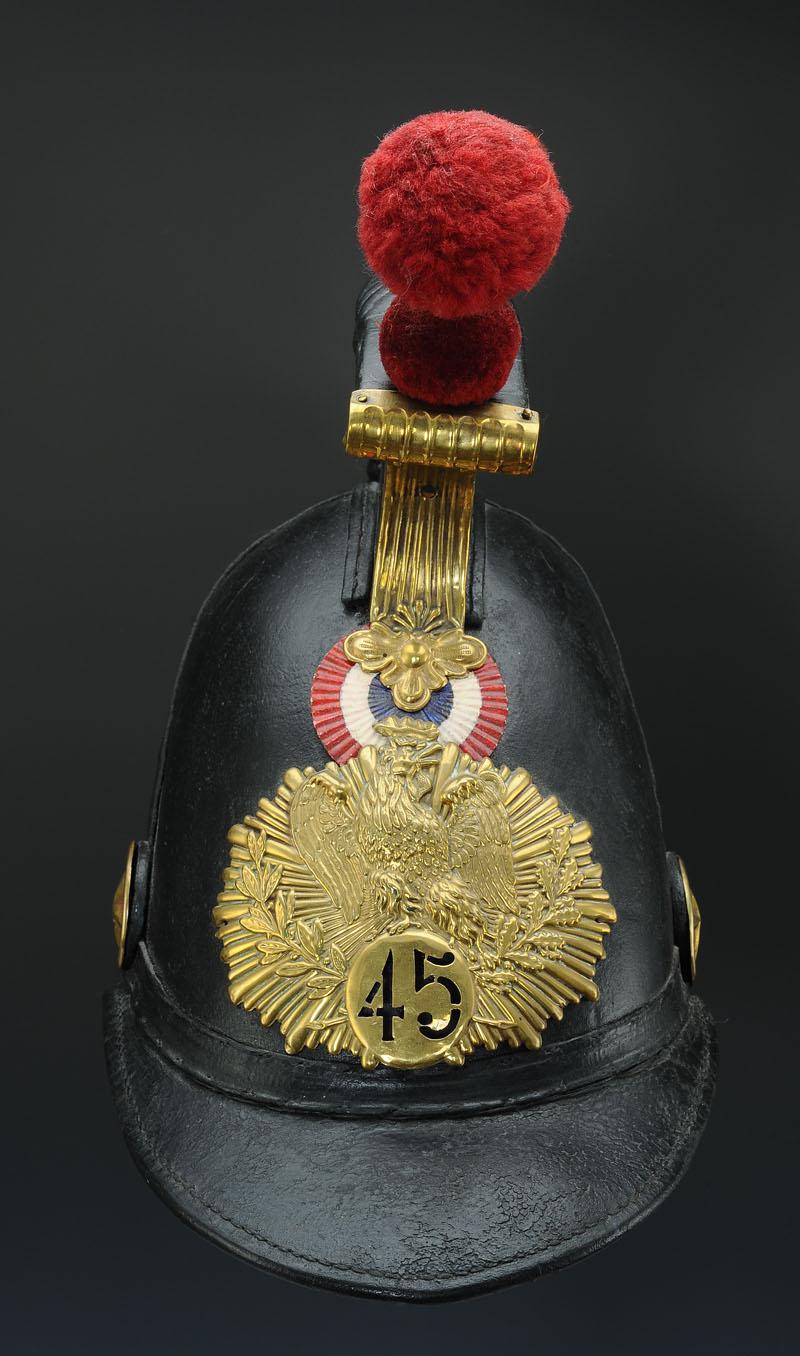
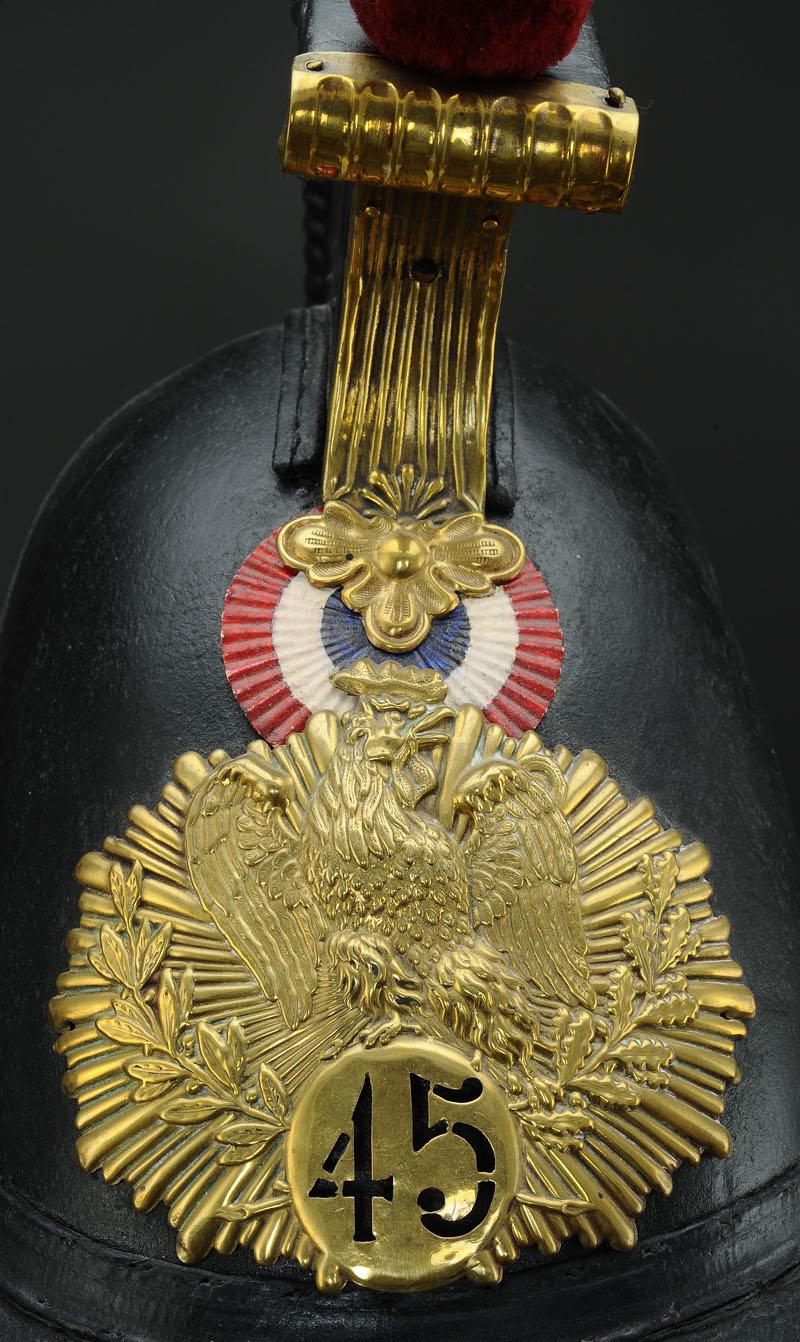
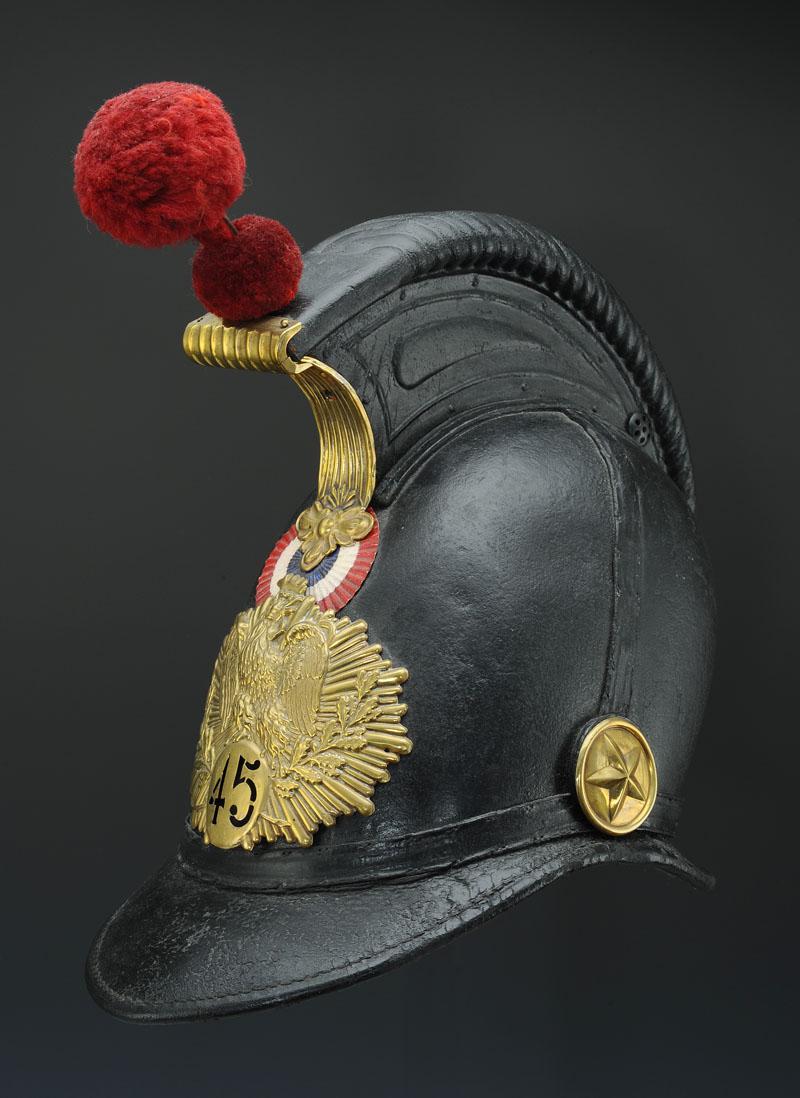
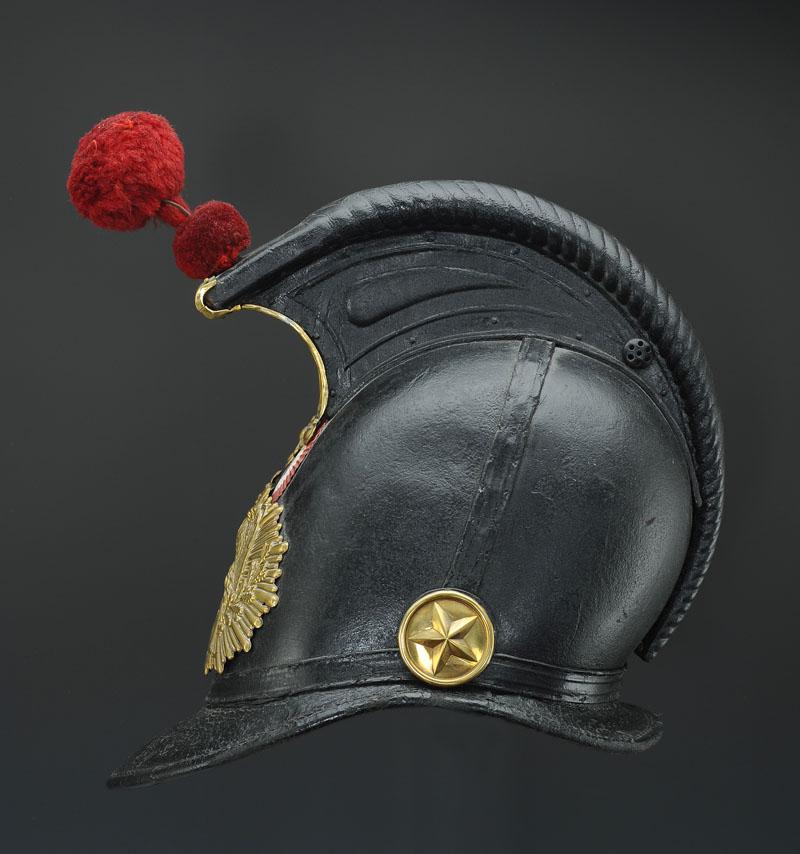
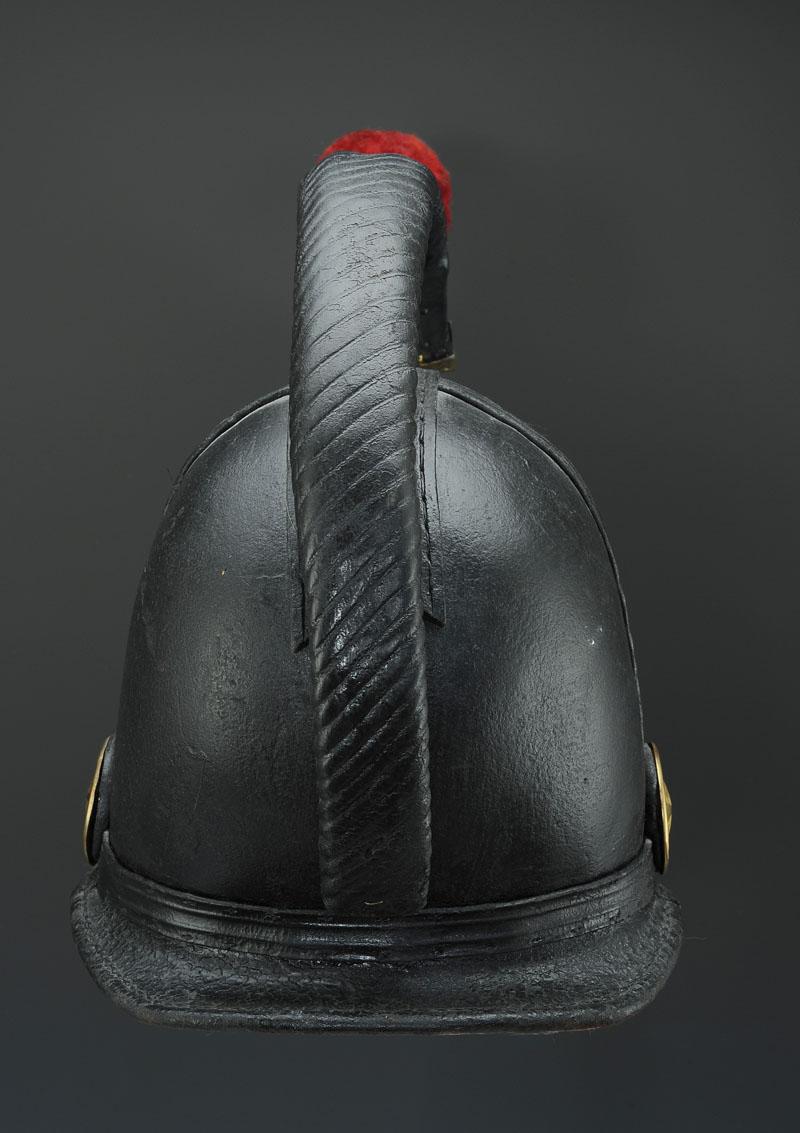
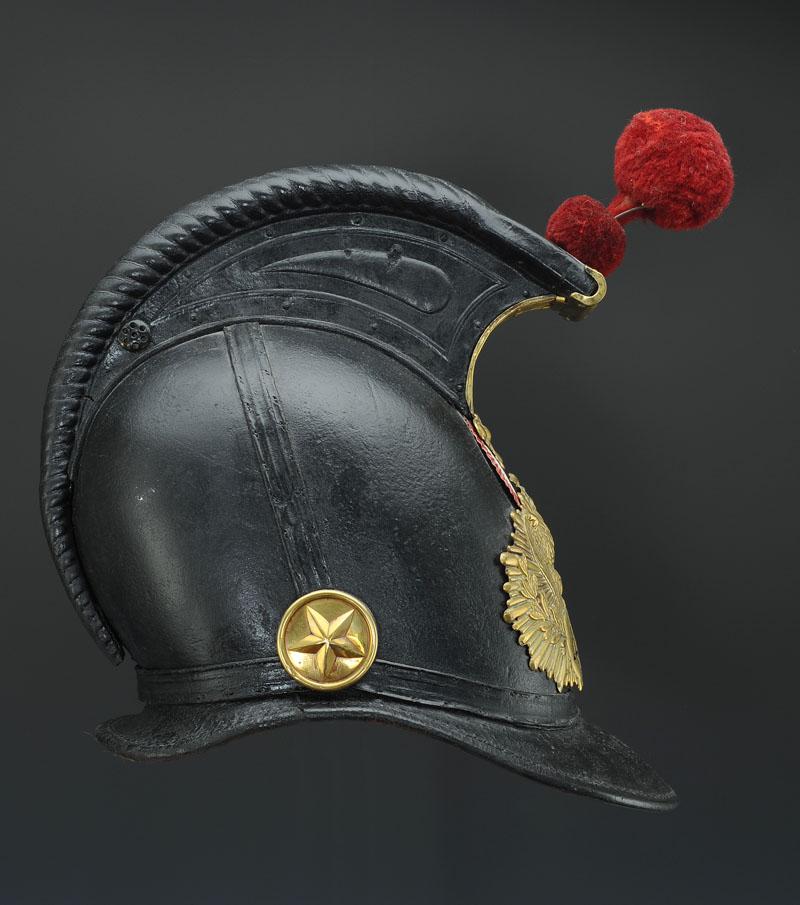
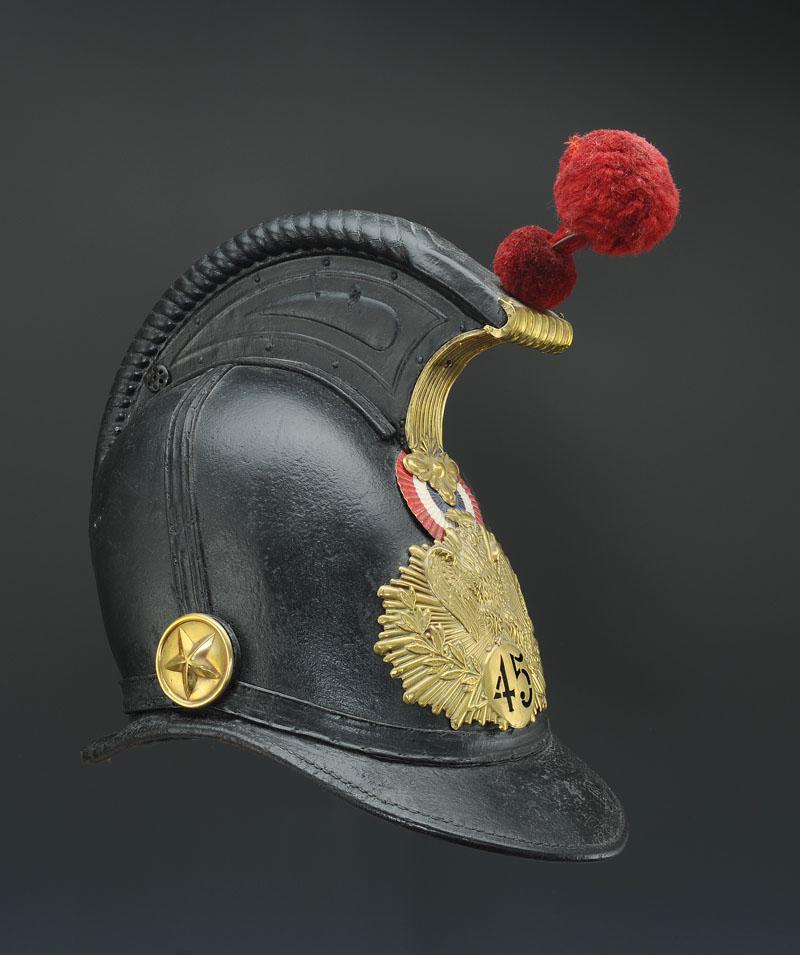
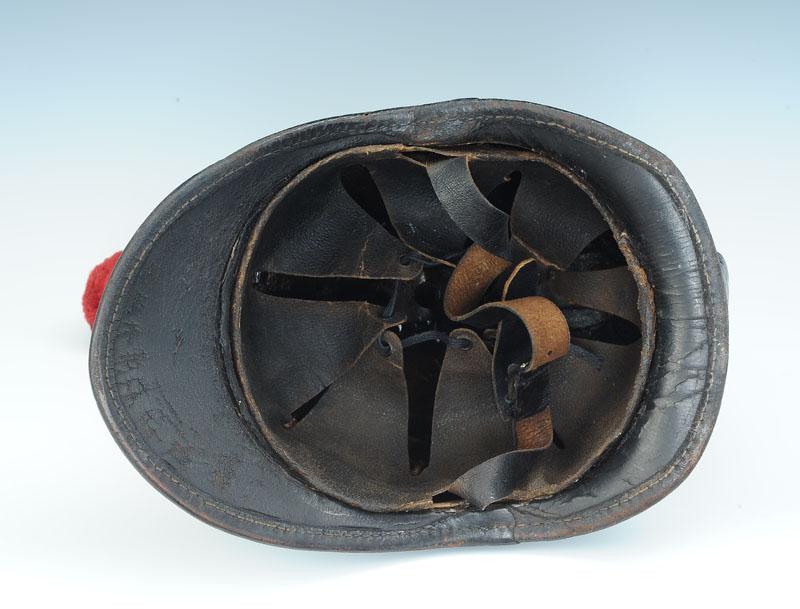
Helmet entirely made of molded black varnished leather. Bomb with a backward sloping neck guard, 15 cm deep, H 18.5 cm with visor and neck cover; reinforced on each side by a 1.5 cm wide leather band of the same color, surrounded at the bottom in the same way. Visor and neck cover in black varnished leather with a folded leather trim over the outer edge and sewn. Visor width 5.7 cm, neck cover width 2.5 cm. Crest composed of two black waxed leather flaps each molded in relief with a large ribbed panel (max H 7 cm) decorated with a black lacquered round metal ventilator at the back. The base of the flaps is bordered with a 1 cm wide leather trim sewn to the bomb. Crest mask in embossed brass with ribbing and a palmette at the bottom, width at the bottom 4 cm, width in the center 2.7 cm, width at the top 5 cm. The top of the crest is covered with a molded leather braid; it is adorned at the front with a double scarlet woolen pompom. Front cockade, fixed under the crest mask, embossed in relief with a radiant sun, tricolor lacquered, diameter 5.5 cm. Front plate in embossed and cut brass in the shape of a radiant sun with a Gallic rooster centered on a globe cut out with the number "45" framed by an oak branch and laurel, H 10 cm, width 13.5 cm. On each side of the bomb, a 4 cm diameter round brass rosette is fixed, stamped with a five-pointed star and a raised molding. Interior leather liner cut into 8 sections. Chin strap in black varnished leather with black lacquered brass fastener.
Total height of the helmet to the top of the crest 26 cm, total height to the top of the double pompom 31 cm.
France.
July Monarchy (1836-1837).
Very good condition, repainted cockade, front plate fixing screw replaced.
NOTE:
In 1835, the Minister of War asked infantry regiments for their opinion on the headgear to adopt. In 1836, the regiments proposed a series of different shako models. The 44th and 45th Line Infantry Regiments received a leather helmet with a plate and crest. This headgear had only a fleeting duration. The reports submitted by the two regiments were entirely contradictory: the 44th Regiment found the helmet heavy and cumbersome, whereas the 45th was in favor of its adoption. In its meeting on May 27, 1837, the Infantry and Cavalry Committee, relying on the conflicting conclusions, advised that the shako should continue to be the headgear for infantry troops.
Helmet entirely made of molded black varnished leather. Bomb with a backward sloping neck guard, 15 cm deep, H 18.5 cm with visor and neck cover; reinforced on each side by a 1.5 cm wide leather band of the same color, surrounded at the bottom in the same way. Visor and neck cover in black varnished leather with a folded leather trim over the outer edge and sewn. Visor width 5.7 cm, neck cover width 2.5 cm. Crest composed of two black waxed leather flaps each molded in relief with a large ribbed panel (max H 7 cm) decorated with a black lacquered round metal ventilator at the back. The base of the flaps is bordered with a 1 cm wide leather trim sewn to the bomb. Crest mask in embossed brass with ribbing and a palmette at the bottom, width at the bottom 4 cm, width in the center 2.7 cm, width at the top 5 cm. The top of the crest is covered with a molded leather braid; it is adorned at the front with a double scarlet woolen pompom. Front cockade, fixed under the crest mask, embossed in relief with a radiant sun, tricolor lacquered, diameter 5.5 cm. Front plate in embossed and cut brass in the shape of a radiant sun with a Gallic rooster centered on a globe cut out with the number "45" framed by an oak branch and laurel, H 10 cm, width 13.5 cm. On each side of the bomb, a 4 cm diameter round brass rosette is fixed, stamped with a five-pointed star and a raised molding. Interior leather liner cut into 8 sections. Chin strap in black varnished leather with black lacquered brass fastener.
Total height of the helmet to the top of the crest 26 cm, total height to the top of the double pompom 31 cm.
France.
July Monarchy (1836-1837).
Very good condition, repainted cockade, front plate fixing screw replaced.
NOTE:
In 1835, the Minister of War asked infantry regiments for their opinion on the headgear to adopt. In 1836, the regiments proposed a series of different shako models. The 44th and 45th Line Infantry Regiments received a leather helmet with a plate and crest. This headgear had only a fleeting duration. The reports submitted by the two regiments were entirely contradictory: the 44th Regiment found the helmet heavy and cumbersome, whereas the 45th was in favor of its adoption. In its meeting on May 27, 1837, the Infantry and Cavalry Committee, relying on the conflicting conclusions, advised that the shako should continue to be the headgear for infantry troops.
Reference :
27256-12905
Order shipments will be suspended between July 31 and September 1.
Next update Friday, august 14 at 13:30 PM
FOR ALL PURCHASES, PAYMENT IN MULTIPLE CHECKS POSSIBLE
bertrand.malvaux@wanadoo.fr 06 07 75 74 63
SHIPPING COSTS
Shipping costs are calculated only once per order for one or more items, all shipments are sent via registered mail, as this is the only way to have proof of dispatch and receipt.
For parcels whose value cannot be insured by the Post, shipments are entrusted to DHL or Fedex with real value insured, the service is of high quality but the cost is higher.
RETURN POLICY
Items can be returned within 8 days of receipt. They must be returned by registered mail at the sender's expense, in their original packaging, and in their original condition.
AUTHENTICITY
The selection of items offered on this site allows me to guarantee the authenticity of each piece described here, all items offered are guaranteed to be period and authentic, unless otherwise noted or restricted in the description.
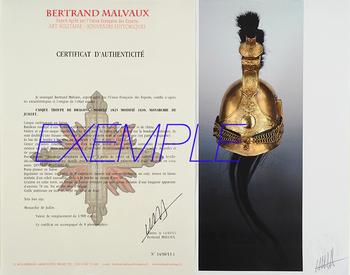
An authenticity certificate of the item including the description published on the site, the period, the sale price, accompanied by one or more color photographs is automatically provided for any item priced over 130 euros. Below this price, each certificate is charged 5 euros.
Only items sold by me are subject to an authenticity certificate, I do not provide any expert reports for items sold by third parties (colleagues or collectors).
Next update Friday, august 14 at 13:30 PM
FOR ALL PURCHASES, PAYMENT IN MULTIPLE CHECKS POSSIBLE
bertrand.malvaux@wanadoo.fr 06 07 75 74 63
An authenticity certificate of the item including the description published on the site, the period, the sale price, accompanied by one or more color photographs is automatically provided for any item priced over 130 euros. Below this price, each certificate is charged 5 euros.
Only items sold by me are subject to an authenticity certificate, I do not provide any expert reports for items sold by third parties (colleagues or collectors).