
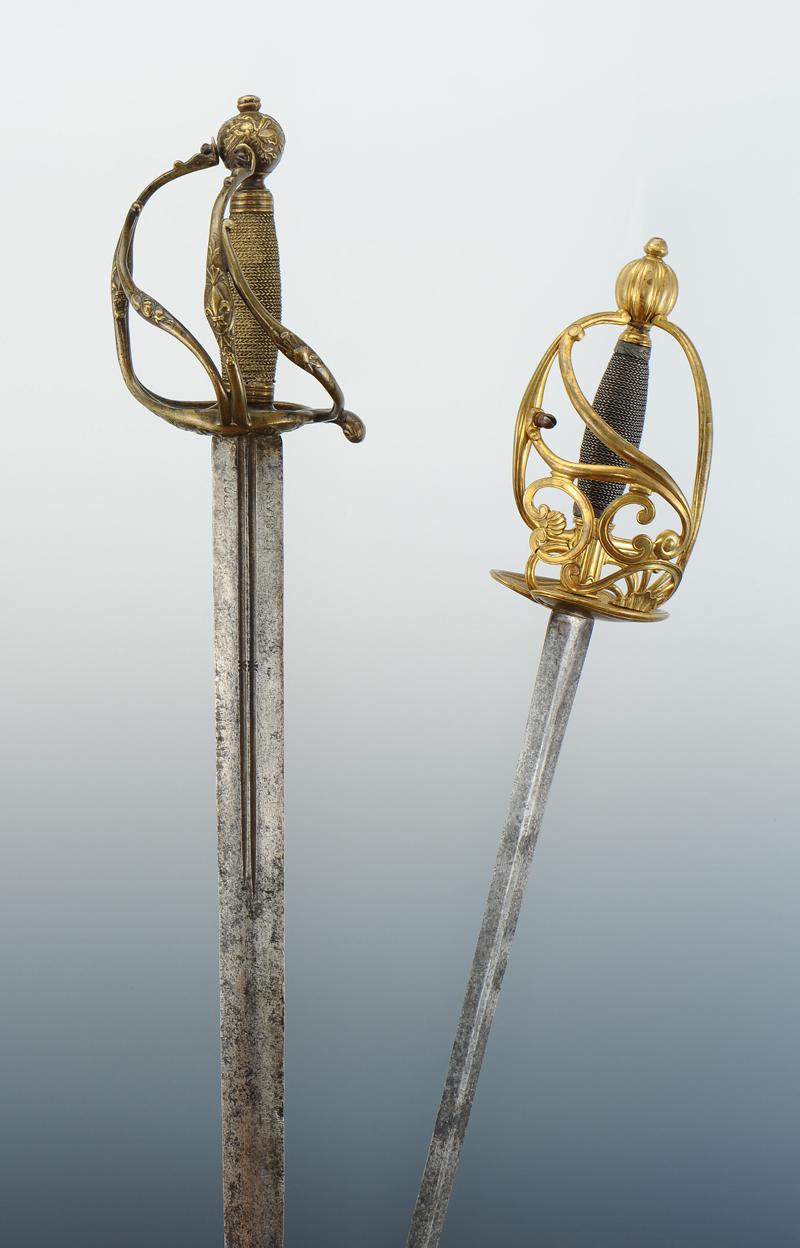
EXCEPTIONNELLE RÉUNION DE DEUX FORTES ÉPÉES DE CHEVAU-LÉGERS DE LA MAISON DU ROI, RÈGNE DE LOUIS XV, PREMIER ET SECOND MODÈLE.

Sold out
EXCEPTIONAL PAIRING OF TWO STRONG SWORDS OF THE KING'S HOUSE CAVALRY LANCERS, REIGN OF LOUIS XV, FIRST AND SECOND MODEL Ancient Monarchy.
To see all the photographs of these two weapons, you must visit the two dedicated listings.
MULTI-BRANCH SABRE OF THE KING'S HOUSE CAVALRY LANCERS, AROUND 1730 TO 1750, REIGN OF LOUIS XV.
Brass hilt with four branches, without a counter-guard or thumb ring. The two main branches are adorned with fleur-de-lis and floral motifs, the secondary branches with military trophies. (Height of guard branches 14 cm, height of pommel 4.9 cm). They are fixed at their top to the pommel by means of steel screws. Round pommel molded in relief with a trophy of weapons on the front face and the Arms of France on the back face. Wooden handle entirely filigreed with brass. Brass ferrules. Bi-valve hilt decorated on the top with a trophy of weapons and the Arms of France placed on a trophy; below, the front part is decorated with the Arms of France framed by palm leaves, the rear part with a trophy of weapons also framed by palm leaves. Original blade 90 cm long, on the exemplar presented, the length is 89.5 cm, with a width of 3.7 cm (originally 4.1 cm) and a lenticular section with a double central fuller, of a very archaic type for the period and of Germanic manufacture. It is marked at the ricasso on both sides of the fullers with "CHEVAU-LEGER-DE-LA » - » GARDE-DU-ROY » on one side, and then with "MAUPETIT » - » FOURBISSEUR-A-PARIS » on the other, in irregular small capitals, these inscriptions are partially erased. The sword cutler Lucien Maupetit is the author of this hilt and the supplier to the Lancers. His son, Lucien-Jacques, will be the entrepreneur of the Alsace manufacture from 1755 to 1765. Without scabbard.
Weight: 1.236 kg.
In his work "Des Sables et des Épées - Troupes à cheval de Louis XIV à l'Empire - tome I," pages 50 and 51, figure 24, Michel Pétard makes the following analysis of this model:
"Although no regulatory text has come down to us, it is certain that this is indeed a model since the rare known specimens are strictly identical. This sumptuous combat saber is of the generation that appeared in 1730 but it stands out by its gilded brass hilt and its high aesthetic relief decoration mixing the fleur-de-lis, martial trophies, and plant elements with success."
Good state of preservation, the brass parts have lost their gilding, minor damage at the top of one of the branches, blade with oxidation typical for that period.
France.
Reign of Louis XV.
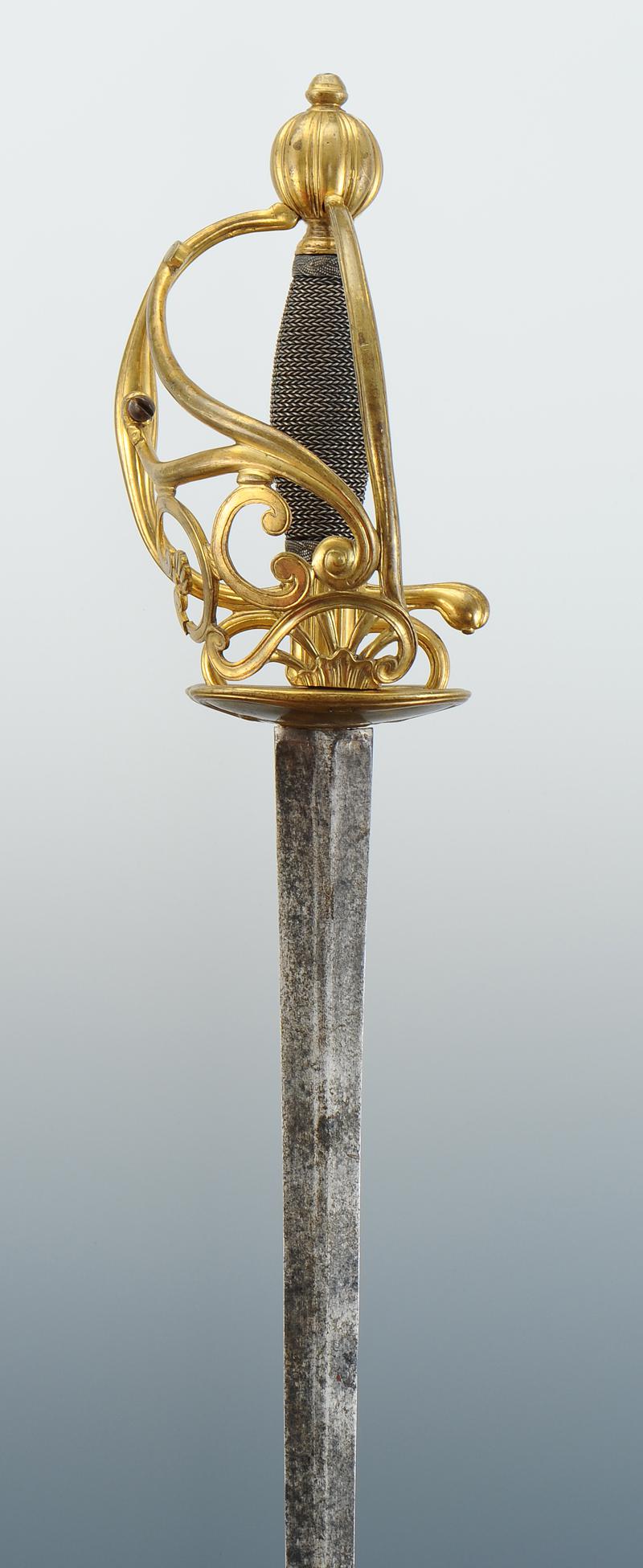
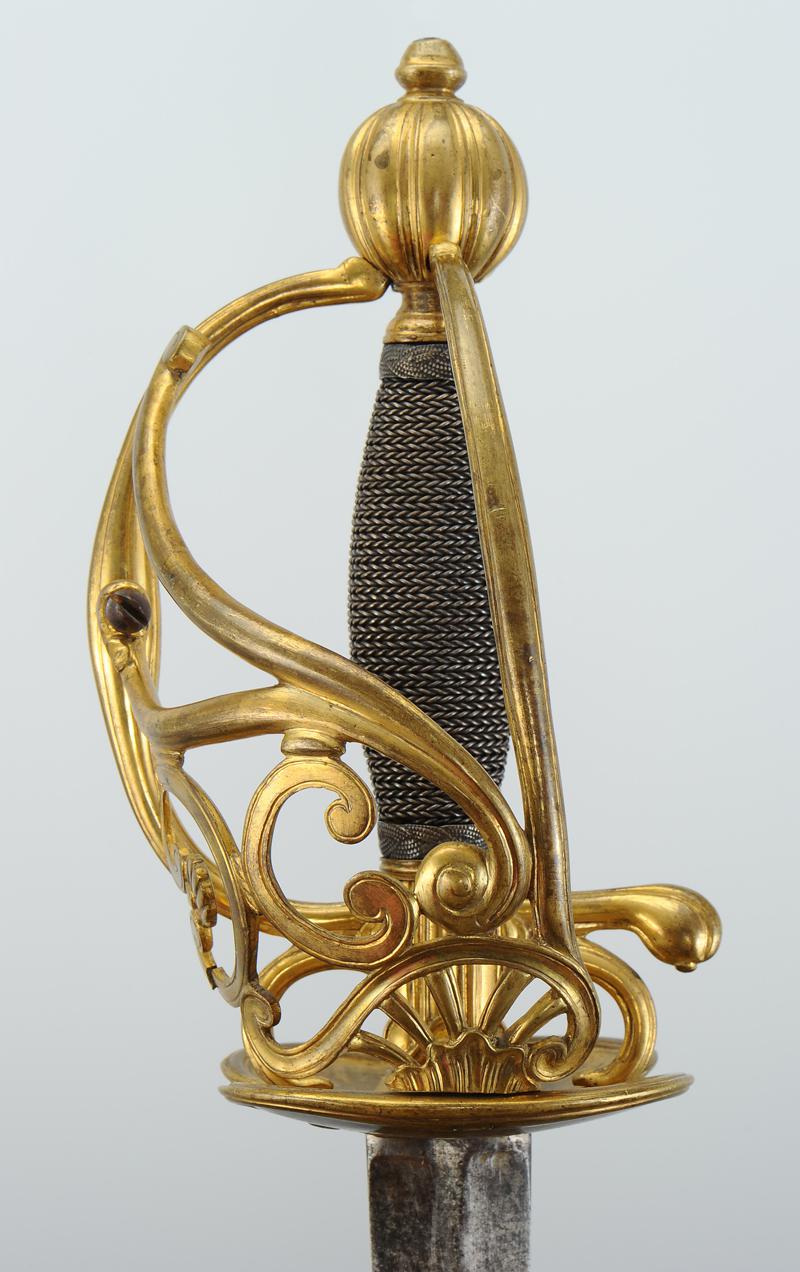
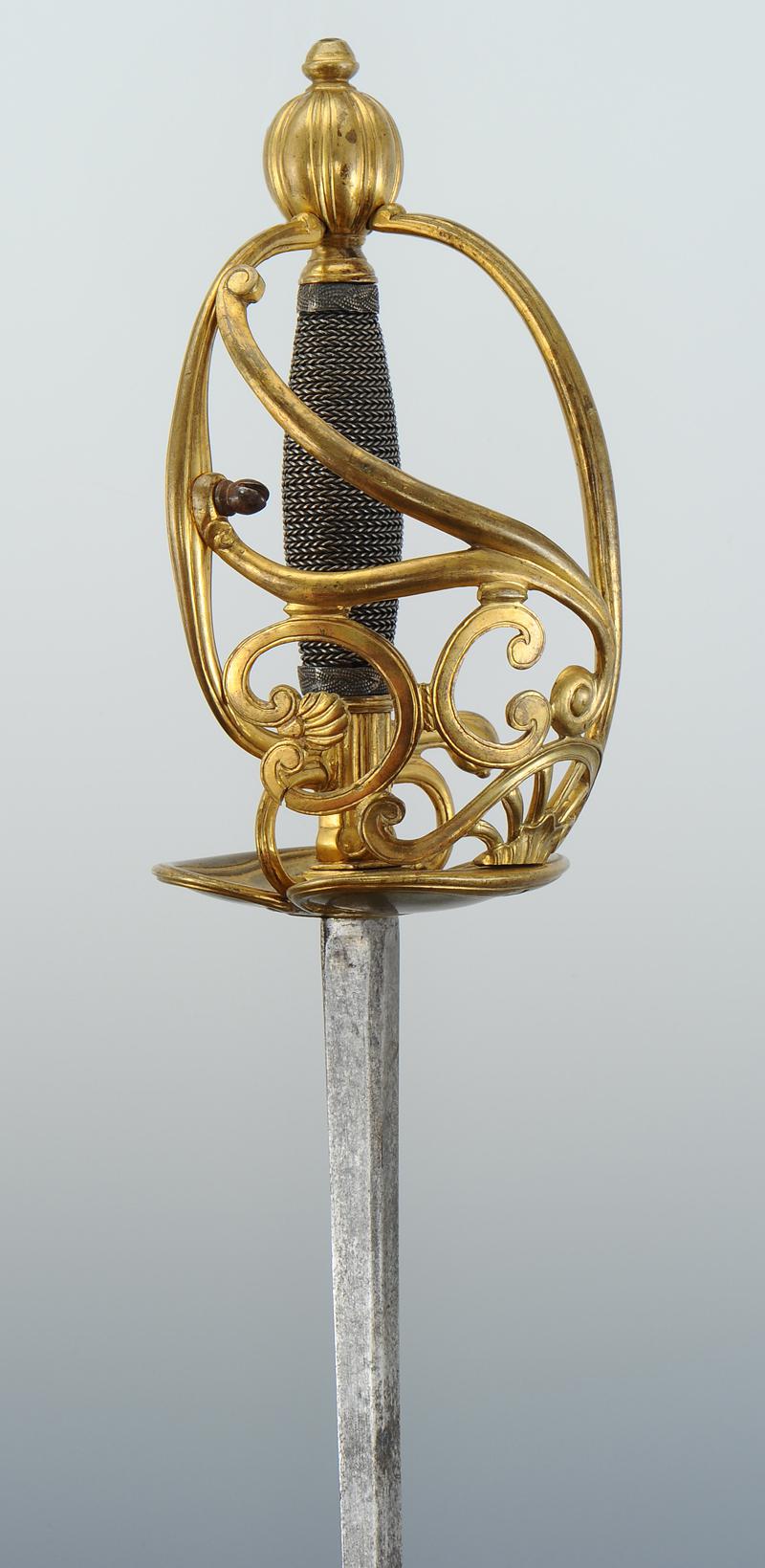
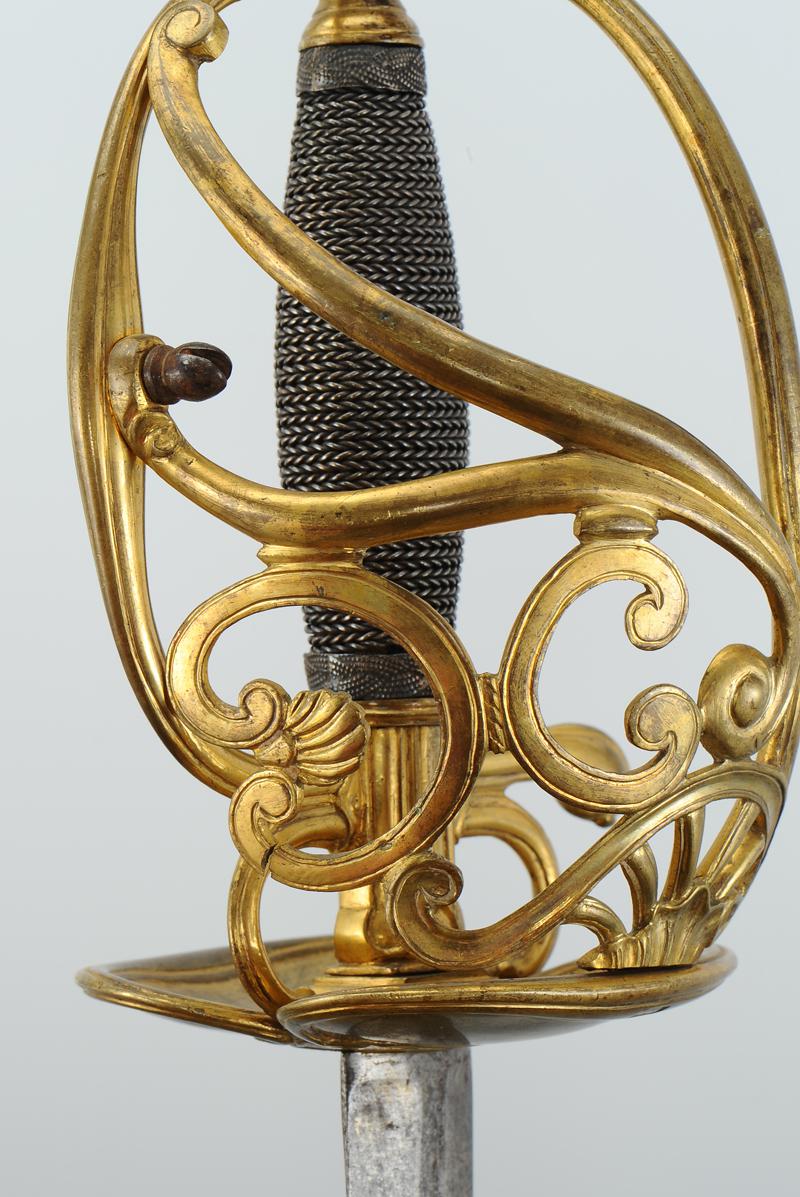
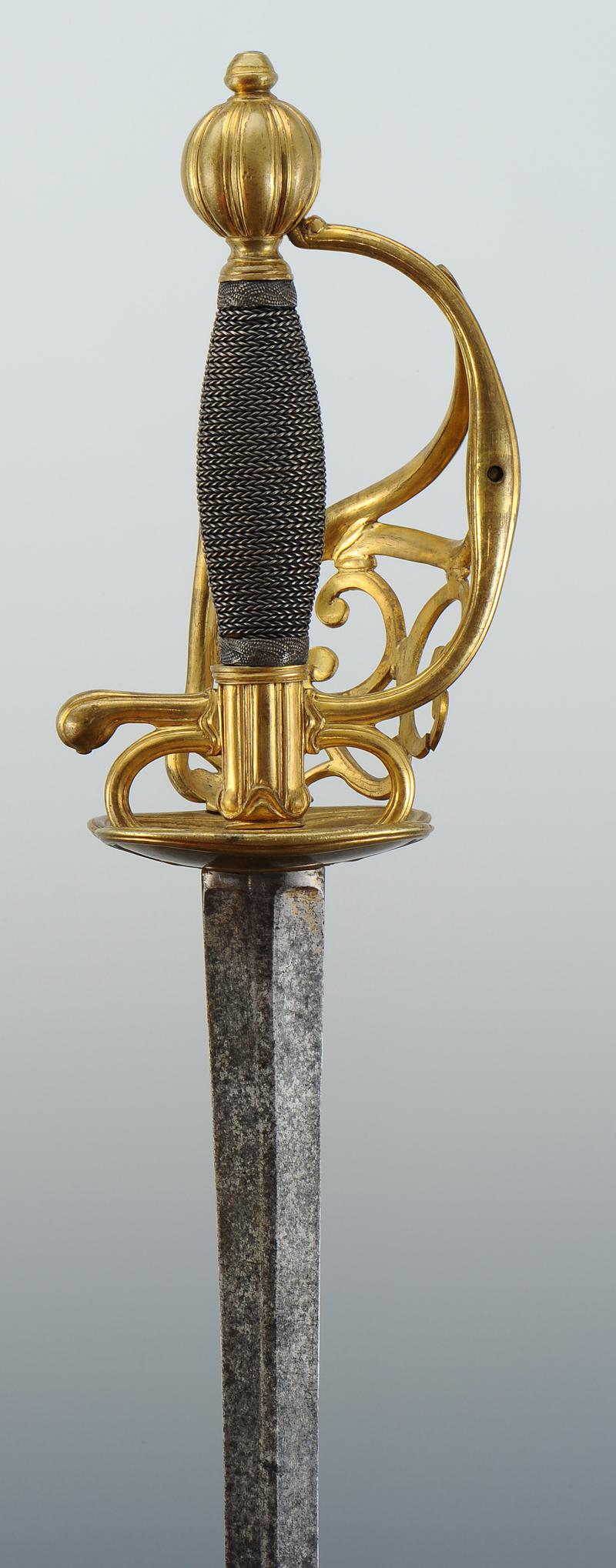
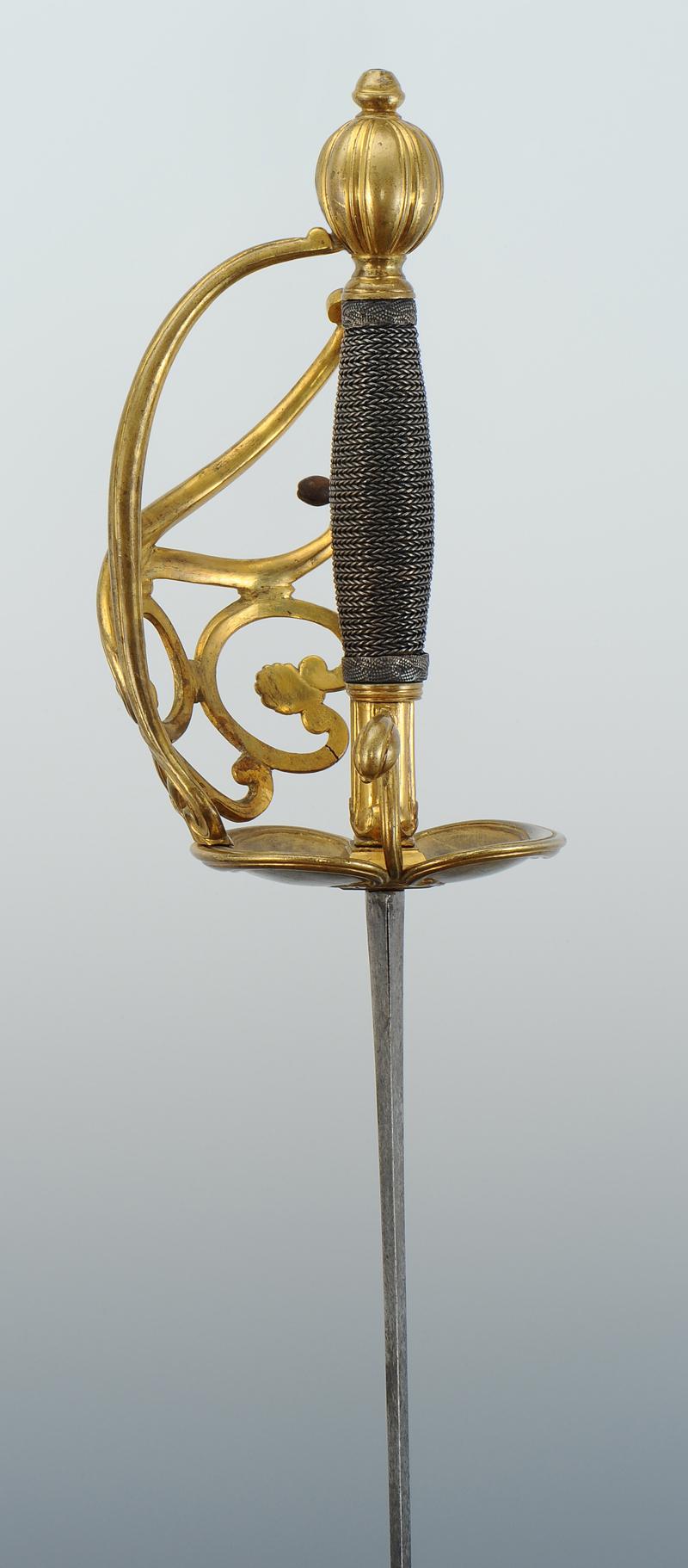
STRONG SWORD OF THE KING'S HOUSE CAVALRY LANCERS, AROUND 1750-1762, REIGN OF LOUIS XV.
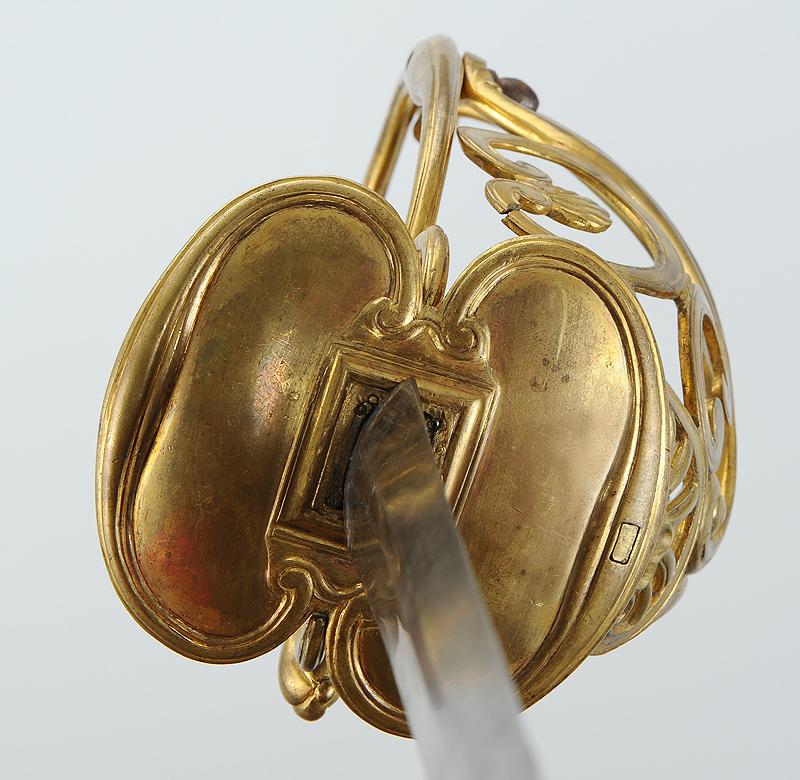
Strong hilt in gilded brass resembling a mousquetaire, with two main branches and two secondary branches forming a palmette and two C's. Oval pommel (Height of guard branches 14.5 cm, height of pommel 5.5 cm). Bi-valve hilt. Wooden handle entirely filigreed with silver. Twisted silver wire ferrules. Blade originally 90 cm long, on this exemplar it measures 87.5 cm, width at the ricasso 2.9 cm, in a half-espadon style, engravings erased. Without scabbard.
Weight: 965 grams.
Since Michel Pétard is regarded as the best specialist on the subject, we draw upon his work "Des Sables et des Épées - Troupes à cheval de Louis XIV à l'Empire - tome I," pages 70 and 71, figure 47S for the full analysis of this object:
"As is often the case in governmental guards, no document informs us about the company of the Cavalry Lancers, only objects are able to enlighten us on the subject. Strong hilt in gilded brass resembling a mousquetaire, strictly identical to that adopted by the maréchaussée around 1730-1740, but notable for its finely filigreed silver handle with stamped braid ferrules, and especially for the presence of a detachable guard piece which had two types of mounting - either by a tenon fitted into a mortise hollowed out in the rib of the shell, or by an expanded base riveted onto the coat of arms base. The 90 cm blade, in a half-espadon style, is engraved in large cursive: "Chevaux-légers De la Gardes Du Roy" and below "Manufacture Royale Des armes blanches D'alsace." Without this indication, we would be unaware of the origin of this very beautiful object. As for dating, it remains vague due to lack of reliable clues. This strong sword was likely a rational compromise between the combat saber and the service sword unsuitable for war."
Very good state of preservation, the hilt has retained almost all of its gilding, blade with oxidation typical for the period.
France.
Reign of Louis XV.
PROVENANCE: Former collection of Dr. Estevenon
To see all the photographs of these two weapons, you must visit the two dedicated listings.
MULTI-BRANCH SABRE OF THE KING'S HOUSE CAVALRY LANCERS, AROUND 1730 TO 1750, REIGN OF LOUIS XV.
Brass hilt with four branches, without a counter-guard or thumb ring. The two main branches are adorned with fleur-de-lis and floral motifs, the secondary branches with military trophies. (Height of guard branches 14 cm, height of pommel 4.9 cm). They are fixed at their top to the pommel by means of steel screws. Round pommel molded in relief with a trophy of weapons on the front face and the Arms of France on the back face. Wooden handle entirely filigreed with brass. Brass ferrules. Bi-valve hilt decorated on the top with a trophy of weapons and the Arms of France placed on a trophy; below, the front part is decorated with the Arms of France framed by palm leaves, the rear part with a trophy of weapons also framed by palm leaves. Original blade 90 cm long, on the exemplar presented, the length is 89.5 cm, with a width of 3.7 cm (originally 4.1 cm) and a lenticular section with a double central fuller, of a very archaic type for the period and of Germanic manufacture. It is marked at the ricasso on both sides of the fullers with "CHEVAU-LEGER-DE-LA » - » GARDE-DU-ROY » on one side, and then with "MAUPETIT » - » FOURBISSEUR-A-PARIS » on the other, in irregular small capitals, these inscriptions are partially erased. The sword cutler Lucien Maupetit is the author of this hilt and the supplier to the Lancers. His son, Lucien-Jacques, will be the entrepreneur of the Alsace manufacture from 1755 to 1765. Without scabbard.
Weight: 1.236 kg.
In his work "Des Sables et des Épées - Troupes à cheval de Louis XIV à l'Empire - tome I," pages 50 and 51, figure 24, Michel Pétard makes the following analysis of this model:
"Although no regulatory text has come down to us, it is certain that this is indeed a model since the rare known specimens are strictly identical. This sumptuous combat saber is of the generation that appeared in 1730 but it stands out by its gilded brass hilt and its high aesthetic relief decoration mixing the fleur-de-lis, martial trophies, and plant elements with success."
Good state of preservation, the brass parts have lost their gilding, minor damage at the top of one of the branches, blade with oxidation typical for that period.
France.
Reign of Louis XV.
STRONG SWORD OF THE KING'S HOUSE CAVALRY LANCERS, AROUND 1750-1762, REIGN OF LOUIS XV.
Strong hilt in gilded brass resembling a mousquetaire, with two main branches and two secondary branches forming a palmette and two C's. Oval pommel (Height of guard branches 14.5 cm, height of pommel 5.5 cm). Bi-valve hilt. Wooden handle entirely filigreed with silver. Twisted silver wire ferrules. Blade originally 90 cm long, on this exemplar it measures 87.5 cm, width at the ricasso 2.9 cm, in a half-espadon style, engravings erased. Without scabbard.
Weight: 965 grams.
Since Michel Pétard is regarded as the best specialist on the subject, we draw upon his work "Des Sables et des Épées - Troupes à cheval de Louis XIV à l'Empire - tome I," pages 70 and 71, figure 47S for the full analysis of this object:
"As is often the case in governmental guards, no document informs us about the company of the Cavalry Lancers, only objects are able to enlighten us on the subject. Strong hilt in gilded brass resembling a mousquetaire, strictly identical to that adopted by the maréchaussée around 1730-1740, but notable for its finely filigreed silver handle with stamped braid ferrules, and especially for the presence of a detachable guard piece which had two types of mounting - either by a tenon fitted into a mortise hollowed out in the rib of the shell, or by an expanded base riveted onto the coat of arms base. The 90 cm blade, in a half-espadon style, is engraved in large cursive: "Chevaux-légers De la Gardes Du Roy" and below "Manufacture Royale Des armes blanches D'alsace." Without this indication, we would be unaware of the origin of this very beautiful object. As for dating, it remains vague due to lack of reliable clues. This strong sword was likely a rational compromise between the combat saber and the service sword unsuitable for war."
Very good state of preservation, the hilt has retained almost all of its gilding, blade with oxidation typical for the period.
France.
Reign of Louis XV.
PROVENANCE: Former collection of Dr. Estevenon
Reference :
7557 - 7558
Next update Friday, octobre 23 at 13:30 PM
FOR ALL PURCHASES, PAYMENT IN MULTIPLE CHECKS POSSIBLE
bertrand.malvaux@wanadoo.fr 06 07 75 74 63
SHIPPING COSTS
Shipping costs are calculated only once per order for one or more items, all shipments are sent via registered mail, as this is the only way to have proof of dispatch and receipt.
For parcels whose value cannot be insured by the Post, shipments are entrusted to DHL or Fedex with real value insured, the service is of high quality but the cost is higher.
RETURN POLICY
Items can be returned within 8 days of receipt. They must be returned by registered mail at the sender's expense, in their original packaging, and in their original condition.
AUTHENTICITY
The selection of items offered on this site allows me to guarantee the authenticity of each piece described here, all items offered are guaranteed to be period and authentic, unless otherwise noted or restricted in the description.
An authenticity certificate of the item including the description published on the site, the period, the sale price, accompanied by one or more color photographs is automatically provided for any item priced over 130 euros. Below this price, each certificate is charged 5 euros.
Only items sold by me are subject to an authenticity certificate, I do not provide any expert reports for items sold by third parties (colleagues or collectors).
FOR ALL PURCHASES, PAYMENT IN MULTIPLE CHECKS POSSIBLE
bertrand.malvaux@wanadoo.fr 06 07 75 74 63
An authenticity certificate of the item including the description published on the site, the period, the sale price, accompanied by one or more color photographs is automatically provided for any item priced over 130 euros. Below this price, each certificate is charged 5 euros.
Only items sold by me are subject to an authenticity certificate, I do not provide any expert reports for items sold by third parties (colleagues or collectors).